


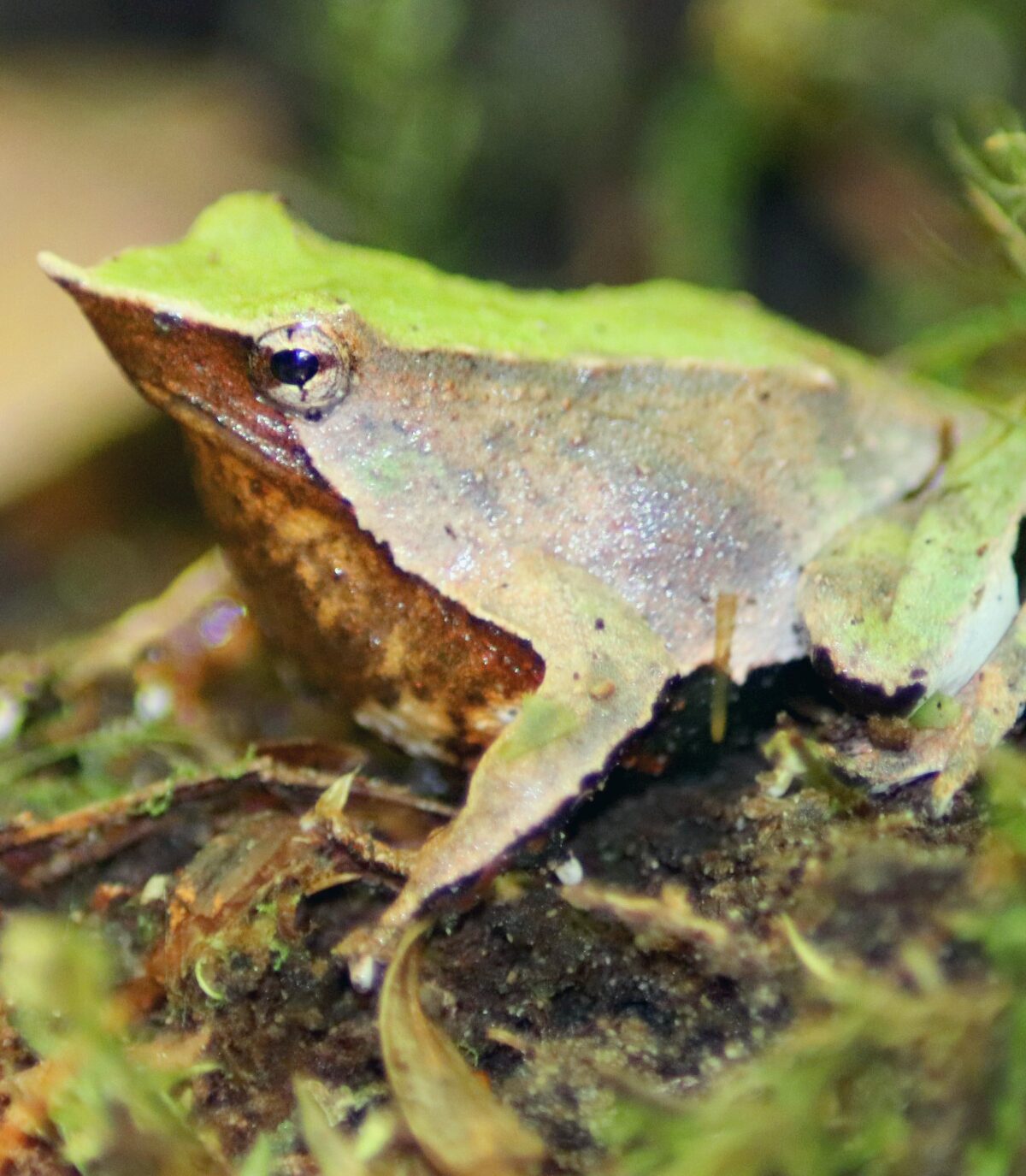
DARWIN'S FROG
Rhinoderma darwinii
DESCRIPTION
Darwin's Frog (Rhinoderma darwinii) is commonly known as the Chilean Darwin's Frog. This small amphibian is characterized by its unique appearance, featuring a flattened body and a distinctive, pointed snout. The coloration varies from green to brown, often with dark spots, allowing it to blend seamlessly into its forested habitat. Behaviorally, Darwin's Frog is known for its remarkable parental care, where males carry developing tadpoles in their vocal sacs until they are ready to emerge as froglets. Ecologically, it inhabits temperate rainforests in Chile and Argentina, relying on moist environments for its survival.
FUN FACTS
- Darwin's Frog is named after Charles Darwin, who first described the species during his voyage on the HMS Beagle
- This frog is unique in that the male carries the developing tadpoles in his vocal sac, a rare behavior among amphibians
- | The species is critically endangered, primarily due to habitat loss and the chytrid fungus, which has devastated amphibian populations worldwide
- Conservationists are working to protect their remaining habitats and study their health to ensure their survival
QUICK INFO
Lifespan5-10 years in the wild
Average Length2.5-3.5 cm
Diet TypeInsectivore
Social Structuresolitary, with males and females coming together only for breeding
Activity PatternNocturnal
Breeding SeasonSpring (September-November)
- Habitat
- This species thrives in humid, temperate rainforests, often near streams and ponds. The moist environment is essential for their breeding and development.
- Biomes
- Temperate Rainforest
- Native Range
- Darwin's Frog is native to the temperate rainforests of southern Chile and Argentina.
- Continent
- South America
- Countries
- Chile, Argentina
- Diet
- Darwin's Frog primarily feeds on small invertebrates, including insects and other arthropods. Its diet is crucial for its growth and reproductive success.
- Diet Type
- Insectivore
- Favorite Food
- small insects
- Social Structure
- solitary, with males and females coming together only for breeding
- Activity Pattern
- Nocturnal
- Group Size
- 1-2
- Territorial
- 0
 VU
VU
 LC
LC
2.5-3.5 cm
Length
- Coloration
- green to brown with dark spots
- Sexual Dimorphism
- males are generally smaller than females
- Lifespan
- 5-10 years in the wild
- Offspring per Birth
- up to 20
- Sexual Maturity
- 1-2 years
- Breeding Season
- Spring (September-November)
CR
Critically Endangered
IUCN Red List Status
- Population Status
- The population of Darwin's Frog is currently declining due to habitat loss and disease.
- Wild Population Estimate
- unknown
- Population Trend
- Decreasing
- Endangered
- 1
- Threats
- Main threats include habitat destruction due to deforestation and the spread of chytridiomycosis, a fungal disease affecting amphibians. These factors have significantly impacted their populations.
- Conservation Program
- Conservation efforts are underway, including habitat protection and research on disease management.
- Predators
- Birds, snakes, and larger amphibians are known predators of Darwin's Frog.
- Defense Mechanisms
- Darwin's Frog can use camouflage to blend into its surroundings, making it less visible to predators.
- Found in Zoos
- Rare