


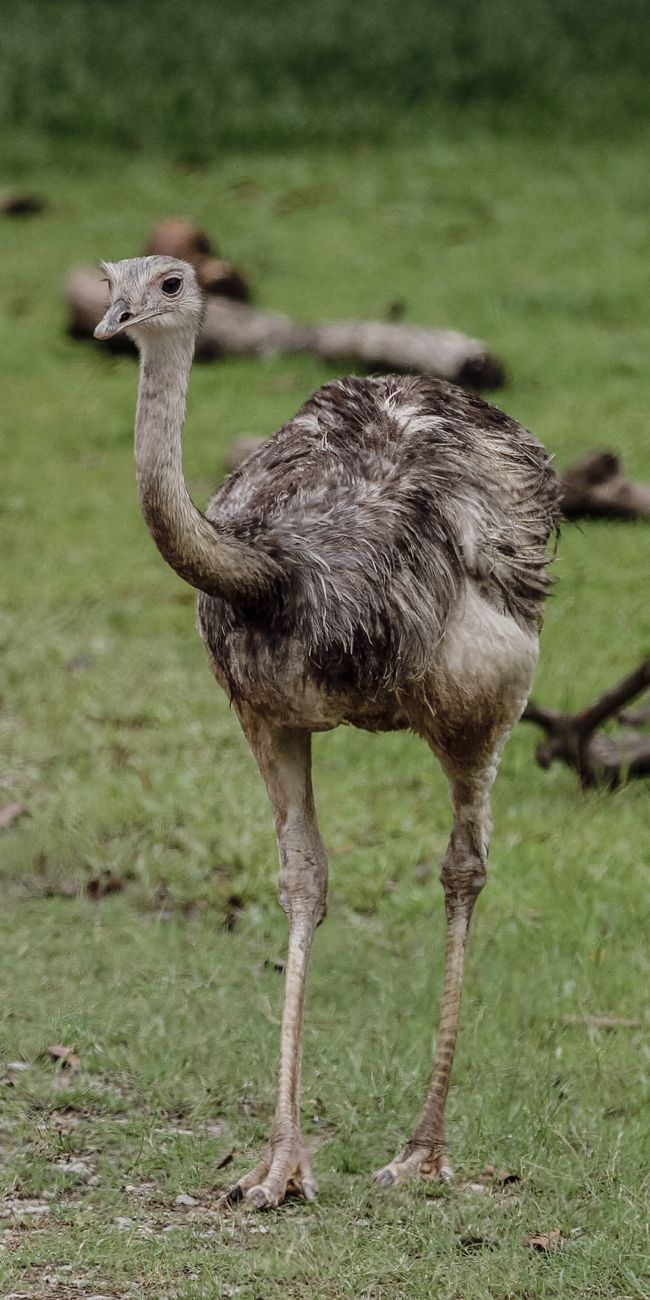
DARWIN'S RHEA
Rhea pennata
DESCRIPTION
Also called Pata and Greater Rhea, Darwin's Rhea is a large flightless bird native to South America. It has a long neck and legs, with a body covered in soft, grayish-brown feathers that provide excellent camouflage in its natural habitat. These birds are known for their social behavior, often seen in groups, and they inhabit open grasslands and savannas where they forage for food.
FUN FACTS
- Darwin's Rhea is named after Charles Darwin, who observed these birds during his voyage on the HMS Beagle
- They are the largest bird species in South America and can run at impressive speeds, making them one of the fastest flightless birds in the world.|Unlike ostriches, which are native to Africa, Darwin's Rhea has a more social nature and is often seen in groups
- They have a unique courtship display where males will perform elaborate dances to attract females
QUICK INFO
Lifespan10-15 years in the wild, up to 20 years in captivi
Average Weight40-60 kg
Average Length1.5-1.8 m
Diet TypeOmnivore
Social Structuregroup — they often form flocks, especially outside of the breeding season.
Activity PatternDiurnal
Breeding SeasonSpring to early summer (September to December in the Southern Hemisphere)
- Habitat
- Darwin's Rhea prefers open grasslands, savannas, and scrublands where they can easily forage for food and evade predators. They are often found in areas with low vegetation that allows for easy movement.
- Biomes
- Grassland, Savanna
- Native Range
- Darwin's Rhea is native to the grasslands and open areas of Argentina, Bolivia, Paraguay, and parts of Brazil.
- Continent
- South America
- Countries
- Argentina, Bolivia, Paraguay, Brazil
- Diet
- Darwin's Rhea primarily feeds on a variety of plant materials, including grasses, seeds, and fruits, but will also consume insects and small animals when available. This omnivorous diet allows them to adapt to different environments.
- Diet Type
- Omnivore
- Favorite Food
- grasses, seeds, fruits
- Social Structure
- group — they often form flocks, especially outside of the breeding season.
- Activity Pattern
- Diurnal
- Group Size
- 5-20
- Territorial
- 0

 LC
LC
40-60 kg
Weight
1.5-1.8 m
Length
- Coloration
- grayish-brown feathers with a lighter underbelly
- Sexual Dimorphism
- males are generally larger than females and have more pronounced plumage.
- Lifespan
- 10-15 years in the wild, up to 20 years in captivi
- Offspring per Birth
- 10-20
- Sexual Maturity
- 2-3 years
- Breeding Season
- Spring to early summer (September to December in the Southern Hemisphere)
LC
Least Concern
IUCN Red List Status
- Population Status
- The population of Darwin's Rhea is currently stable, but habitat loss poses a potential threat.
- Wild Population Estimate
- 50,000-100,000
- Population Trend
- Stable
- Endangered
- 0
- Threats
- Main threats include habitat destruction due to agriculture and hunting. These factors have led to localized declines in certain areas.
- Predators
- Foxes, pumas, and large birds of prey are known to prey on Darwin's Rhea, especially on their eggs and young chicks.
- Defense Mechanisms
- They rely on their speed and agility to escape predators, and they can also use their powerful legs to kick if threatened.
- Found in Zoos
- Common