


DAVID'S DEER
Elaphurus davidianus
DESCRIPTION
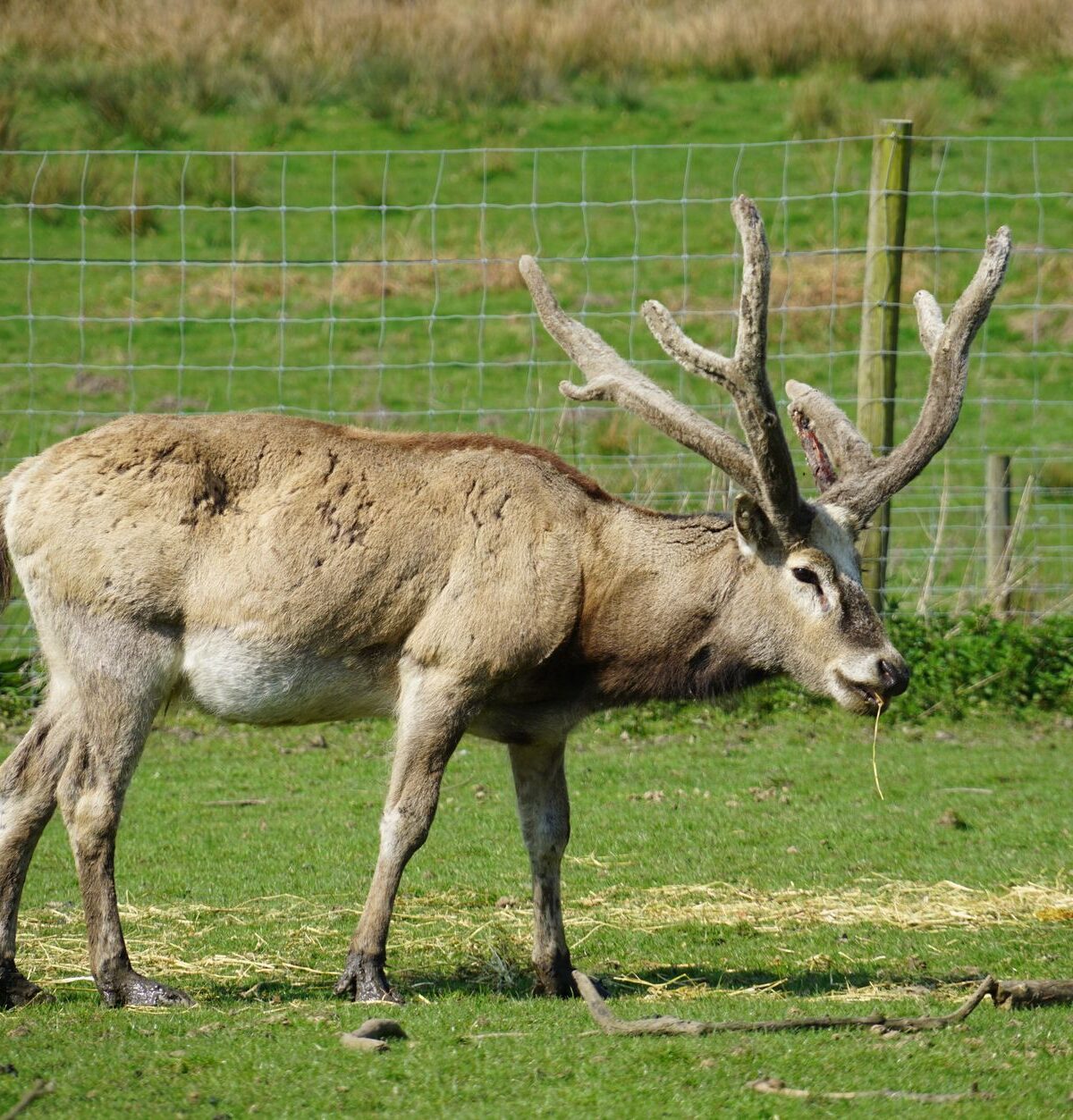
David's Deer (Elaphurus davidianus), also known as the Milu or Sichuan Deer, is a large deer species characterized by its long, slender legs and a distinctive, elongated body. Males possess antlers that are broad and flattened, which can grow up to 1 meter in length. This species is primarily found in wetlands and grasslands, where it exhibits a semi-aquatic lifestyle, often seen wading in water or grazing on aquatic vegetation.
FUN FACTS
- David's Deer is one of the few deer species that is semi-aquatic, often seen swimming and foraging in water
- They have a unique social structure, where females and their young form the core of the group, while males tend to be more solitary outside of the breeding season.|The species was once thought to be extinct in the wild, but small populations have been reintroduced in protected areas, showcasing successful conservation efforts
- Their antlers are unique among deer, being broad and flat, which helps them navigate through dense vegetation
QUICK INFO
Lifespan10-15 years in the wild, up to 20 years in captivi
Average Weight70-120 kg
Average Length1.5-2.0 m
Diet TypeHerbivore
Social Structuregroup — typically found in small herds, especially during feeding.
Activity PatternDiurnal
Breeding SeasonAutumn (September-November)
- Habitat
- David's Deer inhabits wetlands, marshes, and grasslands, often near water sources. They prefer areas with abundant vegetation for grazing and cover.
- Biomes
- Wetlands, Grasslands
- Native Range
- Historically native to the marshes of eastern China, particularly in the Yangtze River basin.
- Continent
- Asia
- Countries
- China
- Diet
- David's Deer primarily feeds on grasses, leaves, and aquatic plants, making it well-suited to its wetland habitat. They are known to graze extensively in the early morning and late afternoon.
- Diet Type
- Herbivore
- Favorite Food
- grasses, aquatic plants
- Social Structure
- group — typically found in small herds, especially during feeding.
- Activity Pattern
- Diurnal
- Group Size
- 5-15
- Territorial
- 0
 EN
LC
EN
LC
70-120 kg
Weight
1.5-2.0 m
Length
1.0-1.2 m at shoulder
Height (Shoulder)
- Coloration
- brownish-red coat with lighter underparts and white spots
- Sexual Dimorphism
- males are larger and have antlers, while females are smaller and antlerless
- Lifespan
- 10-15 years in the wild, up to 20 years in captivi
- Gestation Period
- 210 days
- Offspring per Birth
- 1
- Sexual Maturity
- 1-2 years
- Breeding Season
- Autumn (September-November)
EN
Endangered
IUCN Red List Status
- Population Status
- The population of David's Deer has significantly declined due to habitat loss and hunting, leading to its classification as endangered.
- Wild Population Estimate
- Less than 1,000
- Population Trend
- Decreasing
- Endangered
- 1
- Threats
- Main threats include habitat destruction due to agriculture and urbanization, as well as poaching for their antlers and meat. Conservation efforts are ongoing to protect their remaining habitats.
- Conservation Program
- Breeding programs in captivity and habitat restoration efforts in China.
- Predators
- Tigers, wolves, and large birds of prey are known to prey on David's Deer, particularly the young and weak individuals.
- Defense Mechanisms
- David's Deer relies on its agility and speed to escape predators, often fleeing into water where they can swim to safety.
- Compatible Animals
- none
- Found in Zoos
- Uncommon