


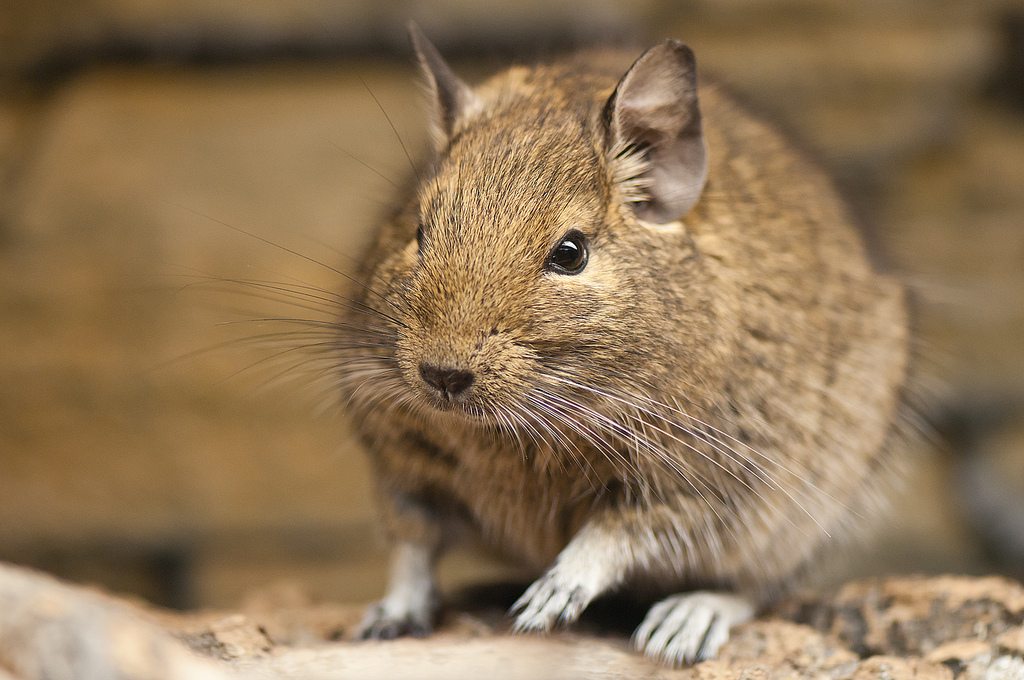
DEGU SQUIRREL
Octodon degus
DESCRIPTION
Degu Squirrel (Octodon degus) is commonly known as the Degu. This small rodent is characterized by its short, bushy tail and large, expressive eyes, which give it a distinctive appearance. Degus are social animals that live in groups, exhibiting complex behaviors and communication methods, making them fascinating to observe in both the wild and in captivity.
FUN FACTS
- Degus have a unique social structure and are known for their playful behavior, often engaging in games with each other
- They also have a remarkable ability to learn and can be trained to perform simple tasks, making them popular pets and subjects of research
QUICK INFO
Lifespan6-8 years in the wild, up to 10 years in captivity
Average Weight170-300 g
Average Length24-30 cm
Diet TypeHerbivore
Social Structuregroup — Degus live in colonies that can range from a few individuals to several dozen.
Activity PatternDiurnal
Breeding SeasonYear-round with peaks in spring and summer
- Habitat
- Degus inhabit arid and semi-arid regions, often found in burrows or rocky areas. They prefer environments with plenty of vegetation for foraging and shelter.
- Biomes
- Desert, Grassland
- Native Range
- Degus are native to the central and northern regions of Chile.
- Continent
- South America
- Countries
- Chile
- Diet
- Degus primarily feed on a herbivorous diet consisting of grasses, seeds, and various plant materials. They have a unique digestive system that allows them to efficiently process fibrous plant matter.
- Diet Type
- Herbivore
- Favorite Food
- grasses, seeds, and leaves
- Social Structure
- group — Degus live in colonies that can range from a few individuals to several dozen.
- Activity Pattern
- Diurnal
- Group Size
- 5-20
- Territorial
- 0
 VU
VU
 LC
LC
 LC
LC
170-300 g
Weight
24-30 cm
Length
- Coloration
- brownish-grey fur with lighter underparts
- Sexual Dimorphism
- males are generally larger than females
- Lifespan
- 6-8 years in the wild, up to 10 years in captivity
- Gestation Period
- 90-100 days
- Offspring per Birth
- 3-6
- Sexual Maturity
- 3-4 months
- Breeding Season
- Year-round with peaks in spring and summer
LC
Least Concern
IUCN Red List Status
- Population Status
- The population of Degus is currently stable, but they face habitat loss due to human activities.
- Wild Population Estimate
- unknown
- Population Trend
- Stable
- Endangered
- 0
- Threats
- Main threats to Degus include habitat destruction and competition with invasive species. They are also vulnerable to predation by birds of prey and domestic animals.
- Predators
- birds of prey, snakes, domestic cats
- Defense Mechanisms
- Degus use their burrows for protection and can also emit alarm calls to warn others of danger.
- Compatible Animals
- none
- Found in Zoos
- Common