


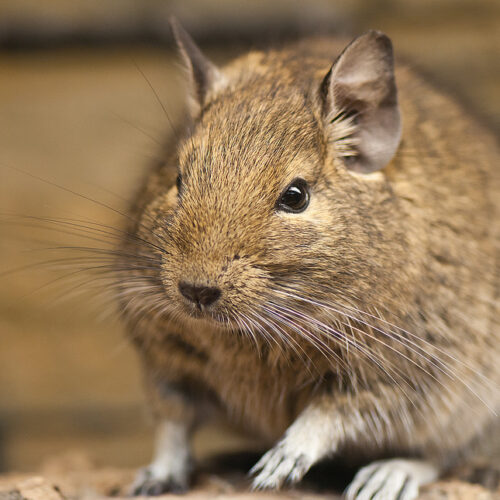
DEGU
Octodon degus
DESCRIPTION
Degus are small, diurnal rodents native to Chile, resembling a cross between a gerbil and a chinchilla. They have a robust body, short legs, and a long, bushy tail, with fur that is typically a sandy brown color. Social animals, degus live in colonies and exhibit complex behaviors, including grooming and playing, which are essential for their social structure.
FUN FACTS
- Degus have a unique social structure and communicate through a variety of vocalizations, including chirps and whistles, which help maintain group cohesion
- They are also known for their impressive memory and can remember the locations of food sources and burrows over long periods of time.|Degus have a special adaptation in their teeth that allows them to continuously grow throughout their lives, similar to other rodents
- This means they need to gnaw on various materials to keep their teeth from becoming overgrown, which is essential for their health
QUICK INFO
Lifespan6-8 years in the wild, up to 10 years in captivity
Average Weight170-300 g
Average Length24-30 cm
Diet TypeHerbivore
Social Structuregroup — degus live in colonies that can consist of several individuals, fostering strong social bonds.
Activity PatternDiurnal
Breeding SeasonYear-round, with peaks in spring and summer
- Habitat
- Degus inhabit arid and semi-arid regions, often found in scrublands and grasslands. They create burrows in the ground, which provide shelter and protection from predators.
- Biomes
- Grassland, Desert
- Native Range
- Degus are native to the central and northern regions of Chile.
- Continent
- South America
- Countries
- Chile
- Diet
- Degus are primarily herbivorous, feeding on a variety of plant materials, including grasses, seeds, and roots. They have a particular affinity for high-fiber foods, which are crucial for their digestive health.
- Diet Type
- Herbivore
- Favorite Food
- grasses, seeds, and vegetables
- Social Structure
- group — degus live in colonies that can consist of several individuals, fostering strong social bonds.
- Activity Pattern
- Diurnal
- Group Size
- 5-10
- Territorial
- 0
 CR
CR
 LC
LC
 LC
LC
170-300 g
Weight
24-30 cm
Length
- Coloration
- sandy brown with lighter underparts
- Sexual Dimorphism
- males are generally larger than females
- Lifespan
- 6-8 years in the wild, up to 10 years in captivity
- Gestation Period
- 90-100 days
- Offspring per Birth
- 3-6
- Sexual Maturity
- 3-4 months
- Breeding Season
- Year-round, with peaks in spring and summer
LC
Least Concern
IUCN Red List Status
- Population Status
- The population of degus is currently stable, but they face habitat loss due to agricultural expansion.
- Wild Population Estimate
- unknown
- Population Trend
- Stable
- Endangered
- 0
- Threats
- Main threats include habitat destruction and competition with invasive species. Additionally, they are sometimes kept as pets, which can lead to over-collection in the wild.
- Predators
- hawks, owls, snakes, and domestic cats
- Defense Mechanisms
- Degus use their burrows for protection and can also emit alarm calls to warn others of danger.
- Compatible Animals
- none
- Found in Zoos
- Common