


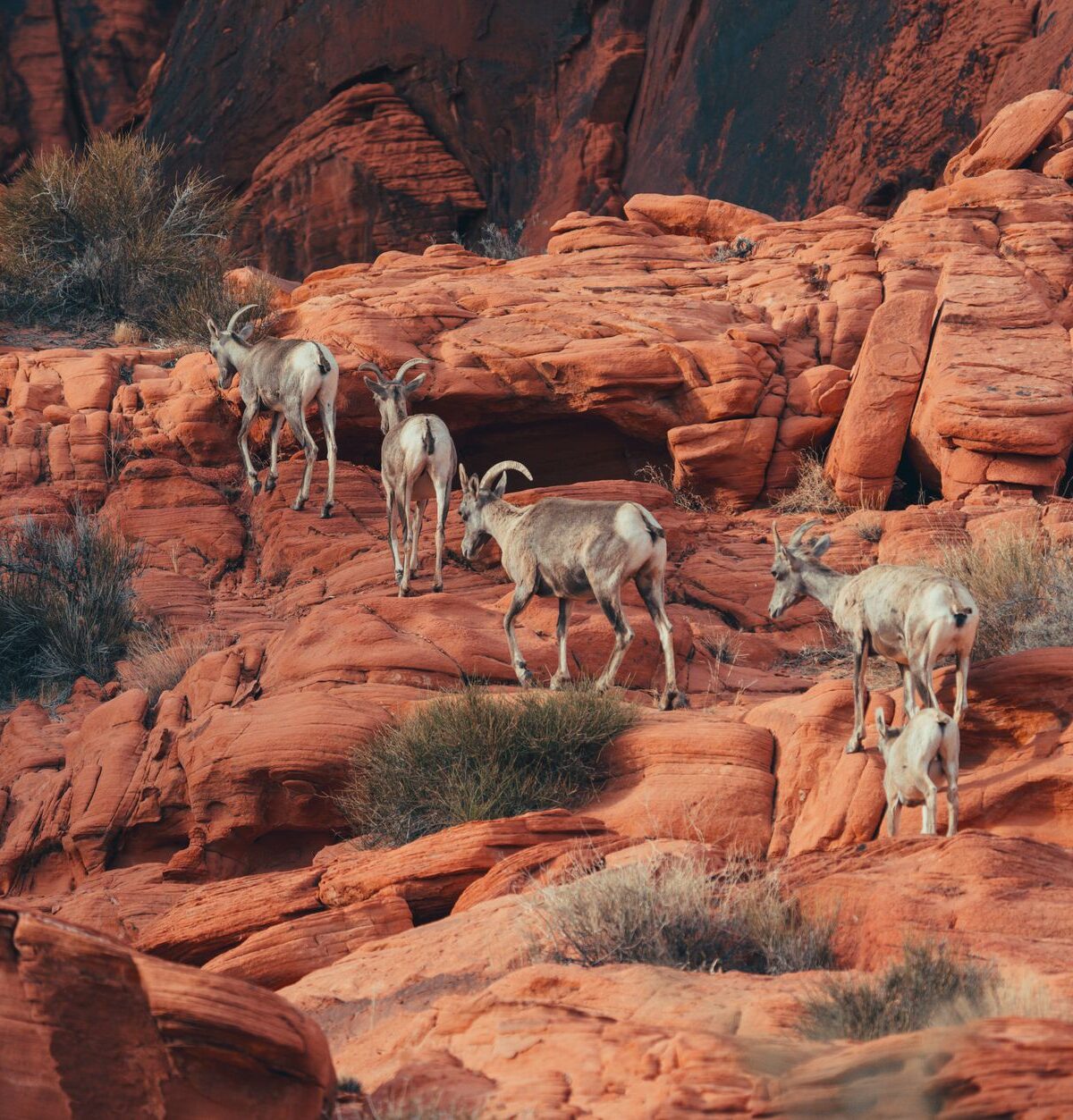
DESERT BIGHORN SHEEP
Ovis canadensis nelsoni
DESCRIPTION
Desert Bighorn Sheep (Ovis canadensis nelsoni) is commonly known as Nelson's Bighorn Sheep. This subspecies of bighorn sheep is characterized by its slender build, long legs, and large, curved horns in males. They are well adapted to their arid desert environments, exhibiting behaviors such as climbing steep rocky terrains and seeking shade during the hottest parts of the day.
FUN FACTS
- Desert Bighorn Sheep are excellent climbers, able to navigate steep and rocky terrains with ease, which helps them evade predators
- Their unique adaptations to desert life include the ability to go long periods without water, obtaining moisture from the plants they consume.|The horns of male Desert Bighorn Sheep can weigh up to 14 kg and grow continuously throughout their lives, making them a key feature for attracting mates and establishing dominance during the breeding season
QUICK INFO
Lifespan10-20 years in the wild, up to 25 years in captivi
Average Weight50-90 kg
Average Length1.5-2.0 m
Diet TypeHerbivore
Social Structuregroup — females and young typically form herds, while males may be solitary or in small groups.
Activity PatternDiurnal
Breeding SeasonFall (November-December)
- Habitat
- Desert Bighorn Sheep inhabit rugged, mountainous areas and rocky outcrops in desert regions. They prefer habitats that provide both food and water sources, often near steep cliffs for safety.
- Biomes
- Desert
- Native Range
- They are native to the southwestern United States and northwestern Mexico.
- Continent
- North America
- Countries
- United States, Mexico
- Diet
- Desert Bighorn Sheep primarily graze on grasses, shrubs, and desert vegetation. They are known to consume a variety of plant species, adapting their diet based on seasonal availability.
- Diet Type
- Herbivore
- Favorite Food
- grasses, shrubs
- Social Structure
- group — females and young typically form herds, while males may be solitary or in small groups.
- Activity Pattern
- Diurnal
- Group Size
- 5-30
- Territorial
- 0
 LC
LC
50-90 kg
Weight
1.5-2.0 m
Length
0.9-1.1 m at shoulder
Height (Shoulder)
- Coloration
- light brown to tan with white markings on the face and belly
- Sexual Dimorphism
- Males are larger and have prominent curved horns, while females are smaller with shorter, less curved horns.
- Lifespan
- 10-20 years in the wild, up to 25 years in captivi
- Gestation Period
- 180-200 days
- Offspring per Birth
- 1
- Sexual Maturity
- 2-3 years
- Breeding Season
- Fall (November-December)
LC
Least Concern
IUCN Red List Status
- Population Status
- The population of Desert Bighorn Sheep has been recovering in some areas due to conservation efforts, but they still face challenges.
- Wild Population Estimate
- approximately 10,000-15,000
- Population Trend
- Stable
- Endangered
- 0
- Threats
- Main threats include habitat loss due to urban development, competition with domestic livestock, and disease transmission. Additionally, climate change poses a risk to their arid habitats.
- Conservation Program
- Various state and federal programs focus on habitat restoration and population monitoring.
- Predators
- Mountain lions, coyotes, and eagles are known predators of Desert Bighorn Sheep, particularly targeting young or weak individuals.
- Defense Mechanisms
- They rely on their agility and ability to navigate steep terrain to escape predators, often fleeing to high cliffs.
- Found in Zoos
- Uncommon