


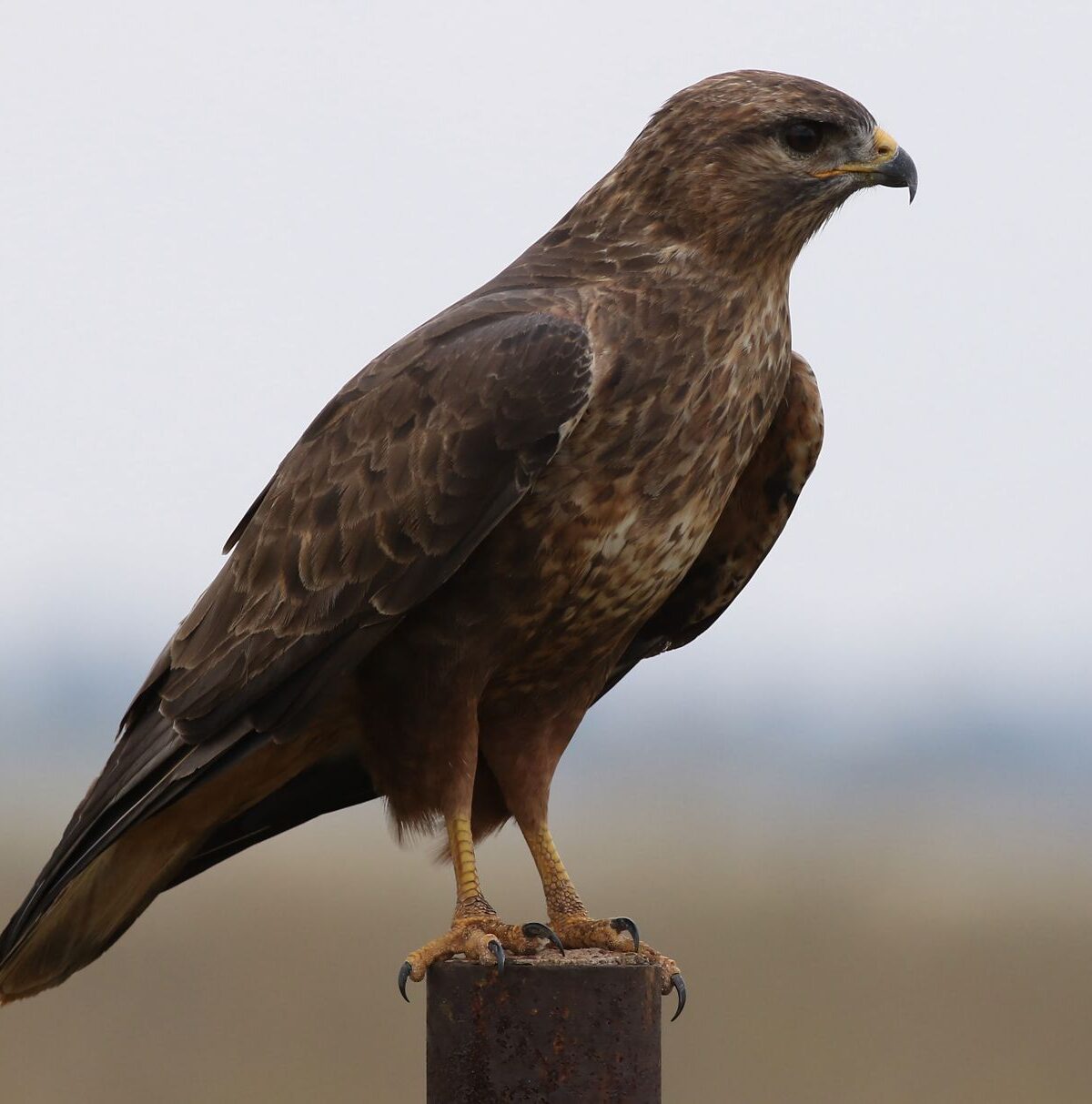
DESERT BUZZARD
DESCRIPTION
Desert Buzzard, also known as the Steppe Buzzard, is a medium to large bird of prey characterized by its broad wings and short tail. It has a variable plumage that can range from light to dark brown, often with a pale underside and dark markings. This species is known for its soaring flight and is often seen gliding over open landscapes in search of prey.
FUN FACTS
- Desert Buzzards are known for their impressive soaring abilities, often reaching altitudes of over 1,000 meters while searching for food
- They can cover large distances in search of prey, sometimes migrating seasonally to find suitable habitats
- | These birds have a unique hunting technique where they will often perch on a high vantage point to survey the ground below, allowing them to spot potential prey with remarkable precision
QUICK INFO
Lifespan10-15 years in the wild
Average Weight0.8-1.5 kg
Average Length45-60 cm
Diet TypeCarnivore
Social Structuresolitary, pairs during breeding season
Activity PatternDiurnal
Breeding SeasonSpring (March-May)
- Habitat
- Desert Buzzards inhabit arid and semi-arid regions, often found in open grasslands, deserts, and scrublands. They prefer areas with scattered trees or cliffs for nesting and perching.
- Biomes
- Desert, Grassland
- Native Range
- The native range of the Desert Buzzard extends across parts of North Africa, the Middle East, and Central Asia.
- Continent
- Asia, Africa
- Countries
- Egypt, Saudi Arabia, Kazakhstan, Uzbekistan
- Diet
- Desert Buzzards primarily feed on small mammals, birds, and reptiles. They are opportunistic hunters and will also scavenge when necessary.
- Diet Type
- Carnivore
- Favorite Food
- small mammals, birds
- Social Structure
- solitary, pairs during breeding season
- Activity Pattern
- Diurnal
- Group Size
- 1-2
- Territorial
- 1
 LC
LC
0.8-1.5 kg
Weight
45-60 cm
Length
- Coloration
- variable brown plumage with lighter underparts and dark markings
- Sexual Dimorphism
- males are generally smaller than females
- Lifespan
- 10-15 years in the wild
- Offspring per Birth
- 2-4
- Sexual Maturity
- 2-3 years
- Breeding Season
- Spring (March-May)
LC
Least Concern
IUCN Red List Status
- Population Status
- The population of Desert Buzzards is currently stable, with no significant declines reported.
- Wild Population Estimate
- 100,000+
- Population Trend
- Stable
- Endangered
- 0
- Threats
- Main threats include habitat loss due to agricultural expansion and human encroachment. Additionally, they face risks from poisoning and hunting in some regions.
- Predators
- eagles, larger hawks, and humans
- Defense Mechanisms
- Desert Buzzards rely on their ability to soar high and spot threats from a distance, often using their speed and agility to evade predators.
- Found in Zoos
- Uncommon