


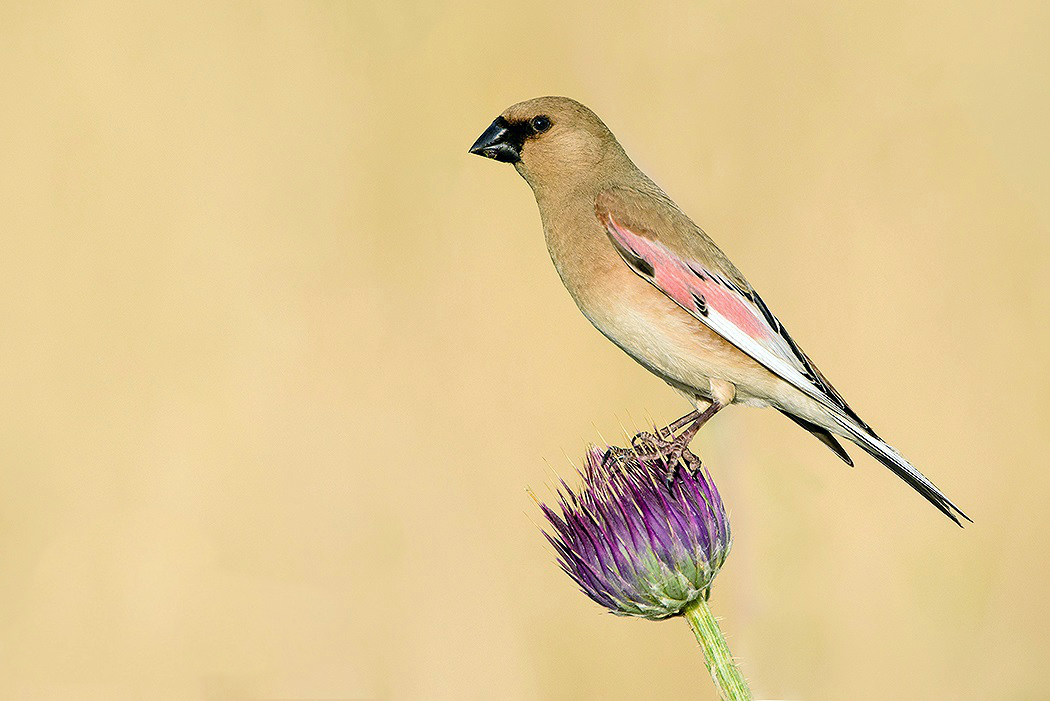
DESERT FINCH
Rhodopechys obsoleta
DESCRIPTION
Desert finch (Rhodopechys obsoleta) is a small passerine bird characterized by its stout bill and distinctive plumage, which is typically a mix of brown and buff with streaks. This species is well-adapted to arid environments, often found in sandy deserts and scrublands where it forages for seeds and insects. Its behavior includes a mix of foraging on the ground and perching on low shrubs, where it can easily spot potential predators.
FUN FACTS
- Desert finches are known for their ability to survive in extreme heat and arid conditions, often going long periods without water by extracting moisture from their food
- They have a unique social structure, often foraging in groups which helps them to detect predators more effectively
QUICK INFO
Lifespan5-7 years in the wild
Average Weight15-20 g
Average Length14-16 cm
Diet TypeOmnivore
Social Structuregroup — they are often found in small flocks, especially outside of the breeding season.
Activity PatternDiurnal
Breeding SeasonSpring (March-May)
- Habitat
- Desert finches inhabit arid and semi-arid regions, often favoring areas with sparse vegetation. They are commonly found in sandy deserts and scrublands where food sources are available.
- Biomes
- Desert
- Native Range
- The native range of the Desert finch includes parts of North Africa and the Arabian Peninsula.
- Continent
- Africa, Asia
- Countries
- Egypt, Libya, Saudi Arabia, Sudan, Yemen
- Diet
- Desert finches primarily feed on seeds, but they also consume small insects and other plant materials. Their diet is crucial for their survival in harsh desert conditions.
- Diet Type
- Omnivore
- Favorite Food
- seeds
- Social Structure
- group — they are often found in small flocks, especially outside of the breeding season.
- Activity Pattern
- Diurnal
- Group Size
- 5-15
- Territorial
- 0
 LC
LC
15-20 g
Weight
14-16 cm
Length
- Coloration
- The coloration of the Desert finch is primarily brown with lighter underparts and streaks, providing excellent camouflage in its desert habitat.
- Sexual Dimorphism
- Males are generally more brightly colored than females, with more pronounced streaking.
- Lifespan
- 5-7 years in the wild
- Offspring per Birth
- 3-5
- Sexual Maturity
- 1 year
- Breeding Season
- Spring (March-May)
LC
Least Concern
IUCN Red List Status
- Population Status
- The population of Desert finches is currently stable, with no significant declines reported.
- Wild Population Estimate
- unknown
- Population Trend
- Stable
- Endangered
- 0
- Threats
- Main threats include habitat loss due to desertification and human encroachment. Climate change may also impact their food sources and breeding success.
- Predators
- Common predators include birds of prey and snakes, which pose a threat to both adults and their nests.
- Defense Mechanisms
- Desert finches rely on their camouflage to avoid detection by predators, and they often use quick flight to escape danger.
- Found in Zoos
- Uncommon