


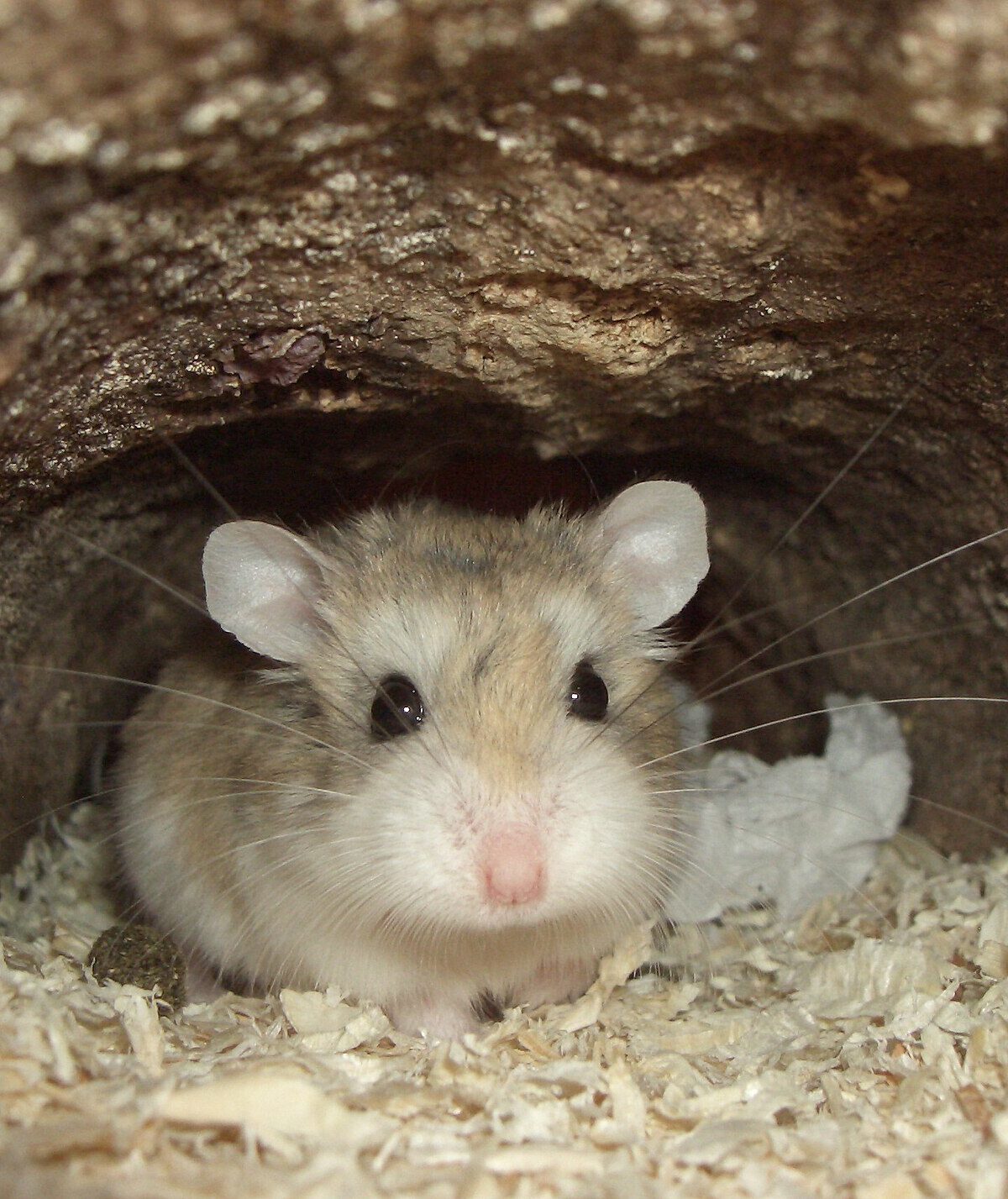
DESERT HAMSTER
Phodopus roborovskii
DESCRIPTION
Desert Hamster (Phodopus roborovskii), also known as Roborovski Hamster, is a small rodent characterized by its sandy-colored fur and small size, typically measuring around 3-4 inches in length. They are known for their lively and social behavior, often seen running and playing in their burrows. In the wild, they inhabit arid regions and are well-adapted to desert life, showcasing behaviors that help them conserve water and avoid extreme temperatures.
FUN FACTS
- Desert Hamsters are known for their incredible speed and agility, which allows them to escape from predators quickly
- They can run up to 6 miles in a single night while foraging for food
- | These hamsters have a unique adaptation that allows them to survive in harsh desert conditions; they can extract moisture from the seeds they eat, reducing their need for water
- This makes them well-suited for life in arid environments
QUICK INFO
Lifespan2-3 years in the wild, up to 4 years in captivity
Average Weight30-50 g
Average Length7-10 cm
Diet TypeHerbivore
Social StructureThey are generally social animals, often found in small groups, but can also be solitary depending on environmental conditions.
Activity PatternNocturnal
Breeding SeasonYear-round, with peaks in spring and summer
- Habitat
- Desert Hamsters thrive in arid desert environments, often creating extensive burrow systems to escape the heat and store food. They prefer sandy soils that allow for easy digging.
- Biomes
- Desert
- Native Range
- They are native to the deserts of Central Asia, particularly in Mongolia and northern China.
- Continent
- Asia
- Countries
- Mongolia, China
- Diet
- Desert Hamsters primarily feed on seeds, grains, and vegetation, foraging for food during the cooler parts of the day. They have a unique ability to store food in their cheek pouches for later consumption.
- Diet Type
- Herbivore
- Favorite Food
- seeds, grains, vegetation
- Social Structure
- They are generally social animals, often found in small groups, but can also be solitary depending on environmental conditions.
- Activity Pattern
- Nocturnal
- Group Size
- 2-10
- Territorial
- 0
 LC
LC
30-50 g
Weight
7-10 cm
Length
- Coloration
- Sandy brown with lighter underparts, providing camouflage in their desert habitat.
- Sexual Dimorphism
- Males are typically slightly larger than females.
- Lifespan
- 2-3 years in the wild, up to 4 years in captivity
- Gestation Period
- 20-22 days
- Offspring per Birth
- 3-8
- Sexual Maturity
- 6-8 weeks
- Breeding Season
- Year-round, with peaks in spring and summer
LC
Least Concern
IUCN Red List Status
- Population Status
- The population is currently stable, but habitat loss poses potential risks.
- Wild Population Estimate
- Unknown
- Population Trend
- Stable
- Endangered
- 0
- Threats
- Main threats include habitat destruction due to agricultural expansion and urban development. Additionally, they face competition for resources from invasive species.
- Predators
- Common predators include birds of prey, snakes, and small mammals such as foxes.
- Defense Mechanisms
- They rely on their burrowing skills to escape predators and can also exhibit rapid movements to evade capture.
- Compatible Animals
- Gerbils, other small rodents
- Found in Zoos
- Common