


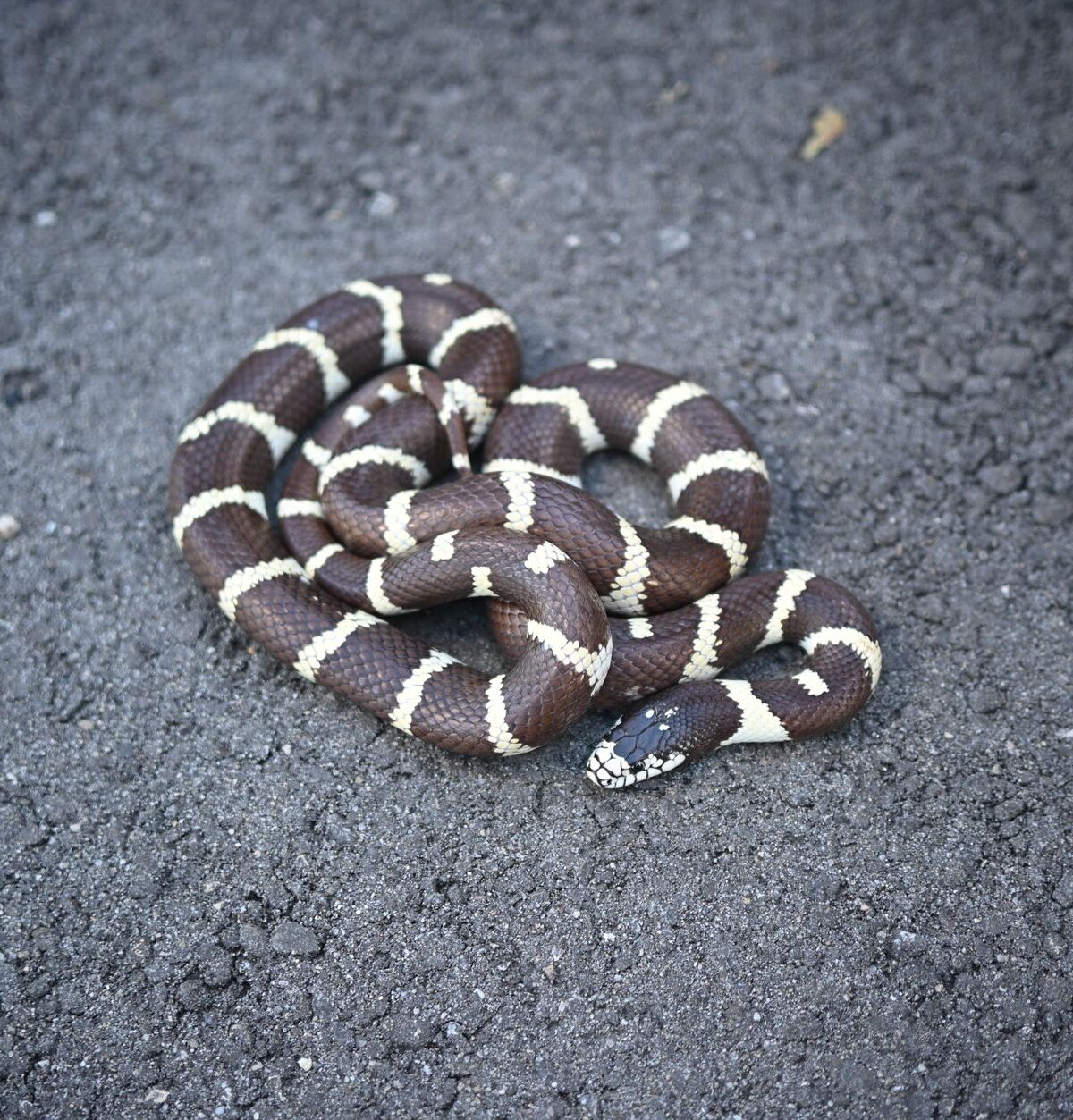
DESERT KINGSNAKE
Lampropeltis getula
DESCRIPTION
Desert Kingsnake (Lampropeltis getula) is commonly known as the California Kingsnake and the Common Kingsnake. This non-venomous snake is characterized by its striking coloration, typically featuring a pattern of black and yellow or white bands. They are known for their docile nature and adaptability, often found in a variety of habitats including deserts, grasslands, and urban areas.
FUN FACTS
- Desert Kingsnakes are known for their ability to consume other snakes, including rattlesnakes, without suffering from venomous bites
- This unique trait makes them an important part of the ecosystem as they help control the populations of potentially dangerous snakes
- | They are popular in the pet trade due to their striking appearance and docile nature, making them a favorite among reptile enthusiasts
- Their adaptability to various environments also contributes to their success in captivity
QUICK INFO
Lifespan15-20 years in the wild, up to 30 in captivity
Average Weight0.5-1.5 kg
Average Length1.2-1.8 m
Diet TypeCarnivore
Social Structuresolitary, typically found alone except during mating season
Activity PatternDiurnal
Breeding SeasonSpring (April-June)
- Habitat
- Desert Kingsnakes inhabit a range of environments, including arid deserts, scrublands, and grasslands. They are often found in areas with ample cover such as rocks, logs, and vegetation.
- Biomes
- Desert, Grassland
- Native Range
- The native range of the Desert Kingsnake extends across the southwestern United States and into northern Mexico.
- Continent
- North America
- Countries
- United States, Mexico
- Diet
- Desert Kingsnakes primarily feed on small mammals, birds, and other reptiles. They are known to consume other snakes, including venomous species, showcasing their predatory skills.
- Diet Type
- Carnivore
- Favorite Food
- small mammals, birds, other reptiles
- Social Structure
- solitary, typically found alone except during mating season
- Activity Pattern
- Diurnal
- Group Size
- 1
- Territorial
- 0
 VU
VU

0.5-1.5 kg
Weight
1.2-1.8 m
Length
- Coloration
- black and yellow or white bands
- Sexual Dimorphism
- males are generally smaller than females
- Lifespan
- 15-20 years in the wild, up to 30 in captivity
- Offspring per Birth
- 4-20
- Sexual Maturity
- 2-3 years
- Breeding Season
- Spring (April-June)
LC
Least Concern
IUCN Red List Status
- Population Status
- The population of Desert Kingsnakes is currently stable, with no significant declines reported.
- Wild Population Estimate
- unknown
- Population Trend
- Stable
- Endangered
- 0
- Threats
- Main threats include habitat destruction and road mortality. However, they are not currently facing significant threats to their overall population.
- Predators
- birds of prey, larger snakes, mammals such as raccoons and foxes
- Defense Mechanisms
- Desert Kingsnakes may mimic the coloration of venomous snakes as a defense mechanism, and they can also release a foul-smelling musk when threatened.
- Found in Zoos
- Common