


DESERT LOCUST
Schistocerca gregaria
DESCRIPTION
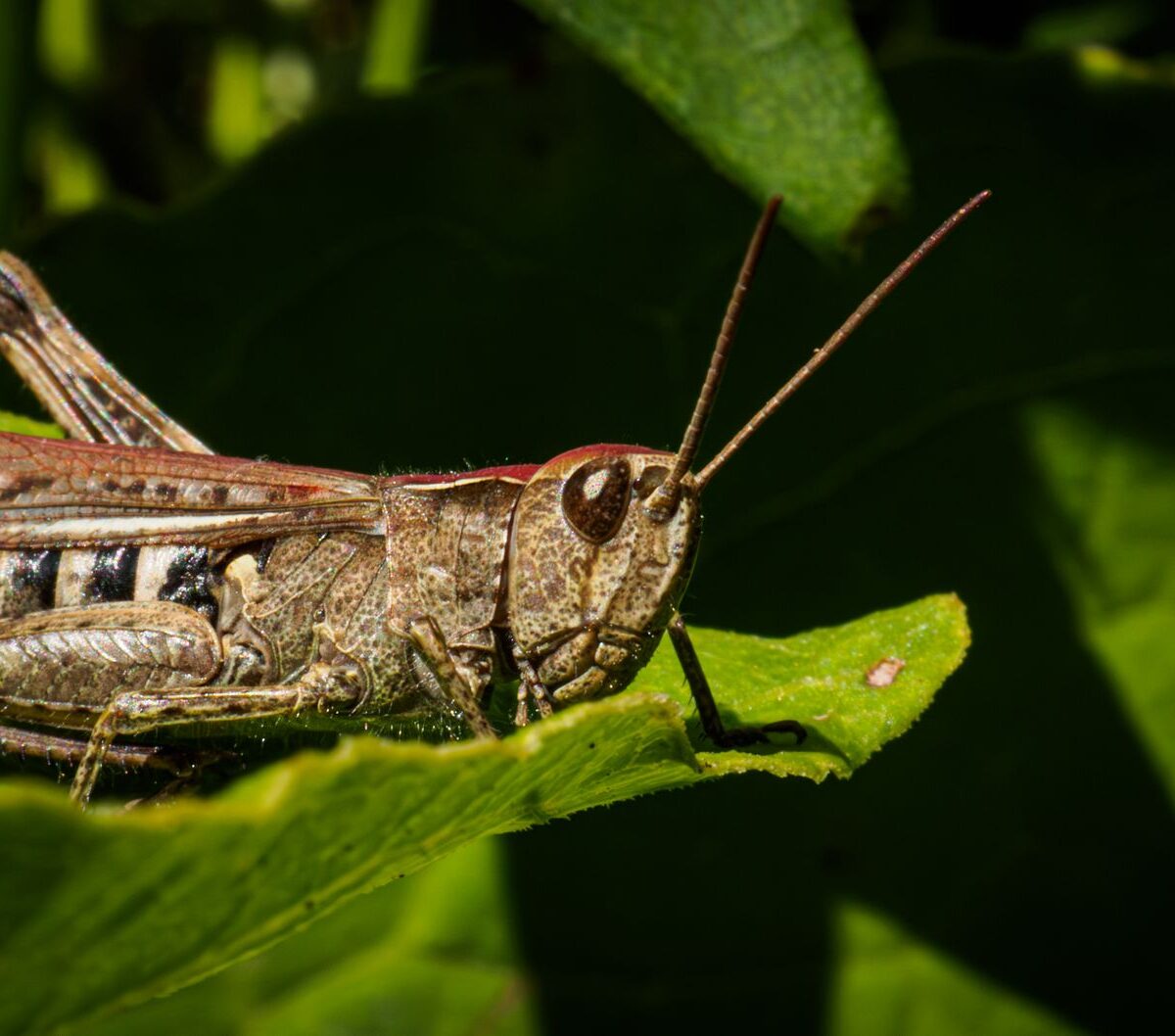
Desert Locust (Schistocerca gregaria) is a highly migratory species known for its swarming behavior, which can lead to devastating impacts on agriculture. They exhibit a remarkable transformation in behavior and morphology when in swarming phase, changing from solitary to gregarious forms. This species is characterized by its long hind legs, large wings, and a coloration that can vary from green to yellow to brown, depending on environmental conditions.
FUN FACTS
- Desert Locusts can travel up to 150 kilometers in a single day when in swarms, which allows them to cover vast distances in search of food
- Their swarming behavior is triggered by environmental factors such as rainfall and vegetation growth, leading to population explosions that can devastate crops across entire regions.|The transformation from solitary to gregarious phase is one of the most fascinating aspects of Desert Locusts, as it involves changes in behavior, color, and morphology
- This phenomenon is a response to increased population density and can lead to swarms that contain billions of individuals
QUICK INFO
Lifespan3-5 months in the wild, up to a year in captivity
Average Weight2-3 grams
Average Length7-8 cm
Diet TypeHerbivore
Social Structuregroup — they can form large swarms consisting of millions of individuals.
Activity PatternDiurnal
Breeding Seasonvaries by region, often during rainy seasons
- Habitat
- Desert Locusts inhabit arid and semi-arid regions, often found in grasslands and open areas where vegetation is available. They thrive in environments that can support their breeding and feeding needs.
- Biomes
- Desert, Grassland
- Native Range
- The native range of the Desert Locust includes parts of North Africa, the Middle East, and South Asia, extending to regions where suitable vegetation is present.
- Continent
- Africa, Asia
- Countries
- Algeria, Sudan, Egypt, Saudi Arabia, India
- Diet
- Desert Locusts primarily feed on a variety of grasses and other vegetation, consuming large quantities to sustain their energy during swarming. They are known to devastate crops and pastures, leading to significant agricultural damage.
- Diet Type
- Herbivore
- Favorite Food
- grasses, cereal crops
- Social Structure
- group — they can form large swarms consisting of millions of individuals.
- Activity Pattern
- Diurnal
- Group Size
- millions in swarms
- Territorial
- 0
 VU
VU

2-3 grams
Weight
7-8 cm
Length
- Coloration
- coloration varies from green to yellow to brown, often with dark markings.
- Sexual Dimorphism
- females are generally larger than males.
- Lifespan
- 3-5 months in the wild, up to a year in captivity
- Offspring per Birth
- up to 100 eggs
- Sexual Maturity
- about 3 months
- Breeding Season
- varies by region, often during rainy seasons
LC
Least Concern
IUCN Red List Status
- Population Status
- The population of Desert Locusts can fluctuate dramatically, especially during swarming events.
- Wild Population Estimate
- unknown, can reach millions during swarming
- Population Trend
- Increasing
- Endangered
- 0
- Threats
- Main threats include habitat loss due to agricultural expansion and climate change, which can alter their breeding and feeding grounds. Additionally, control measures such as pesticides can impact their populations.
- Predators
- birds, reptiles, and some mammals such as rodents.
- Defense Mechanisms
- Desert Locusts can change color and behavior to blend into their environment, and they can also produce toxic compounds when threatened.
- Found in Zoos
- Rare