


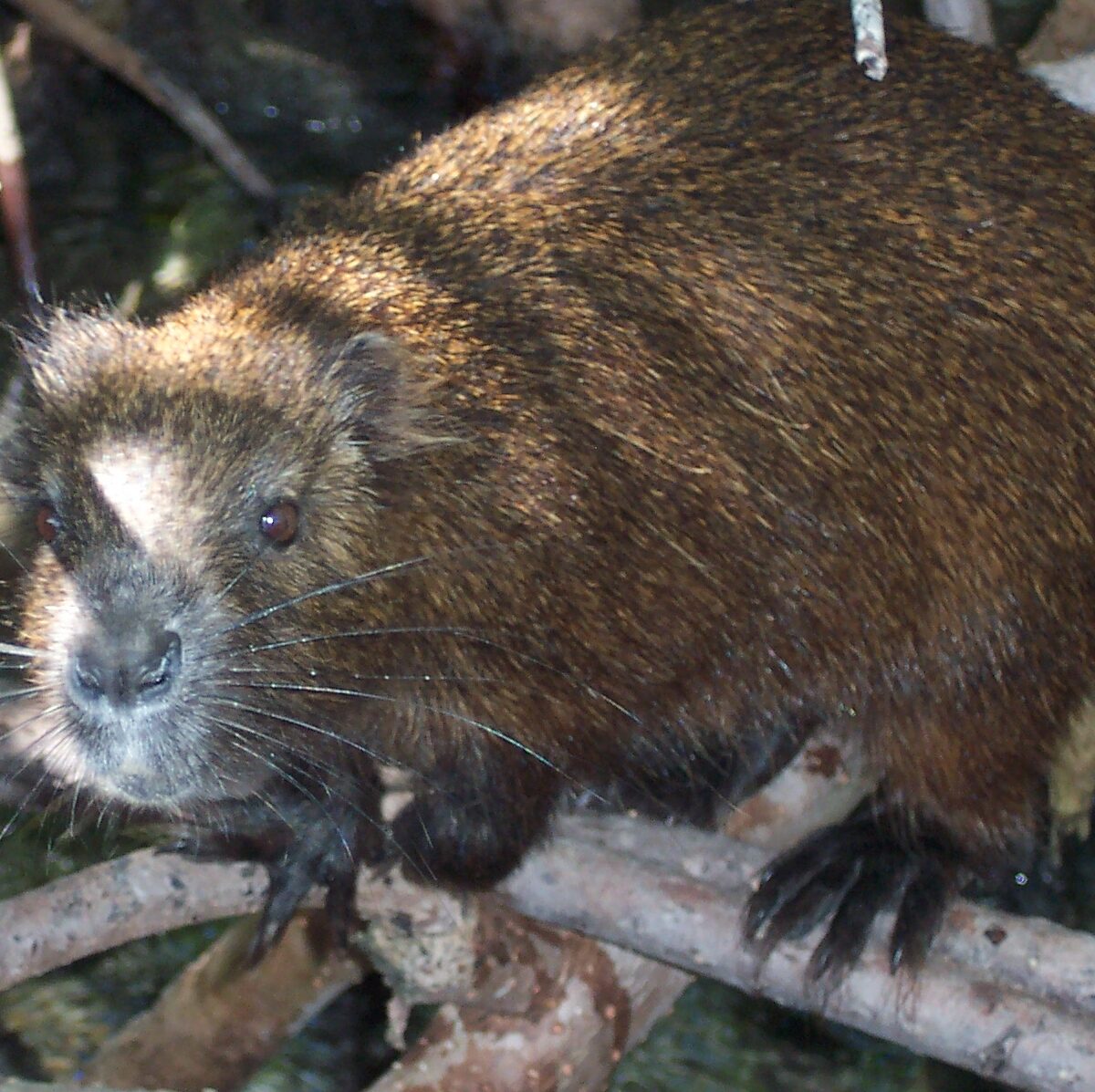
DESMAREST'S HUTIA
Capromys pilorides
DESCRIPTION
Desmarest's hutia (Capromys pilorides) is commonly known as the Cuban hutia and is a large rodent native to Cuba. It has a robust body, short legs, and a long, bushy tail, with fur that ranges from brown to grayish in color. These animals are primarily nocturnal and are known for their arboreal habits, often climbing trees to forage for food.
FUN FACTS
- Desmarest's hutia is one of the largest rodents in the Caribbean, showcasing a unique adaptation to its island habitat
- They have a remarkable ability to climb and navigate through trees, which helps them evade predators and access food sources
- | These animals are also known for their social grooming behaviors, which help strengthen bonds between individuals when they are found in small groups
- Their gentle demeanor makes them a favorite among zoo visitors, although they are not commonly seen in captivity
QUICK INFO
Lifespanup to 10 years in the wild, longer in captivity
Average Weight3-5 kg
Average Length50-70 cm
Diet TypeHerbivore
Social Structuresolitary, occasionally found in small groups
Activity PatternNocturnal
Breeding SeasonYear-round, with peaks in spring and summer
- Habitat
- They inhabit a variety of environments, including forests, shrublands, and coastal areas. Their preference is for dense vegetation where they can find ample food and shelter.
- Biomes
- Tropical Rainforest, Coastal Forest
- Native Range
- Endemic to Cuba, including the main island and some surrounding smaller islands.
- Continent
- North America
- Countries
- Cuba
- Diet
- Desmarest's hutia primarily feeds on leaves, fruits, and bark. They are herbivorous and play a significant role in their ecosystem by aiding in seed dispersal.
- Diet Type
- Herbivore
- Favorite Food
- leaves, fruits, bark
- Social Structure
- solitary, occasionally found in small groups
- Activity Pattern
- Nocturnal
- Group Size
- 1-5
- Territorial
- 0
 LC
LC
3-5 kg
Weight
50-70 cm
Length
- Coloration
- brown to grayish fur
- Lifespan
- up to 10 years in the wild, longer in captivity
- Gestation Period
- 110 days
- Offspring per Birth
- 1-3
- Sexual Maturity
- 6-12 months
- Breeding Season
- Year-round, with peaks in spring and summer
LC
Least Concern
IUCN Red List Status
- Population Status
- The population is currently stable, but habitat loss poses a potential threat.
- Wild Population Estimate
- unknown
- Population Trend
- Stable
- Endangered
- 0
- Threats
- Main threats include habitat destruction due to deforestation and human encroachment. Additionally, they are sometimes hunted for food.
- Predators
- Main predators include birds of prey and large snakes.
- Defense Mechanisms
- They rely on their ability to climb trees to escape predators and can also remain motionless to avoid detection.
- Found in Zoos
- Uncommon