


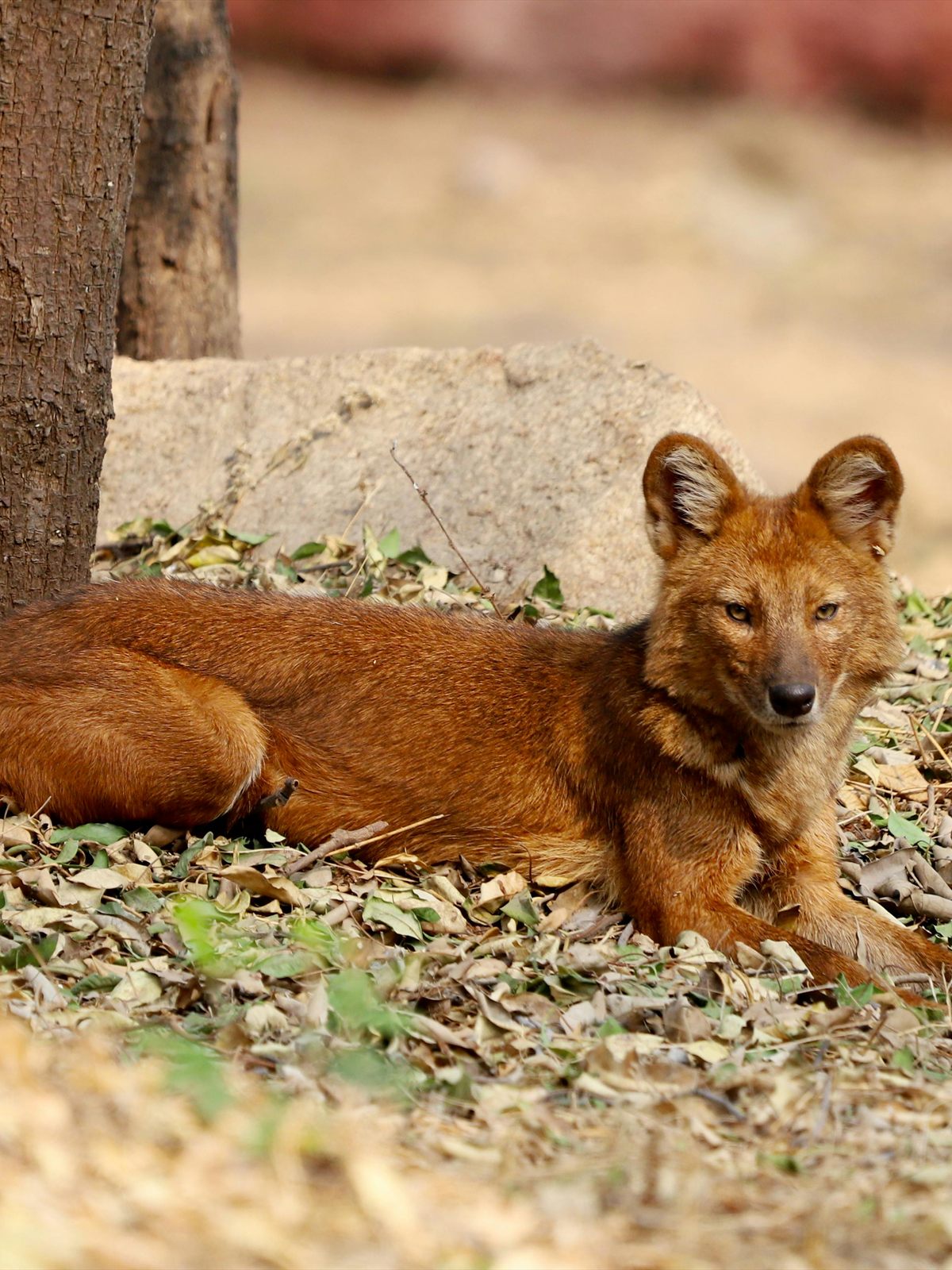
DHOLE
DESCRIPTION
Also called the Asiatic wild dog, Dhole is a highly social canid known for its unique vocalizations and pack behavior. They have a slender, agile body with a reddish-brown coat, a bushy tail, and a distinctive whistle-like call that sets them apart from other canids. Dholes are skilled hunters, often working in packs to take down prey, and they play a crucial role in their ecosystems as apex predators.
FUN FACTS
- Dholes are known for their unique vocalizations, which include a series of whistles and yips that help them communicate with each other during hunts
- Unlike many other canids, Dholes have a unique hunting strategy that involves chasing prey over long distances, often exhausting them before making the kill.|Dholes are highly adaptable and can thrive in a variety of habitats, from dense forests to open grasslands
- Their social structure is fascinating, as they often exhibit cooperative breeding, where non-breeding members of the pack help care for the young
QUICK INFO
Lifespan10-15 years in the wild, up to 16 years in captivi
Average Weight10-25 kg
Average Length75-110 cm
Diet TypeCarnivore
Social StructureGroup, living in packs that exhibit strong social hierarchies and cooperative behaviors.
Activity PatternDiurnal
Breeding SeasonWinter (December-February)
- Habitat
- Dholes inhabit a variety of environments, including forests, grasslands, and mountainous regions. They prefer areas with sufficient cover and access to water sources.
- Biomes
- Temperate Forest, Tropical Rainforest, Grassland
- Native Range
- Dholes are native to Asia, ranging from India to Southeast Asia and parts of China.
- Continent
- Asia
- Countries
- India, Nepal, Bhutan, Bangladesh, Myanmar, Thailand, Vietnam, Laos, Cambodia, China
- Diet
- Dholes primarily eat medium to large-sized ungulates, but they also consume smaller mammals and birds when necessary.
- Diet Type
- Carnivore
- Favorite Food
- Deer, wild boar
- Social Structure
- Group, living in packs that exhibit strong social hierarchies and cooperative behaviors.
- Activity Pattern
- Diurnal
- Group Size
- 5-12
- Territorial
- 1
 EN
EN
 VU
VU
10-25 kg
Weight
75-110 cm
Length
- Coloration
- Reddish-brown with a lighter underbelly and darker legs.
- Sexual Dimorphism
- Males are generally larger than females.
- Lifespan
- 10-15 years in the wild, up to 16 years in captivi
- Gestation Period
- 60-65 days
- Offspring per Birth
- 4-6
- Sexual Maturity
- 2-3 years
- Breeding Season
- Winter (December-February)
EN
Endangered
IUCN Red List Status
- Population Status
- Dhole populations are declining due to habitat loss and competition with other predators.
- Wild Population Estimate
- 6,000-10,000
- Population Trend
- Decreasing
- Endangered
- 1
- Threats
- The main threats to Dholes include habitat destruction, loss of prey, and competition with larger predators like tigers and wolves. Additionally, they are often persecuted by humans due to livestock predation.
- Predators
- Tigers, leopards, and humans are known to be the main threats to Dhole populations.
- Defense Mechanisms
- Dholes rely on their social structure and pack behavior for defense, often using vocalizations to communicate and coordinate during hunts.
- Found in Zoos
- Uncommon