


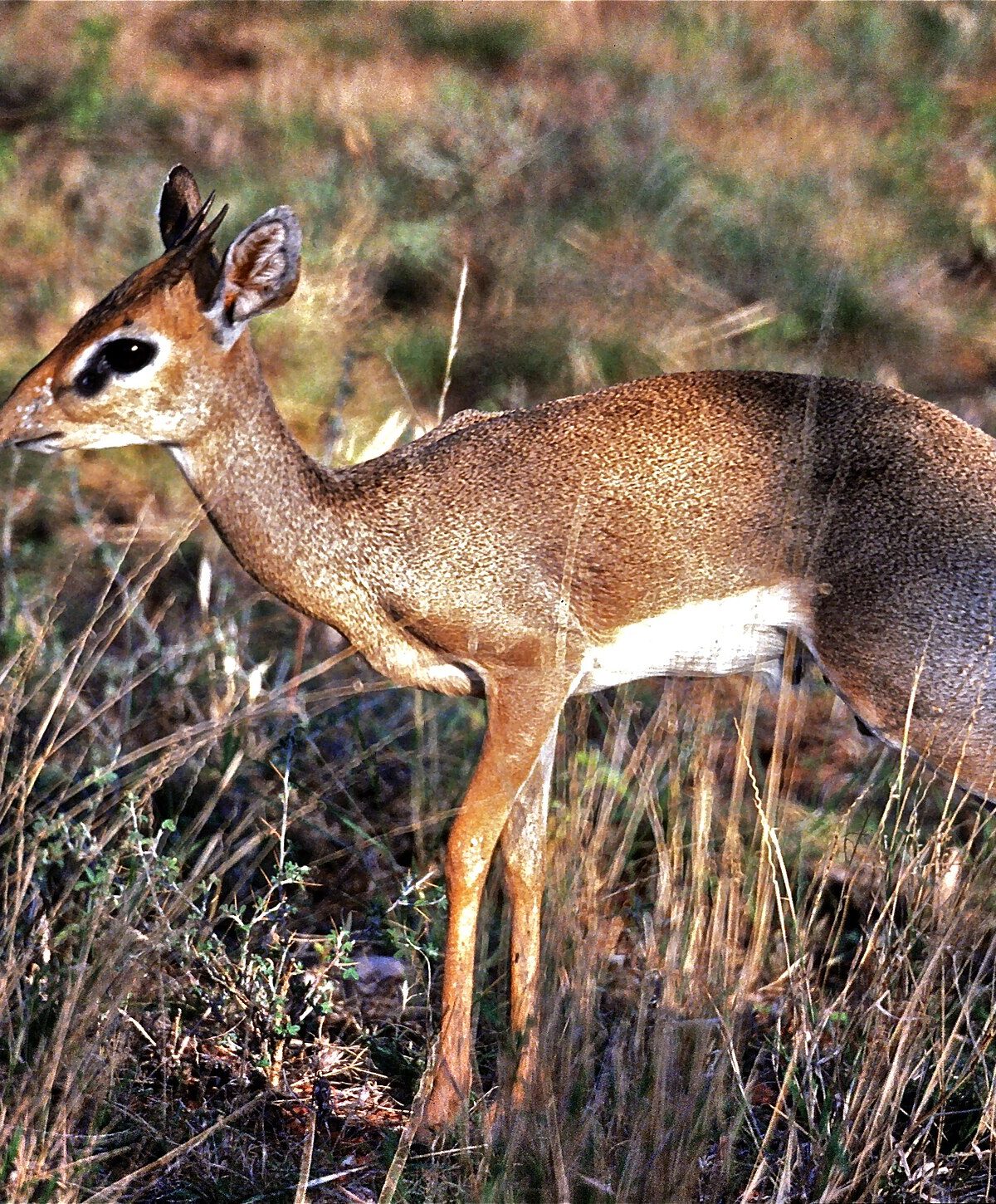
DIBATAG
Madoqua guentheri
DESCRIPTION
Dibatag (Madoqua guentheri) is a small antelope known for its slender body and long legs, which help it navigate its arid habitat. It has a distinctive coat that is reddish-brown with white markings, particularly around the eyes and mouth, giving it a unique appearance. Dibatags are primarily solitary or found in pairs, and they are known for their agility and speed, which they use to evade predators in their natural environment.
FUN FACTS
- Dibatags have a unique way of communicating with each other through a series of whistles and snorts, which can be heard over long distances
- They are also known for their remarkable ability to leap over obstacles, making them agile and quick in their natural habitat.|Despite their small size, Dibatags can reach speeds of up to 30 km/h when fleeing from predators, showcasing their impressive agility and endurance
QUICK INFO
Lifespan10-12 years in the wild, up to 15 years in captivi
Average Weight6-10 kg
Average Length70-90 cm
Diet TypeHerbivore
Social StructureDibatags are typically solitary or found in pairs, with males often establishing territories.
Activity PatternCrepuscular
Breeding SeasonYear-round, with peaks depending on local conditions
- Habitat
- Dibatags inhabit dry, bushy areas and savannas, often favoring regions with dense vegetation for cover. They are well-adapted to arid environments, where they can find sufficient food and water.
- Biomes
- Savanna, Dry Forest
- Native Range
- Dibatags are native to the eastern and southern regions of Africa, particularly in countries like Somalia, Kenya, and Tanzania.
- Continent
- Africa
- Countries
- Somalia, Kenya, Tanzania
- Diet
- Dibatags are herbivores that primarily feed on leaves, shoots, and fruits. They are known to browse on a variety of vegetation, adapting their diet based on seasonal availability.
- Diet Type
- Herbivore
- Favorite Food
- leaves, shoots, fruits
- Social Structure
- Dibatags are typically solitary or found in pairs, with males often establishing territories.
- Activity Pattern
- Crepuscular
- Group Size
- 1-2
- Territorial
- 1
 LC
LC
 VU
VU
 LC
LC
6-10 kg
Weight
70-90 cm
Length
40-50 cm at shoulder
Height (Shoulder)
- Coloration
- reddish-brown with white markings
- Sexual Dimorphism
- Males are generally larger and have longer horns than females.
- Lifespan
- 10-12 years in the wild, up to 15 years in captivi
- Gestation Period
- 7 months
- Offspring per Birth
- 1
- Sexual Maturity
- 6-12 months
- Breeding Season
- Year-round, with peaks depending on local conditions
LC
Least Concern
IUCN Red List Status
- Population Status
- The population of Dibatags is currently stable, but they face threats from habitat loss.
- Wild Population Estimate
- Unknown
- Population Trend
- Stable
- Endangered
- 0
- Threats
- Main threats include habitat destruction due to agriculture and human encroachment. Additionally, hunting poses a risk in some areas.
- Predators
- Lions, leopards, hyenas, and large birds of prey are known to prey on Dibatags.
- Defense Mechanisms
- Dibatags rely on their speed and agility to escape predators, often using dense vegetation for cover.
- Found in Zoos
- Uncommon