


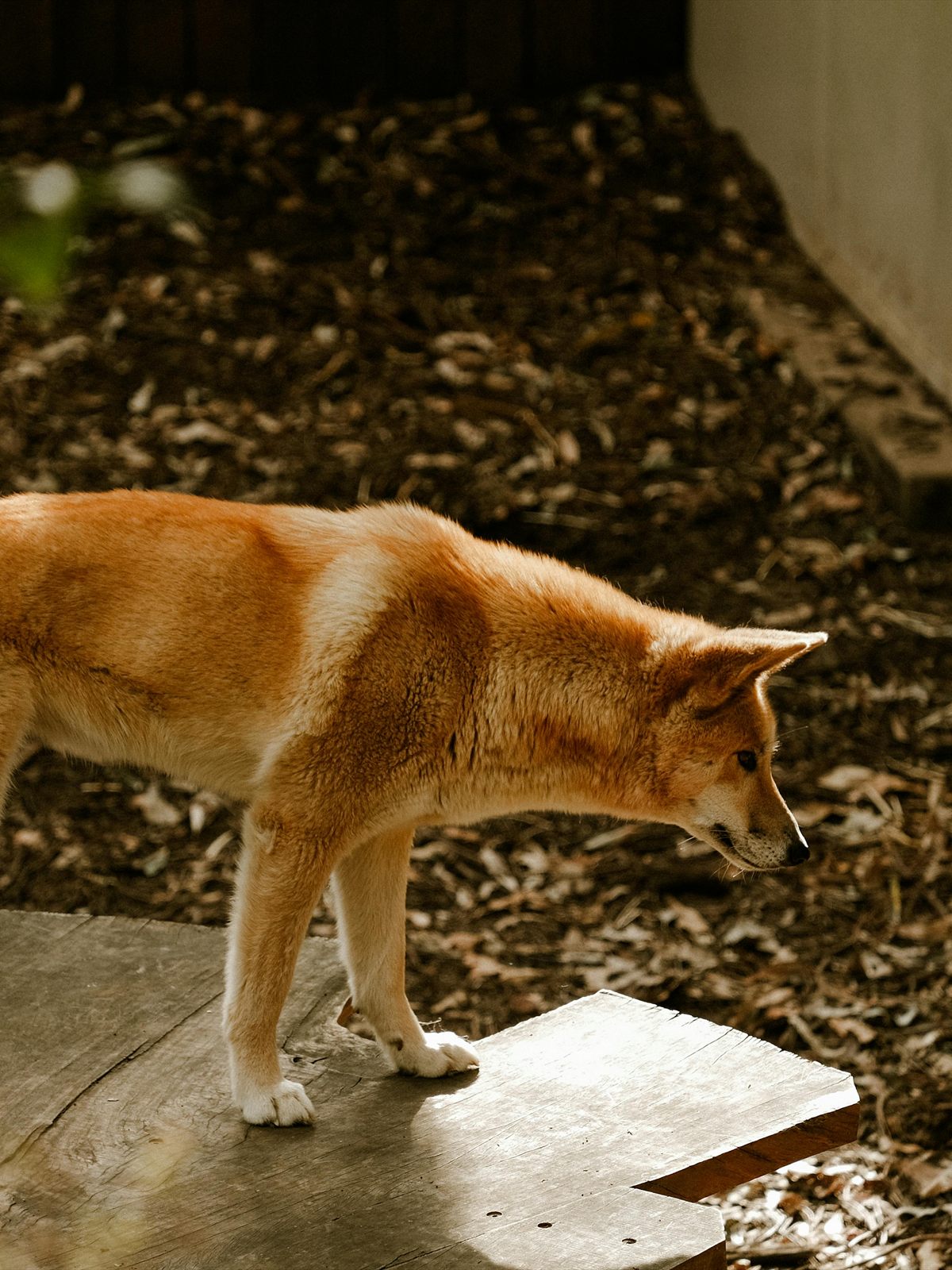
DINGO
DESCRIPTION
Also called the Australian Dingo, Dingo is a wild dog native to Australia. It has a lean, muscular build with a short coat that can vary in color from sandy yellow to reddish-brown, often with white markings. Dingoes are highly adaptable and are known for their intelligence and social behavior, often forming packs that work together to hunt and raise their young.
FUN FACTS
- Dingoes are believed to have arrived in Australia around 4,000 years ago, likely brought by seafaring people from Southeast Asia
- They are considered a vital part of the Australian ecosystem, helping to control populations of other species
- | Unlike domestic dogs, Dingoes have retained many of their wild instincts and behaviors, making them more independent and less reliant on humans
- They are known for their unique vocalizations, which can include howls, barks, and growls, used for communication within their packs
QUICK INFO
Lifespan10-15 years in the wild, up to 20 years in captivi
Average Weight12-20 kg
Average Length0.9-1.2 m
Diet TypeCarnivore
Social StructureDingoes typically live in small family groups or packs, which can consist of a breeding pair and their offspring.
Activity PatternNocturnal
Breeding SeasonWinter (June-August)
- Habitat
- Dingoes inhabit a range of environments, including deserts, grasslands, and forests. They are highly adaptable and can thrive in both remote wilderness areas and near human settlements.
- Biomes
- Desert, Grassland, Forest
- Native Range
- Dingoes are native to Australia, with populations found across the continent.
- Continent
- Australia
- Countries
- Australia
- Diet
- Dingoes primarily eat meat, hunting a variety of prey including kangaroos, rabbits, and birds. They are opportunistic feeders and will scavenge when necessary.
- Diet Type
- Carnivore
- Favorite Food
- kangaroos, rabbits, birds
- Social Structure
- Dingoes typically live in small family groups or packs, which can consist of a breeding pair and their offspring.
- Activity Pattern
- Nocturnal
- Group Size
- 2-10
- Territorial
- 1
 VU
VU
12-20 kg
Weight
0.9-1.2 m
Length
0.5-0.6 m at shoulder
Height (Shoulder)
- Coloration
- short coat, varies from sandy yellow to reddish-brown
- Sexual Dimorphism
- males are generally larger than females
- Lifespan
- 10-15 years in the wild, up to 20 years in captivi
- Gestation Period
- 63 days
- Offspring per Birth
- 1-8
- Sexual Maturity
- 1-2 years
- Breeding Season
- Winter (June-August)
LC
Least Concern
IUCN Red List Status
- Population Status
- Dingo populations are considered stable in some areas, but they face threats from habitat loss and hybridization with domestic dogs.
- Wild Population Estimate
- 100,000+
- Population Trend
- Stable
- Endangered
- 0
- Threats
- Main threats to Dingoes include habitat destruction, hybridization with domestic dogs, and persecution by humans. These factors have led to a decline in some local populations.
- Predators
- Humans, large birds of prey, and occasionally other large carnivores.
- Defense Mechanisms
- Dingoes use their agility and speed to escape predators, and they can also be quite vocal to warn off threats.
- Found in Zoos
- Uncommon