


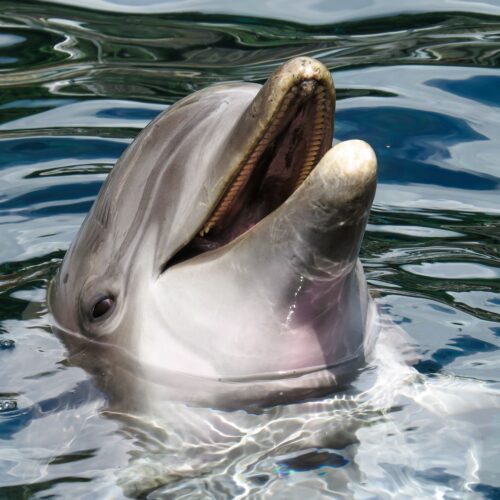
DOLPHIN
Delphinus delphis
DESCRIPTION
The common dolphin (Delphinus delphis) is a highly social marine mammal known for its acrobatic displays and intelligence. They are characterized by their slender bodies and distinctive hourglass pattern on their sides.
FUN FACTS
- Common dolphins can swim at speeds of up to 60 km/h | They are known to engage in playful behaviors such as surfing on waves | Their social structures can include complex communication and cooperation
QUICK INFO
Lifespan20-25 years in the wild, up to 30 in captivity
Average Weight70-110 kg
Average Length2-2.5 m
Diet TypePiscivore
Social Structuregroup — they live in pods that can vary in size and composition.
Activity PatternDiurnal
Breeding SeasonYear-round, with peaks depending on the region
- Habitat
- Common dolphins inhabit warm and temperate seas, often found in deep offshore waters. They prefer areas with abundant fish populations and are frequently seen near the surface.
- Biomes
- Marine
- Native Range
- They are found in oceans worldwide, particularly in the Atlantic and Pacific Oceans.
- Continent
- North America, South America, Europe, Africa, Asia, Australia
- Countries
- USA, Mexico, Brazil, Spain, South Africa, Australia
- Diet
- Common dolphins primarily feed on small fish and squid. They are known to hunt in groups, using cooperative strategies to herd their prey.
- Diet Type
- Piscivore
- Favorite Food
- small fish, squid
- Social Structure
- group — they live in pods that can vary in size and composition.
- Activity Pattern
- Diurnal
- Group Size
- 5-1000
- Territorial
- 0
 VU
VU
 LC
LC
70-110 kg
Weight
2-2.5 m
Length
- Coloration
- They have a distinctive coloration with a dark gray back and lighter sides, often with a yellowish or white hourglass pattern.
- Sexual Dimorphism
- Males are generally larger than females.
- Lifespan
- 20-25 years in the wild, up to 30 in captivity
- Gestation Period
- 11 months
- Offspring per Birth
- 1
- Sexual Maturity
- 3-5 years
- Breeding Season
- Year-round, with peaks depending on the region
LC
Least Concern
IUCN Red List Status
- Population Status
- The population is considered stable in many areas, but local declines have been observed.
- Wild Population Estimate
- 1,000,000+
- Population Trend
- Stable
- Endangered
- 0
- Threats
- Main threats include habitat degradation, fishing bycatch, and pollution. Climate change also poses a risk to their food sources.
- Predators
- Orcas and large sharks
- Defense Mechanisms
- They use speed and agility to evade predators, often leaping out of the water.
- Compatible Animals
- none
- Found in Zoos
- Common