


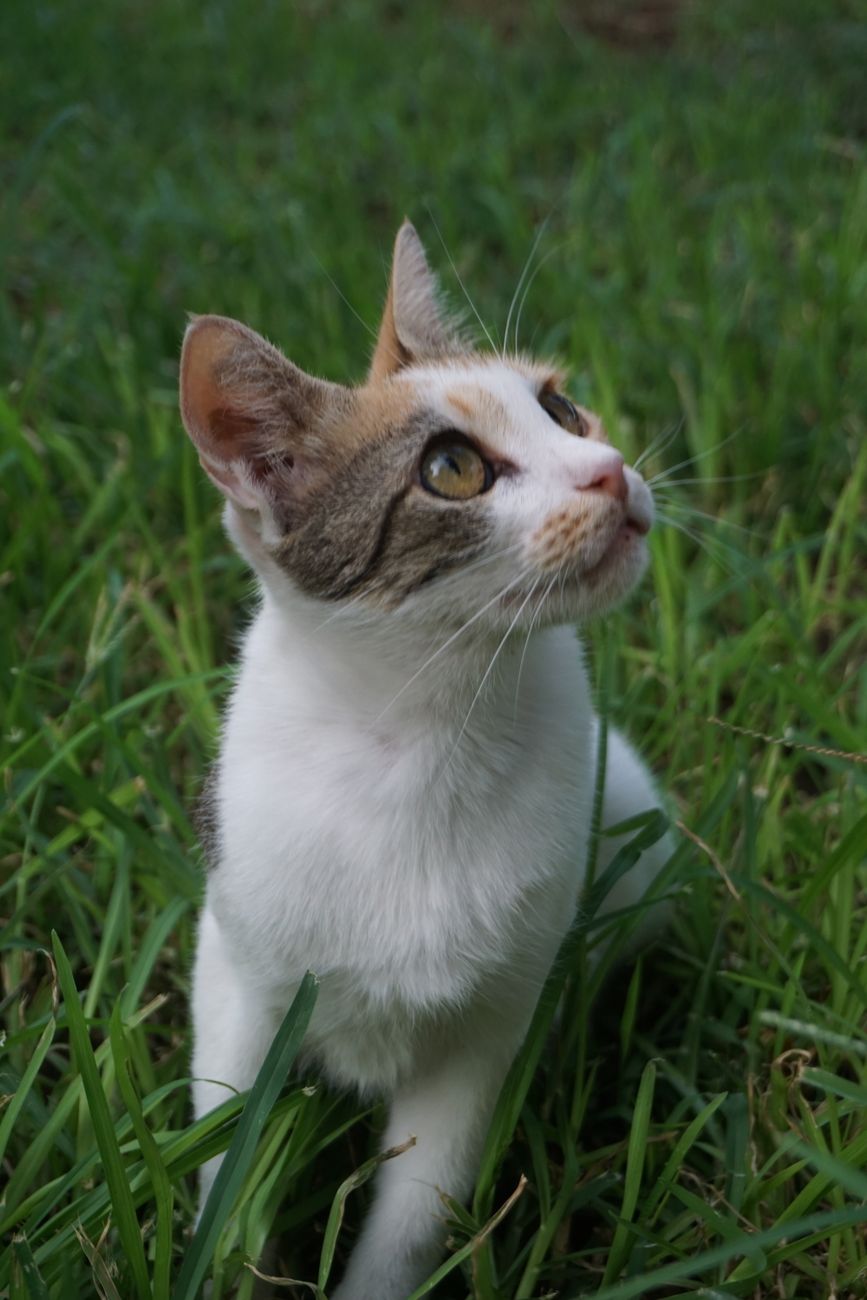
DOMESTIC CAT
Felis catus
DESCRIPTION
Domestic Cat (Felis catus) is commonly known as the House Cat or simply Feline. This small, carnivorous mammal is characterized by its agile body, sharp retractable claws, and keen senses, particularly its excellent night vision. They exhibit a wide range of coat colors and patterns, and their behavior is often playful and curious, making them popular companions in households around the world.
FUN FACTS
- Cats have a unique grooming behavior that not only keeps their fur clean but also helps regulate their body temperature
- They have a special collarbone that allows them to always land on their feet when they fall, a trait known as the righting reflex.| Domestic Cats can make over 100 different sounds, while dogs can only make about 10
- This vocal range allows them to communicate a variety of emotions and needs to their human companions
QUICK INFO
Lifespan12-15 years in the wild, up to 20 years in captivi
Average Weight3.5-4.5 kg
Average Length0.5-1.0 m
Diet TypeCarnivore
Social Structuresolitary, though they can form loose colonies in feral situations
Activity PatternNocturnal
Breeding SeasonSpring (February-May)
- Habitat
- Domestic Cats are highly adaptable and can thrive in various environments, including urban, suburban, and rural areas. They often prefer sheltered spaces where they can hide and stalk prey.
- Biomes
- Urban, Grassland, Forest
- Native Range
- Originally domesticated in the Near East, Domestic Cats are now found worldwide due to their close association with humans.
- Continent
- All
- Countries
- Worldwide
- Diet
- Domestic Cats primarily eat meat, as they are obligate carnivores. Their diet consists mainly of small mammals, birds, and occasionally insects.
- Diet Type
- Carnivore
- Favorite Food
- small mammals, birds
- Social Structure
- solitary, though they can form loose colonies in feral situations
- Activity Pattern
- Nocturnal
- Group Size
- 1-5
- Territorial
- 1

 VU
VU
3.5-4.5 kg
Weight
0.5-1.0 m
Length
0.25-0.3 m at shoulder
Height (Shoulder)
- Coloration
- varies widely, including solid, tabby, calico, and more
- Sexual Dimorphism
- males are generally larger than females
- Lifespan
- 12-15 years in the wild, up to 20 years in captivi
- Gestation Period
- 65-67 days
- Offspring per Birth
- 1-8
- Sexual Maturity
- 5-12 months
- Breeding Season
- Spring (February-May)
LC
Least Concern
IUCN Red List Status
- Population Status
- Domestic Cats are one of the most popular pets globally, with millions kept as companions.
- Wild Population Estimate
- unknown, as they are domesticated
- Population Trend
- Stable
- Endangered
- 0
- Threats
- While not endangered, Domestic Cats face threats from overpopulation and the impact of feral populations on local wildlife. They can also be affected by diseases and accidents.
- Predators
- Coyotes, Birds of Prey, Larger Mammals
- Defense Mechanisms
- Cats use their agility, sharp claws, and teeth to defend themselves, along with their ability to hide and escape quickly.
- Compatible Animals
- Dogs, Rabbits, Guinea Pigs
- Found in Zoos
- Rare