


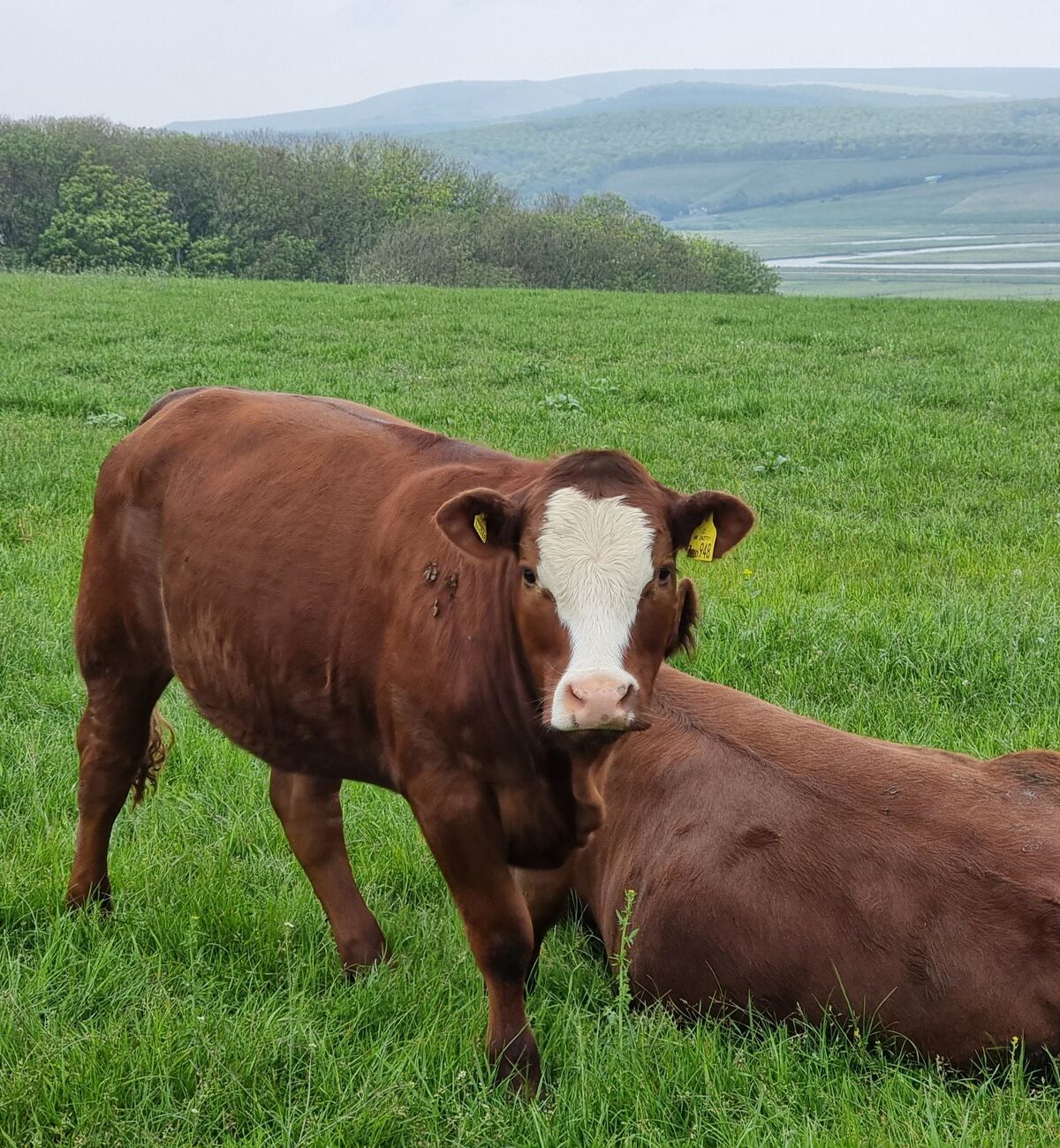
DOMESTIC COW
DESCRIPTION
Domestic Cow, also known as Cattle, is a large herbivorous mammal characterized by its sturdy body, cloven hooves, and prominent horns, which can vary in size and shape depending on the breed. They exhibit a range of colors including black, brown, white, and combinations thereof, often with distinctive patterns. Social animals by nature, Domestic Cows are known for their gentle demeanor and strong herd instincts, often forming close bonds with other members of their group.
FUN FACTS
- Cows have a highly developed sense of smell and can detect odors up to six miles away, which helps them find food and avoid predators
- | Cows are known to have complex social structures and can form strong friendships with other cows, often spending time grooming and resting together
QUICK INFO
Lifespan15-20 years in the wild, up to 25 years in captivi
Average Weight450-1,000 kg
Average Length2.5-3.5 m
Diet TypeHerbivore
Social Structuregroup — they live in herds that can range from a few individuals to several hundred.
Activity PatternDiurnal
Breeding SeasonYear-round, with peaks depending on the region
- Habitat
- Domestic Cows are typically found in pastures, grasslands, and farms where they are raised for milk or meat production. They thrive in environments that provide ample grazing opportunities and shelter from extreme weather.
- Biomes
- Grassland, Savanna, Temperate Forest
- Native Range
- Originally domesticated from wild ancestors in the regions of the Middle East and South Asia, Domestic Cows are now found worldwide due to their importance in agriculture.
- Continent
- Asia, Europe, North America, South America, Africa, Australia
- Countries
- United States, India, Brazil, China, Russia
- Diet
- Domestic Cows primarily graze on grass and other vegetation, utilizing their specialized digestive system to break down fibrous plant material. They may also consume hay, silage, and grains depending on availability and farming practices.
- Diet Type
- Herbivore
- Favorite Food
- Grass, Hay
- Social Structure
- group — they live in herds that can range from a few individuals to several hundred.
- Activity Pattern
- Diurnal
- Group Size
- 10-100
- Territorial
- 0
450-1,000 kg
Weight
2.5-3.5 m
Length
1.2-1.5 m at shoulder
Height (Shoulder)
- Coloration
- varies widely, including solid colors and patterns of black, white, and brown
- Sexual Dimorphism
- males are generally larger and more muscular than females
- Lifespan
- 15-20 years in the wild, up to 25 years in captivi
- Gestation Period
- 280 days
- Offspring per Birth
- 1
- Sexual Maturity
- 1-2 years
- Breeding Season
- Year-round, with peaks depending on the region
LC
Least Concern
IUCN Red List Status
- Population Status
- Domestic Cows are one of the most populous livestock species globally, with billions raised for agricultural purposes.
- Population Trend
- Stable
- Endangered
- 0
- Threats
- While not endangered, Domestic Cows face threats from habitat loss and changes in agricultural practices. Additionally, they are affected by diseases and the impacts of climate change.
- Predators
- Humans are the primary threat, but in some regions, large predators like wolves and big cats may pose a risk to calves.
- Defense Mechanisms
- Cows may use their size and strength to defend themselves, and they can also run away from threats.
- Compatible Animals
- Sheep, Goats, Horses
- Found in Zoos
- Common