


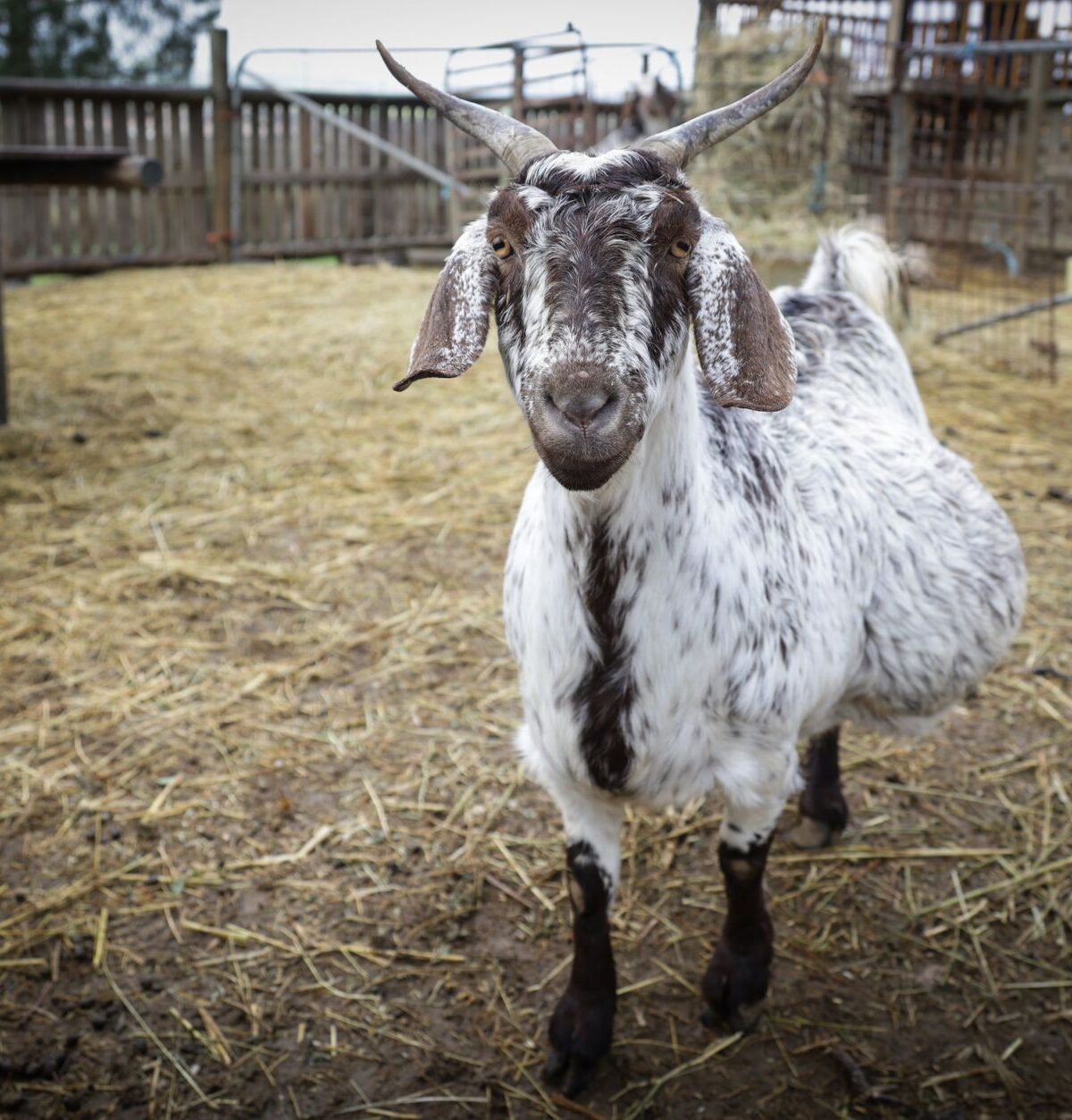
DOMESTIC GOAT
Capra hircus
DESCRIPTION
Domestic Goat, also known simply as Goat, is a domesticated subspecies of the wild goat. They are known for their distinctive beards, curved horns, and a variety of coat colors and patterns. These animals are highly social and intelligent, often forming strong bonds with their herd members and displaying playful behavior.
FUN FACTS
- Goats have a unique way of communicating with each other, using a variety of vocalizations that can indicate different emotions or alerts
- They are also known for their incredible climbing abilities, often seen scaling steep rocky terrains that would be challenging for other animals
QUICK INFO
Lifespan15-18 years in captivity, 10-12 years in the wild
Average Weight45-150 kg
Average Length1.2-1.5 m
Diet TypeHerbivore
Social Structuregroup — they typically live in herds, which can range from a few individuals to several dozen.
Activity PatternDiurnal
Breeding SeasonFall (September-November)
- Habitat
- Domestic Goats are adaptable and can thrive in a variety of habitats, including grasslands, forests, and mountainous regions. They are often found in areas where they can graze freely.
- Biomes
- Grassland, Forest, Mountain
- Native Range
- Originally from the mountainous regions of Central Asia, Domestic Goats have been spread worldwide due to domestication.
- Continent
- Asia, Europe, Africa, North America, South America, Australia
- Countries
- Worldwide
- Diet
- Domestic Goats are primarily herbivores, grazing on a variety of vegetation including grasses, shrubs, and leaves. They are known for their ability to browse on plants that many other livestock avoid.
- Diet Type
- Herbivore
- Favorite Food
- grasses, shrubs, leaves
- Social Structure
- group — they typically live in herds, which can range from a few individuals to several dozen.
- Activity Pattern
- Diurnal
- Group Size
- 5-30
- Territorial
- 0
 LC
LC
LC
LC
LC
LC
45-150 kg
Weight
1.2-1.5 m
Length
0.76-1.1 m at shoulder
Height (Shoulder)
- Coloration
- varies widely, including solid colors and patterns such as spots or patches
- Sexual Dimorphism
- males are generally larger and have more prominent horns than females
- Lifespan
- 15-18 years in captivity, 10-12 years in the wild
- Gestation Period
- 150 days
- Offspring per Birth
- 1-3
- Sexual Maturity
- 5-12 months
- Breeding Season
- Fall (September-November)
LC
Least Concern
IUCN Red List Status
- Population Status
- Domestic Goats are one of the most numerous livestock species worldwide, with a stable population.
- Population Trend
- Stable
- Endangered
- 0
- Threats
- While Domestic Goats themselves are not endangered, they can be affected by habitat loss and competition with wild species. Additionally, they can contribute to overgrazing in certain areas.
- Predators
- wolves, coyotes, mountain lions, domestic dogs
- Defense Mechanisms
- Goats can defend themselves by fleeing quickly and using their horns if threatened.
- Compatible Animals
- sheep, cattle, llamas
- Found in Zoos
- Common