


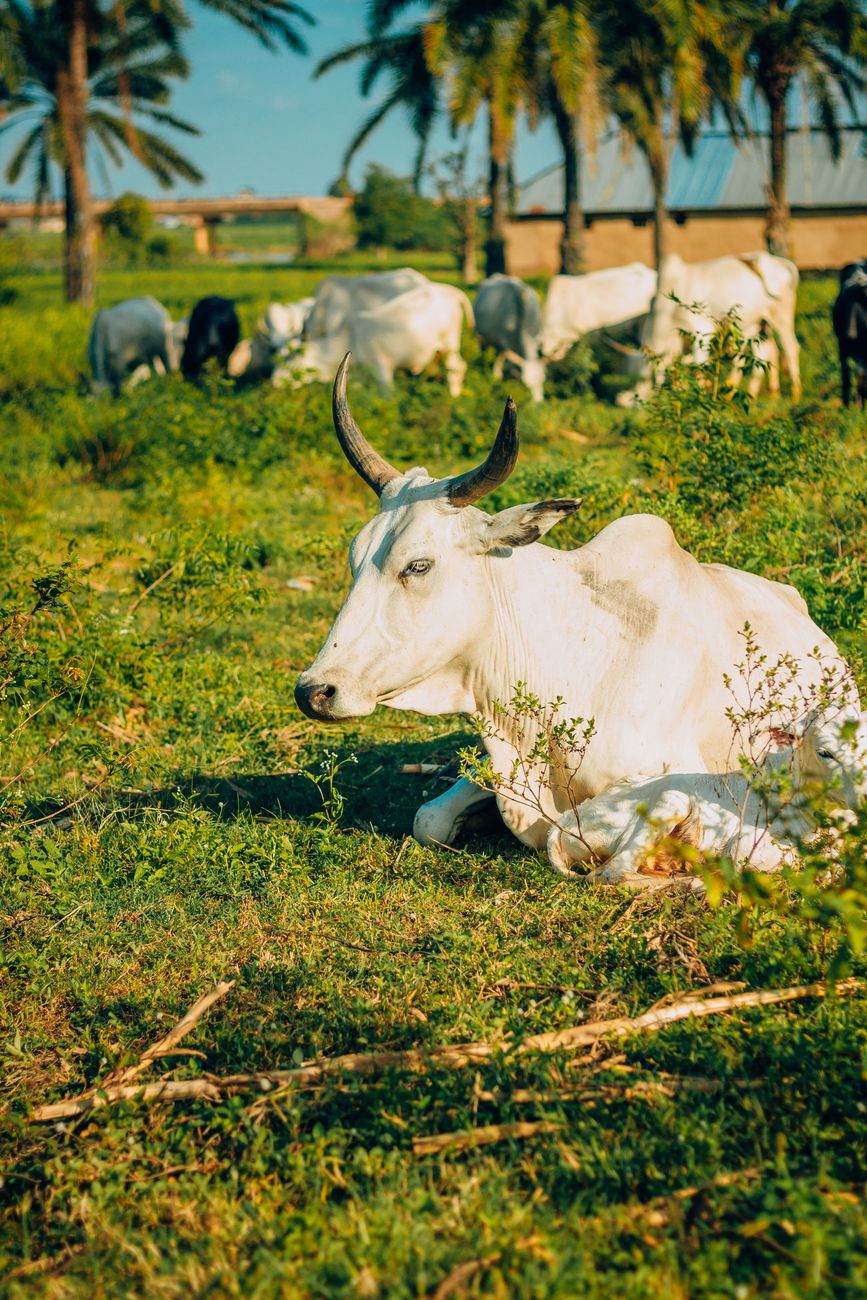
DOMESTIC ZEBU
Bos taurus indicus
DESCRIPTION
Domestic zebu (Bos taurus indicus) is commonly known as zebu and is characterized by its distinctive hump over the shoulders, large drooping ears, and a long, slender body. These cattle are well-adapted to hot climates, exhibiting behaviors such as seeking shade during the hottest parts of the day and being more active during cooler times. Ecologically, zebu play a significant role in agricultural systems, providing milk, meat, and labor in many tropical regions.
FUN FACTS
- Zebu are known for their ability to tolerate heat and are often used in tropical agriculture due to their resilience
- They can survive on lower-quality forage compared to other cattle breeds, making them valuable in regions with limited resources
- | The hump of the zebu is not just for show; it is made of muscle and fat, which helps the animal store energy and provides insulation against heat
- This unique adaptation allows zebu to thrive in hot climates where other cattle might struggle
QUICK INFO
Lifespan15-25 years in captivity
Average Weight250-400 kg
Average Length1.5-2.0 m
Diet TypeHerbivore
Social Structuregroup — typically found in herds that can vary in size.
Activity PatternDiurnal
Breeding SeasonYear-round in tropical climates
- Habitat
- Zebu are typically found in tropical and subtropical regions, often in pastures or grasslands where they can graze freely. They are also commonly kept in agricultural settings.
- Biomes
- Savanna, Grassland, Tropical Dry Forest
- Native Range
- Zebu are native to South Asia but have been introduced to many tropical regions around the world.
- Continent
- Asia, Africa
- Countries
- India, Bangladesh, Brazil, Sudan, Madagascar
- Diet
- Zebu are herbivores that primarily graze on grasses, leaves, and other vegetation. They are known to consume a variety of plant materials, adapting their diet based on availability.
- Diet Type
- Herbivore
- Favorite Food
- grasses, legumes
- Social Structure
- group — typically found in herds that can vary in size.
- Activity Pattern
- Diurnal
- Group Size
- 10-50
- Territorial
- 0
250-400 kg
Weight
1.5-2.0 m
Length
1.2-1.5 m at shoulder
Height (Shoulder)
- Coloration
- varies from white to gray, brown, or black, often with lighter markings
- Sexual Dimorphism
- males are generally larger and have more pronounced humps than females
- Lifespan
- 15-25 years in captivity
- Gestation Period
- 280 days
- Offspring per Birth
- 1
- Sexual Maturity
- 2-3 years
- Breeding Season
- Year-round in tropical climates
LC
Least Concern
IUCN Red List Status
- Population Status
- The population of domestic zebu is large and stable, with millions of individuals worldwide.
- Population Trend
- Stable
- Endangered
- 0
- Threats
- Main threats include habitat loss due to agricultural expansion and climate change. Additionally, zebu are sometimes affected by diseases that can impact their health and productivity.
- Predators
- Humans, large carnivores such as lions and tigers in some regions
- Defense Mechanisms
- Zebu can defend themselves by using their size and strength, and they may also exhibit aggressive behaviors when threatened.
- Compatible Animals
- goats, sheep, chickens
- Found in Zoos
- Uncommon