


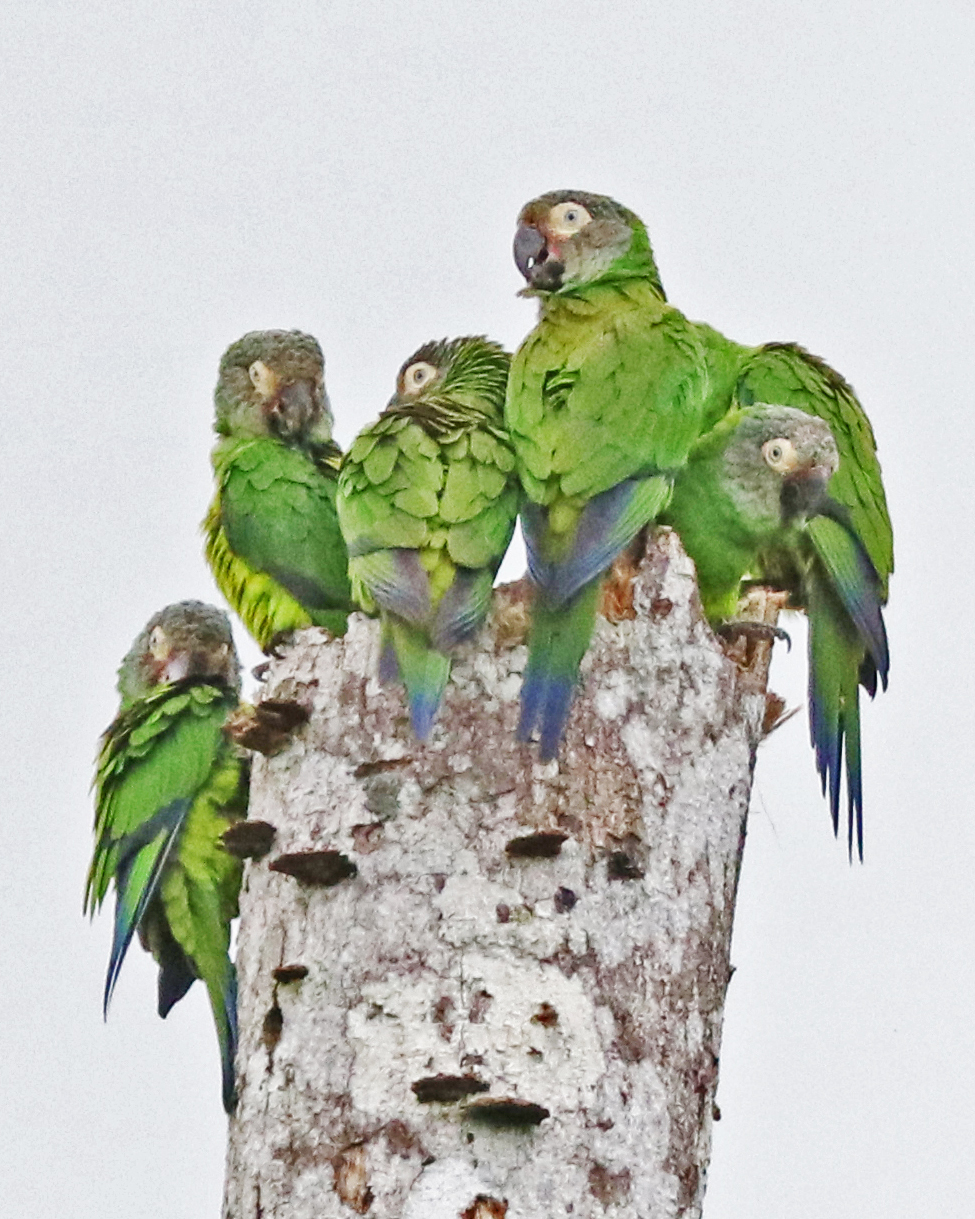
DUSKY-HEADED CONURE
Aratinga weddellii
DESCRIPTION
Dusky-headed Conure (Aratinga weddellii) is commonly known as Weddell's Conure and is characterized by its striking coloration and playful behavior. This medium-sized parrot features a predominantly green body with a distinctive dusky gray head, which gives it its name. They are social birds, often found in flocks, and are known for their vocalizations and acrobatic displays, making them popular pets.
FUN FACTS
- Dusky-headed Conures are known for their playful and curious nature, often engaging in acrobatic stunts and vocal mimicry
- They can learn to mimic human speech and sounds, making them entertaining companions for their owners.|These birds are highly intelligent and require mental stimulation to thrive
- In the wild, they are known to use tools, such as using sticks to extract seeds from hard-to-reach places
QUICK INFO
Lifespan20-30 years in captivity
Average Weight90-120 g
Average Length25-30 cm
Diet TypeHerbivore
Social Structuregroup — they are typically found in flocks of 10-30 individuals, which helps them in foraging and protection from predators.
Activity PatternDiurnal
Breeding SeasonSpring (March-May)
- Habitat
- These birds inhabit subtropical and tropical forests, as well as savannas and woodlands. They prefer areas with abundant food sources and nesting sites, often near water.
- Biomes
- Tropical Rainforest, Savanna
- Native Range
- Dusky-headed Conures are native to the eastern slopes of the Andes in South America, particularly in countries like Bolivia and parts of Brazil.
- Continent
- South America
- Countries
- Bolivia, Brazil
- Diet
- Dusky-headed Conures primarily feed on seeds, fruits, and nuts, foraging in trees and shrubs. They are known to enjoy a variety of foods, which contributes to their vibrant health and energy.
- Diet Type
- Herbivore
- Favorite Food
- seeds, fruits, nuts
- Social Structure
- group — they are typically found in flocks of 10-30 individuals, which helps them in foraging and protection from predators.
- Activity Pattern
- Diurnal
- Group Size
- 10-30
- Territorial
- 0
 CR
CR
 LC
LC
90-120 g
Weight
25-30 cm
Length
- Coloration
- primarily green with a dusky gray head and orange under the tail
- Sexual Dimorphism
- males and females are similar in appearance, making it difficult to distinguish between the sexes.
- Lifespan
- 20-30 years in captivity
- Offspring per Birth
- 3-5
- Sexual Maturity
- 2-3 years
- Breeding Season
- Spring (March-May)
LC
Least Concern
IUCN Red List Status
- Population Status
- The population of Dusky-headed Conures is currently stable, but habitat loss poses a potential threat.
- Wild Population Estimate
- unknown
- Population Trend
- Stable
- Endangered
- 0
- Threats
- Main threats include habitat destruction due to deforestation and the illegal pet trade. Conservation efforts are needed to ensure their habitats are protected.
- Predators
- hawks, snakes, and larger birds of prey are known to prey on Dusky-headed Conures.
- Defense Mechanisms
- They often rely on their social structure and flocking behavior to evade predators, using alarm calls to warn others.
- Compatible Animals
- other small parrots, finches
- Found in Zoos
- Common