


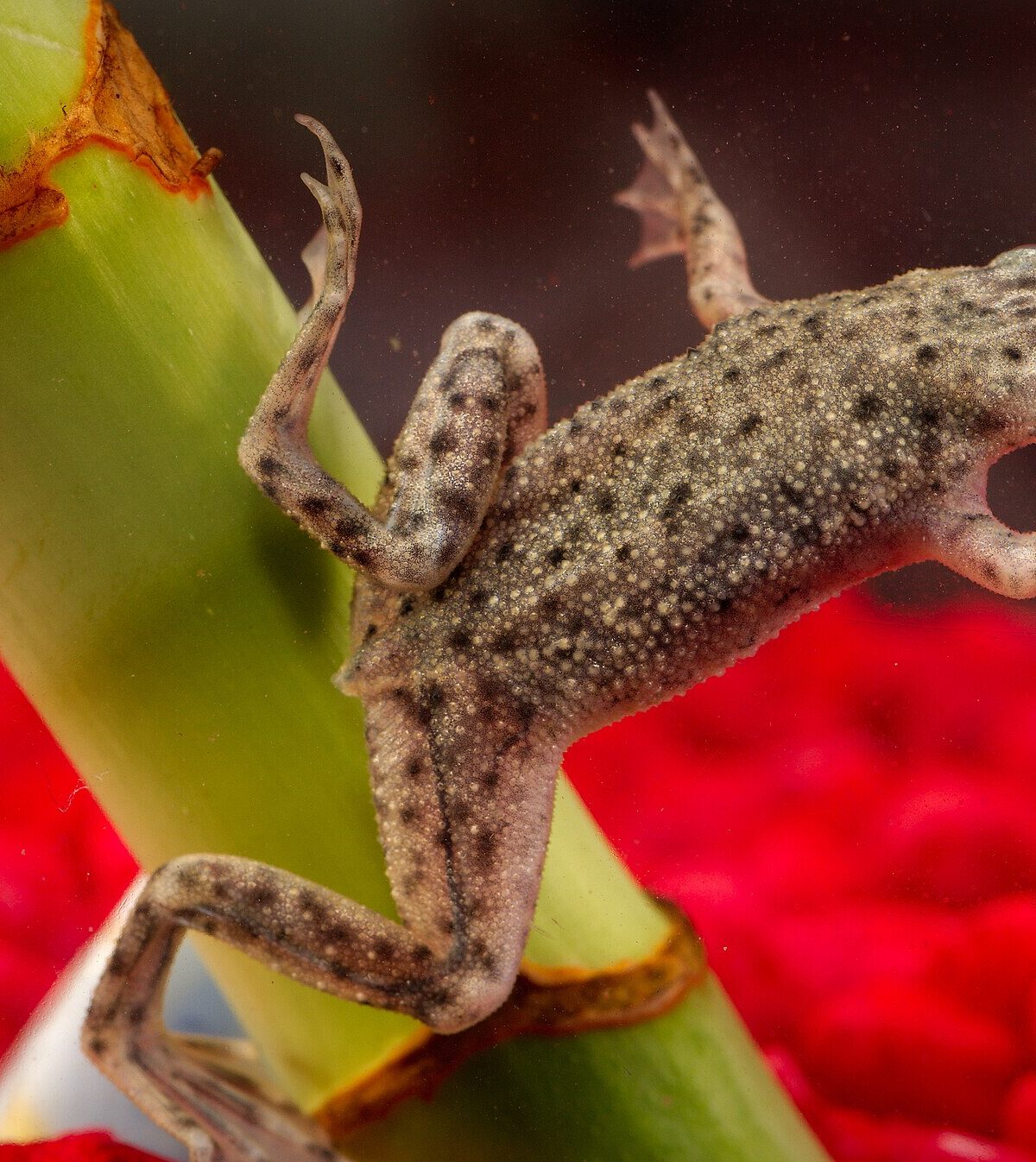
DWARF CLAWED FROG
Hymenochirus spp.
DESCRIPTION
Dwarf Clawed Frog (Hymenochirus spp.) is commonly known as the African Dwarf Frog and is characterized by its small size, typically reaching only 2-3 inches in length. These frogs have a smooth, olive-green to brownish coloration with lighter spots, which helps them blend into their aquatic environments. They are fully aquatic and exhibit a unique swimming style, using their webbed feet to propel themselves through the water, and are known for their playful behavior, often seen swimming in groups or exploring their surroundings.
FUN FACTS
- Dwarf Clawed Frogs are unique among frogs because they are fully aquatic and do not require land for any part of their life cycle
- They are also known for their ability to breathe through their skin, which allows them to absorb oxygen directly from the water, making them well-adapted to their aquatic habitats.| These frogs are often kept in aquariums due to their small size and interesting behaviors
- They are social animals that thrive in groups, and their playful nature makes them a favorite among aquarium enthusiasts
QUICK INFO
Lifespan5-10 years in captivity
Average Weight10-20 g
Average Length2-3 inches
Diet TypeCarnivore
Social StructureThey are generally found in small groups, often seen interacting with one another.
Activity PatternNocturnal
Breeding SeasonYear-round in suitable conditions
- Habitat
- These frogs inhabit slow-moving or still freshwater bodies such as ponds, swamps, and marshes. They prefer environments with plenty of vegetation and hiding spots to provide shelter and breeding sites.
- Biomes
- Freshwater, Wetlands
- Native Range
- Dwarf Clawed Frogs are native to the tropical regions of Africa, particularly in countries around the Congo River basin.
- Continent
- Africa
- Countries
- Democratic Republic of the Congo, Republic of the Congo, Cameroon, Gabon
- Diet
- Dwarf Clawed Frogs primarily feed on small invertebrates and aquatic organisms. They are known to consume a variety of foods, including bloodworms, brine shrimp, and other small aquatic creatures.
- Diet Type
- Carnivore
- Favorite Food
- small invertebrates, bloodworms
- Social Structure
- They are generally found in small groups, often seen interacting with one another.
- Activity Pattern
- Nocturnal
- Group Size
- 2-10
- Territorial
- 0
 LC
LC
 VU
VU
10-20 g
Weight
2-3 inches
Length
- Coloration
- Olive-green to brownish with lighter spots
- Sexual Dimorphism
- Males are typically smaller and have more pronounced vocal sacs than females.
- Lifespan
- 5-10 years in captivity
- Offspring per Birth
- 100-200 eggs
- Sexual Maturity
- 6-12 months
- Breeding Season
- Year-round in suitable conditions
LC
Least Concern
IUCN Red List Status
- Population Status
- The population is currently stable, but habitat destruction poses a potential threat.
- Population Trend
- Stable
- Endangered
- 0
- Threats
- Main threats include habitat loss due to pollution and urbanization. Additionally, they are sometimes collected for the pet trade.
- Predators
- Fish, birds, and larger amphibians are known predators of Dwarf Clawed Frogs.
- Defense Mechanisms
- They can use their agility in water to evade predators and often hide among vegetation.
- Compatible Animals
- Small fish, other small amphibians
- Found in Zoos
- Common