


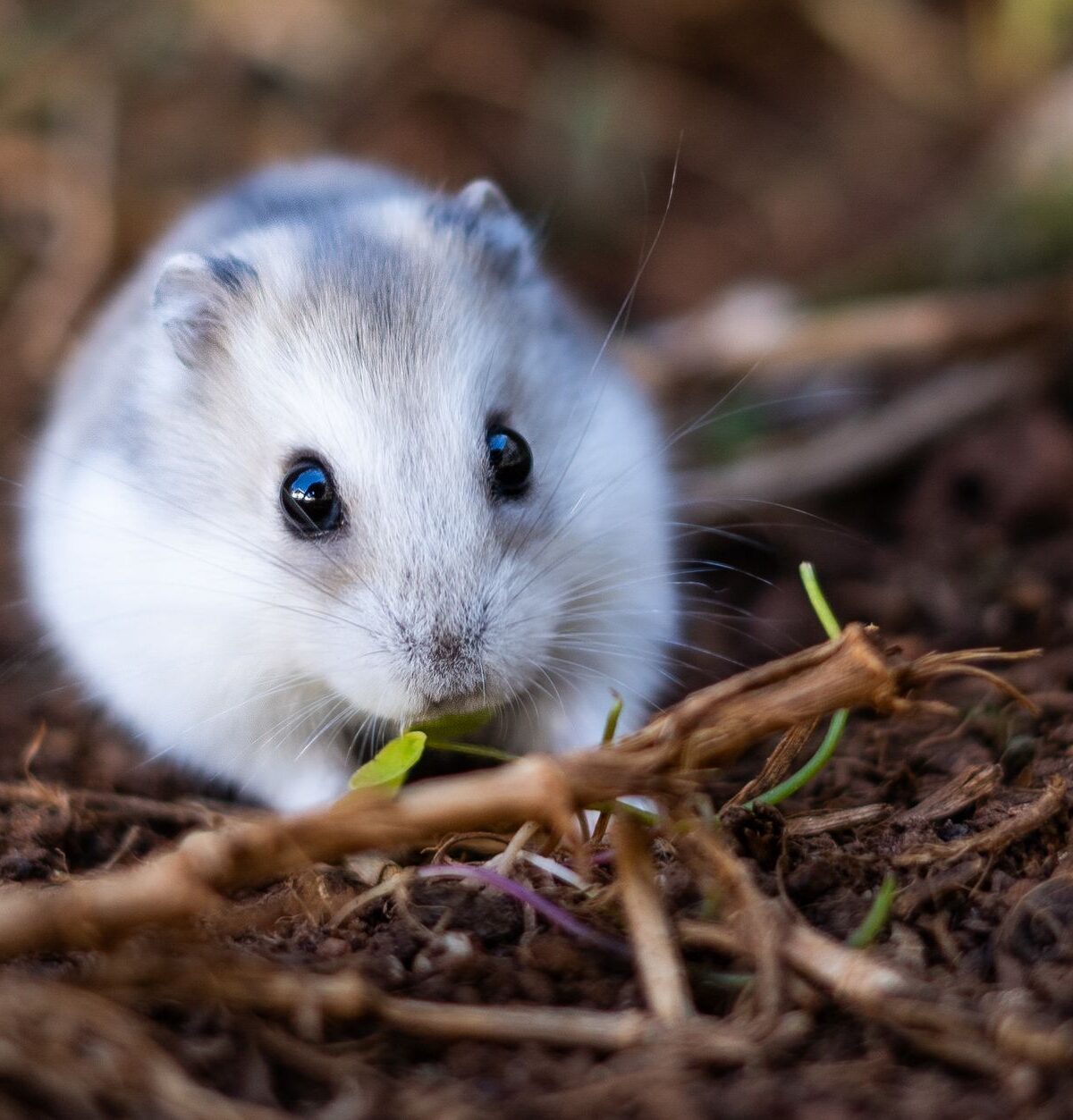
DWARF HAMSTER
DESCRIPTION
Dwarf Hamster is commonly known as the Roborovski Hamster, Campbell's Dwarf Hamster, and Winter White Dwarf Hamster. These small rodents typically measure around 3 to 4 inches in length and have a compact body covered in soft fur that can vary in color from sandy brown to grayish-white, often with a lighter underbelly. They are known for their energetic and curious behavior, often seen running on wheels or exploring their habitats, and they thrive in arid environments, making them well-adapted to desert-like conditions.
FUN FACTS
- Dwarf Hamsters are known for their cheek pouches, which they use to store food and transport it back to their burrows
- These pouches can expand significantly, allowing them to carry large amounts of food at once
- | Despite their small size, Dwarf Hamsters are incredibly agile and can run up to 6 miles on a wheel in a single night, showcasing their high energy levels and playful nature
QUICK INFO
Lifespan2-3 years in the wild, up to 4 years in captivity
Average Weight30-50 g
Average Length7-10 cm
Diet TypeHerbivore
Social Structuresolitary, though they may tolerate others in a breeding context
Activity PatternNocturnal
Breeding SeasonSpring to early summer
- Habitat
- Dwarf Hamsters inhabit dry, sandy areas and grasslands, often creating burrows to escape the heat and store food. They prefer environments that provide ample cover and nesting materials.
- Biomes
- Desert, Grassland
- Native Range
- Dwarf Hamsters are native to parts of Central Asia, including regions of Mongolia and northern China.
- Continent
- Asia
- Countries
- Mongolia, China
- Diet
- Dwarf Hamsters primarily eat seeds, grains, and vegetables, supplemented with occasional protein sources like insects. They have a strong preference for high-fiber foods.
- Diet Type
- Herbivore
- Favorite Food
- seeds, grains, vegetables
- Social Structure
- solitary, though they may tolerate others in a breeding context
- Activity Pattern
- Nocturnal
- Group Size
- 1-2
- Territorial
- 1
 VU
VU

 LC
LC
30-50 g
Weight
7-10 cm
Length
- Coloration
- soft fur that can be sandy brown, grayish-white, or a mix
- Sexual Dimorphism
- males are typically slightly larger than females
- Lifespan
- 2-3 years in the wild, up to 4 years in captivity
- Gestation Period
- 18-21 days
- Offspring per Birth
- 3-8
- Sexual Maturity
- 6-8 weeks
- Breeding Season
- Spring to early summer
LC
Least Concern
IUCN Red List Status
- Population Status
- Dwarf Hamsters are relatively common in the wild, but habitat destruction poses a threat to their populations.
- Wild Population Estimate
- unknown
- Population Trend
- Stable
- Endangered
- 0
- Threats
- Main threats include habitat loss due to agricultural expansion and urban development. Additionally, they face predation from various birds and mammals.
- Predators
- birds of prey, foxes, snakes, and other small mammals
- Defense Mechanisms
- Dwarf Hamsters use burrowing and hiding as primary defense mechanisms, retreating to their burrows when threatened.
- Compatible Animals
- none
- Found in Zoos
- Common