


DWARF HIPPOPOTAMUS
Hexaprotodon liberiensis
DESCRIPTION
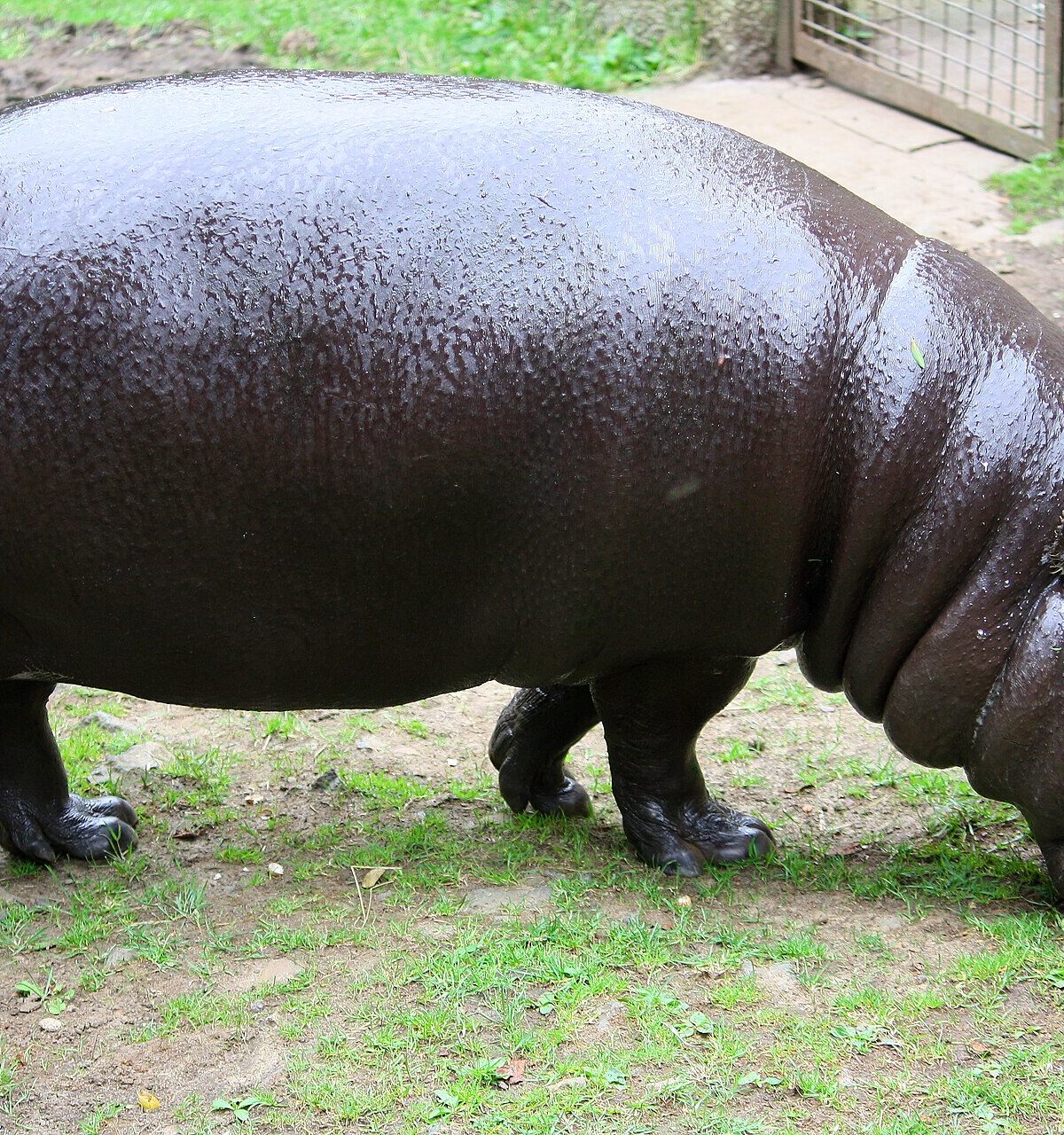
Dwarf Hippopotamus (Hexaprotodon liberiensis), also known as the Liberian Dwarf Hippopotamus, is a small, stocky mammal that resembles a miniature version of the common hippopotamus. It has a robust body, short legs, and a large head with a broad snout, typically measuring about 1.5 meters in length. This species is primarily nocturnal and spends much of its time in water, which helps to keep its skin moist and cool in its tropical habitat.
FUN FACTS
- Dwarf Hippopotamus is one of the smallest members of the hippopotamus family, making it a unique species among its larger relatives
- Despite their size, they are excellent swimmers and can hold their breath underwater for several minutes, allowing them to evade predators and navigate their aquatic habitats.| This species is critically endangered, with habitat loss being a significant threat
- Conservationists are working to protect their remaining habitats and raise awareness about the importance of preserving this unique species
QUICK INFO
Lifespan30-50 years in captivity, shorter in the wild
Average Weight150-250 kg
Average Length1.5-1.8 m
Diet TypeHerbivore
Social Structuresolitary or small groups, typically a mother with her young
Activity PatternNocturnal
Breeding SeasonYear-round
- Habitat
- This species inhabits dense tropical forests and swamps, often near rivers and lakes. They prefer areas with abundant vegetation for foraging and access to water for cooling.
- Biomes
- Tropical Rainforest, Wetland
- Native Range
- Dwarf Hippopotamus is native to the forests and swamps of West Africa, particularly in Liberia and surrounding regions.
- Continent
- Africa
- Countries
- Liberia, Ivory Coast, Sierra Leone
- Diet
- Dwarf Hippopotamus primarily feeds on a variety of vegetation, including grasses, leaves, and fruits. They are known to graze on land during the night and return to the water during the day.
- Diet Type
- Herbivore
- Favorite Food
- grasses, leaves, fruits
- Social Structure
- solitary or small groups, typically a mother with her young
- Activity Pattern
- Nocturnal
- Group Size
- 1-3
- Territorial
- 0
 LC
LC
150-250 kg
Weight
1.5-1.8 m
Length
- Coloration
- dark brown to grayish skin with a smooth texture
- Lifespan
- 30-50 years in captivity, shorter in the wild
- Gestation Period
- 210 days
- Offspring per Birth
- 1
- Sexual Maturity
- 3-4 years
- Breeding Season
- Year-round
CR
Critically Endangered
IUCN Red List Status
- Population Status
- The population of Dwarf Hippopotamus is currently declining due to habitat loss and hunting.
- Wild Population Estimate
- unknown, but likely fewer than 2,000 individuals
- Population Trend
- Decreasing
- Endangered
- 1
- Threats
- Main threats include habitat destruction due to logging and agriculture, as well as poaching for bushmeat. These factors have significantly reduced their population and range.
- Conservation Program
- Various local and international conservation efforts are underway to protect their habitat and reduce poaching.
- Predators
- Nile crocodiles, large cats, and humans pose threats to Dwarf Hippopotamus, particularly when they are young or vulnerable.
- Defense Mechanisms
- Dwarf Hippopotamus relies on its size and strength for defense, and it can be aggressive if threatened.
- Found in Zoos
- Uncommon