


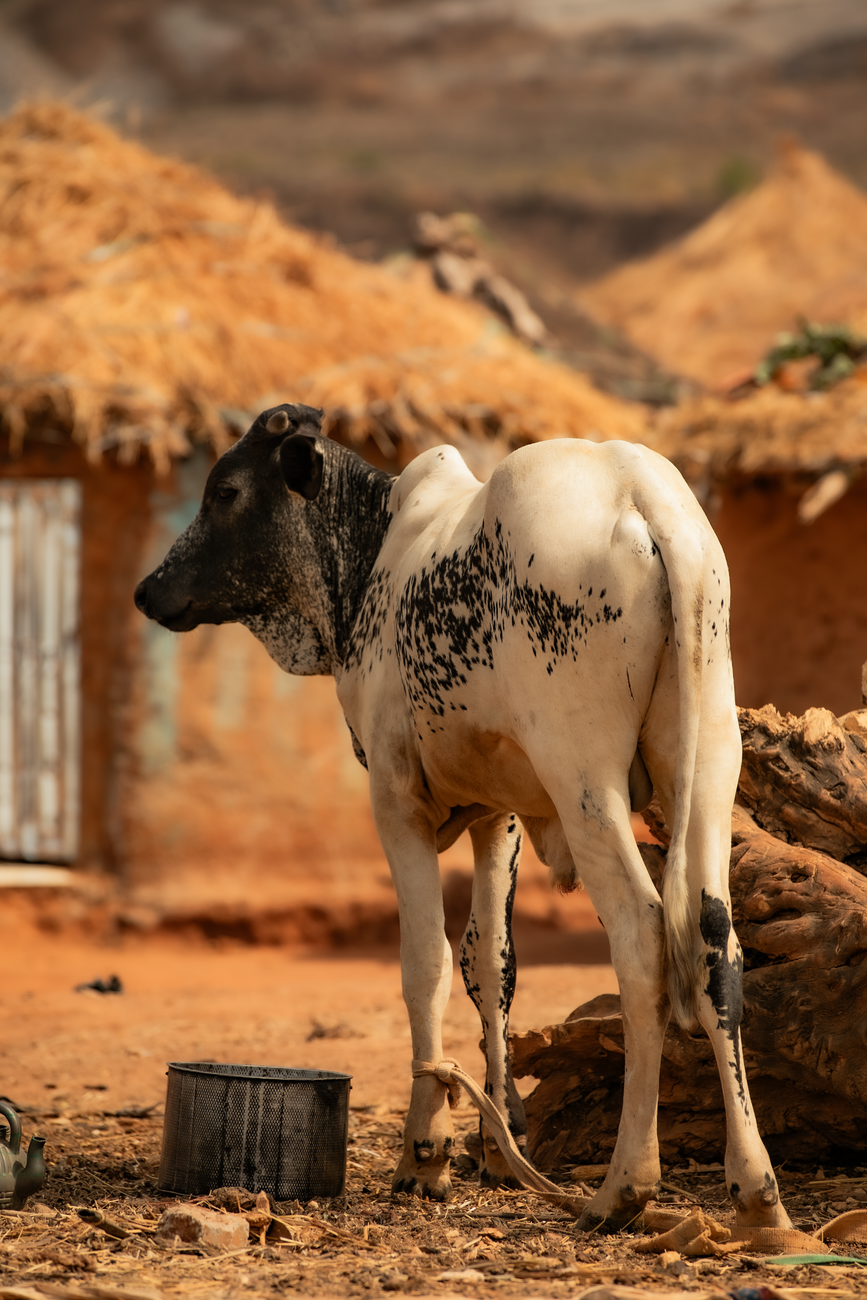
DWARF ZEBU
Bos taurus indicus dwarf
DESCRIPTION
Dwarf zebu (Bos taurus indicus dwarf) is commonly known as the Miniature zebu and is characterized by its small stature, typically standing around 1.2 meters at the shoulder. These cattle have a distinctive hump over their shoulders and a short, stocky build, with a variety of coat colors including gray, black, and white. They are known for their docile temperament and adaptability to various environmental conditions, making them suitable for small-scale farming and as pets in some regions.
FUN FACTS
- Dwarf zebus are known for their unique ability to tolerate heat and drought, making them ideal for regions with harsh climates
- They have been used in traditional medicine in some cultures, believed to have various health benefits due to their hardiness and adaptability.|These animals are often kept as pets due to their gentle nature and manageable size, making them suitable for small farms and even urban settings
- Their milk is also valued for its nutritional content, contributing to local diets
QUICK INFO
Lifespan15-20 years in the wild, up to 25 years in captivi
Average Weight150-250 kg
Average Length1.5-2.0 m
Diet TypeHerbivore
Social StructureGroup, typically found in small herds of 5-10 individuals.
Activity PatternDiurnal
Breeding SeasonYear-round, with peaks depending on local conditions.
- Habitat
- Dwarf zebus are typically found in grasslands and savannas, where they can graze freely. They are also adaptable to semi-arid regions, often found in areas with limited water resources.
- Biomes
- Savanna, Grassland
- Native Range
- Dwarf zebu is native to South Asia, particularly in India and surrounding regions.
- Continent
- Asia
- Countries
- India, Bangladesh, Sri Lanka
- Diet
- Dwarf zebus are herbivores, primarily grazing on grasses, leaves, and other vegetation. They are known to be efficient foragers, able to thrive on lower-quality forage.
- Diet Type
- Herbivore
- Favorite Food
- Grasses, leaves
- Social Structure
- Group, typically found in small herds of 5-10 individuals.
- Activity Pattern
- Diurnal
- Group Size
- 5-10
- Territorial
- 0
 VU
VU
150-250 kg
Weight
1.5-2.0 m
Length
1.2 m at shoulder
Height (Shoulder)
- Coloration
- Varies from gray to black and white, often with a light underbelly.
- Sexual Dimorphism
- Males are generally larger and have more pronounced humps than females.
- Lifespan
- 15-20 years in the wild, up to 25 years in captivi
- Gestation Period
- 280 days
- Offspring per Birth
- 1
- Sexual Maturity
- 2-3 years
- Breeding Season
- Year-round, with peaks depending on local conditions.
LC
Least Concern
IUCN Red List Status
- Population Status
- The population of Dwarf zebu is stable, with a significant presence in rural farming communities.
- Wild Population Estimate
- Unknown, primarily domesticated.
- Population Trend
- Stable
- Endangered
- 0
- Threats
- Main threats include habitat loss due to agricultural expansion and crossbreeding with larger cattle breeds, which can dilute the genetic traits of the Dwarf zebu.
- Predators
- Main predators include large carnivores such as tigers and leopards, although domesticated animals are less frequently targeted due to their size.
- Defense Mechanisms
- Dwarf zebus rely on their herd behavior for protection, using their agility to escape predators.
- Compatible Animals
- Sheep, goats
- Found in Zoos
- Uncommon