


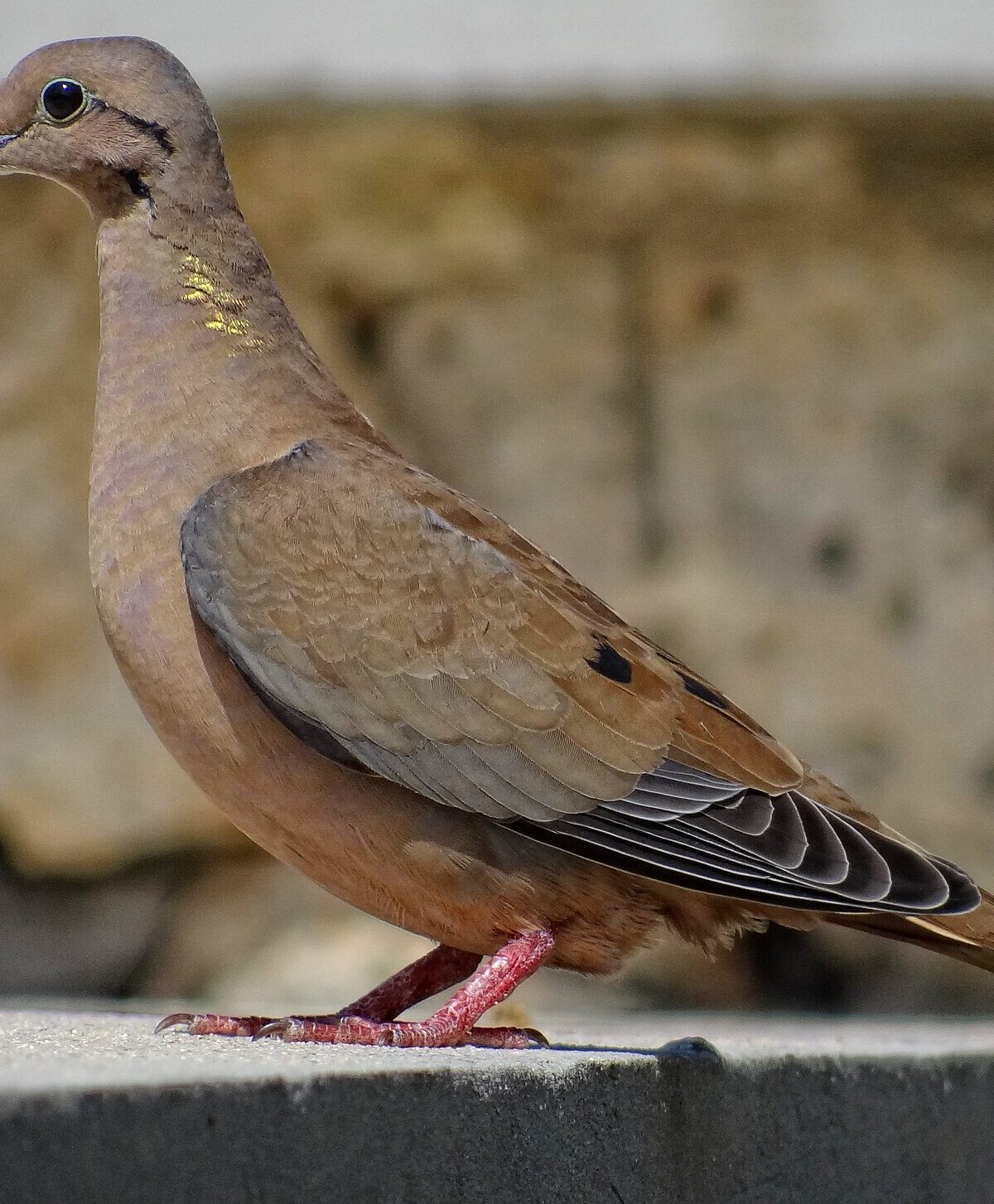
EARED DOVE
Zenaida auriculata
DESCRIPTION
The Eared Dove (Zenaida auriculata) is a medium-sized dove characterized by its distinctive ear-like feather tufts on the sides of its head. It has a grayish-brown body with a slightly paler underbelly and a long, pointed tail that is often seen in flight. This species is known for its gentle cooing calls and is commonly found in urban areas, agricultural fields, and open woodlands.
FUN FACTS
- Eared Doves are known for their unique cooing calls, which can vary significantly between individuals, making them quite vocal and communicative
- | These doves are often seen bathing in shallow water, which not only helps them stay clean but also plays a role in their social interactions, as they often bathe together in groups
QUICK INFO
Lifespan5-10 years in the wild
Average Weight150-200 g
Average Length28-30 cm
Diet TypeGranivore
Social Structuregroup — they are often seen in small flocks or pairs.
Activity PatternDiurnal
Breeding SeasonYear-round in suitable climates, peaking in spring and summer.
- Habitat
- Eared Doves inhabit a variety of environments, including urban areas, agricultural lands, and open woodlands. They prefer areas with accessible food sources and suitable nesting sites.
- Biomes
- Temperate Forest, Grassland, Urban
- Native Range
- The Eared Dove is native to South America, particularly found in countries like Argentina, Bolivia, Paraguay, and parts of Brazil.
- Continent
- South America
- Countries
- Argentina, Bolivia, Paraguay, Brazil
- Diet
- Eared Doves primarily feed on seeds, grains, and fruits. They are often seen foraging on the ground or in open areas.
- Diet Type
- Granivore
- Favorite Food
- seeds and grains
- Social Structure
- group — they are often seen in small flocks or pairs.
- Activity Pattern
- Diurnal
- Group Size
- 5-30
- Territorial
- 0
 CR
CR
150-200 g
Weight
28-30 cm
Length
- Coloration
- grayish-brown with a paler underbelly and distinctive ear-like feather tufts.
- Lifespan
- 5-10 years in the wild
- Offspring per Birth
- 1-2
- Sexual Maturity
- 6-12 months
- Breeding Season
- Year-round in suitable climates, peaking in spring and summer.
LC
Least Concern
IUCN Red List Status
- Population Status
- The Eared Dove has a stable population and is not currently considered threatened.
- Wild Population Estimate
- Not specifically estimated, but considered common in its range.
- Population Trend
- Stable
- Endangered
- 0
- Threats
- Main threats include habitat loss due to agricultural expansion and urbanization. However, they adapt well to human-altered environments.
- Predators
- Cats, hawks, and snakes are known predators of the Eared Dove.
- Defense Mechanisms
- Eared Doves rely on their ability to fly quickly and their camouflage to evade predators.
- Found in Zoos
- Uncommon