


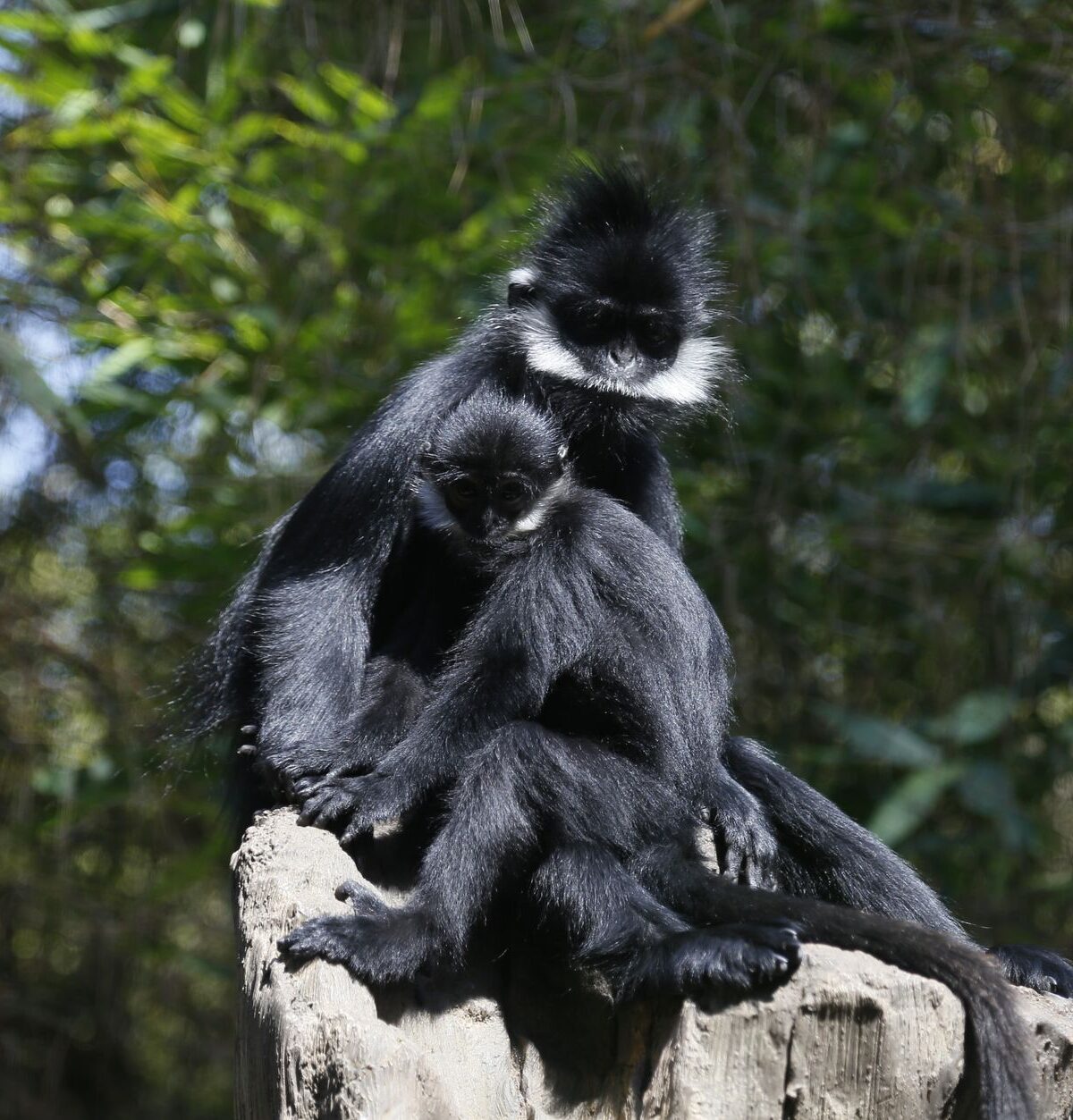
EASTERN BLACK AND WHITE COLOBUS
DESCRIPTION
Eastern Black and White Colobus, also known as the Eastern Colobus, is a striking primate characterized by its long, flowing black and white fur. This species exhibits a unique social structure, often living in groups that can range from a few individuals to over twenty. They are primarily arboreal, spending most of their time in the trees of their forest habitats, where they engage in social grooming and play.
FUN FACTS
- Eastern Black and White Colobus are known for their unique digestive system, which allows them to break down tough plant materials that many other primates cannot digest
- This adaptation enables them to thrive in their leaf-based diet, making them an important part of their ecosystem
- | They have a distinctive social structure, often engaging in grooming behaviors that strengthen social bonds within their groups
- This social grooming is not only a way to maintain hygiene but also plays a crucial role in their social interactions and hierarchy
QUICK INFO
Lifespan15-20 years in the wild, up to 30 in captivity
Average Weight10-20 kg
Average Length50-70 cm
Diet TypeHerbivore
Social Structuregroup — they typically live in social groups that consist of several females and a few males.
Activity PatternDiurnal
Breeding SeasonYear-round
- Habitat
- Eastern Black and White Colobus inhabit tropical rainforests and moist woodlands, where they can find ample food and shelter. They are highly adapted to life in the trees, using their long limbs and prehensile tails to navigate the canopy.
- Biomes
- Tropical Rainforest
- Native Range
- This species is native to the eastern regions of Africa, particularly found in countries like Uganda, Kenya, and Tanzania.
- Continent
- Africa
- Countries
- Uganda, Kenya, Tanzania
- Diet
- They primarily consume leaves, fruits, and flowers, with a particular preference for young leaves due to their high nutritional value.
- Diet Type
- Herbivore
- Favorite Food
- young leaves, fruits
- Social Structure
- group — they typically live in social groups that consist of several females and a few males.
- Activity Pattern
- Diurnal
- Group Size
- 5-20
- Territorial
- 1
 VU
VU
 VU
VU
 LC
LC
10-20 kg
Weight
50-70 cm
Length
- Coloration
- black and white fur with a distinctive long tail
- Sexual Dimorphism
- males are generally larger than females
- Lifespan
- 15-20 years in the wild, up to 30 in captivity
- Gestation Period
- 150 days
- Offspring per Birth
- 1
- Sexual Maturity
- 3-4 years
- Breeding Season
- Year-round
LC
Least Concern
IUCN Red List Status
- Population Status
- The population is currently stable, but habitat loss poses a significant threat.
- Wild Population Estimate
- 20,000-30,000
- Population Trend
- Stable
- Endangered
- 0
- Threats
- Main threats include habitat destruction due to logging and agricultural expansion, as well as hunting. These factors have led to localized declines in some areas.
- Predators
- Leopards, large birds of prey, and occasionally snakes.
- Defense Mechanisms
- They rely on their agility in trees to escape predators and use vocalizations to alert group members of danger.
- Found in Zoos
- Uncommon