


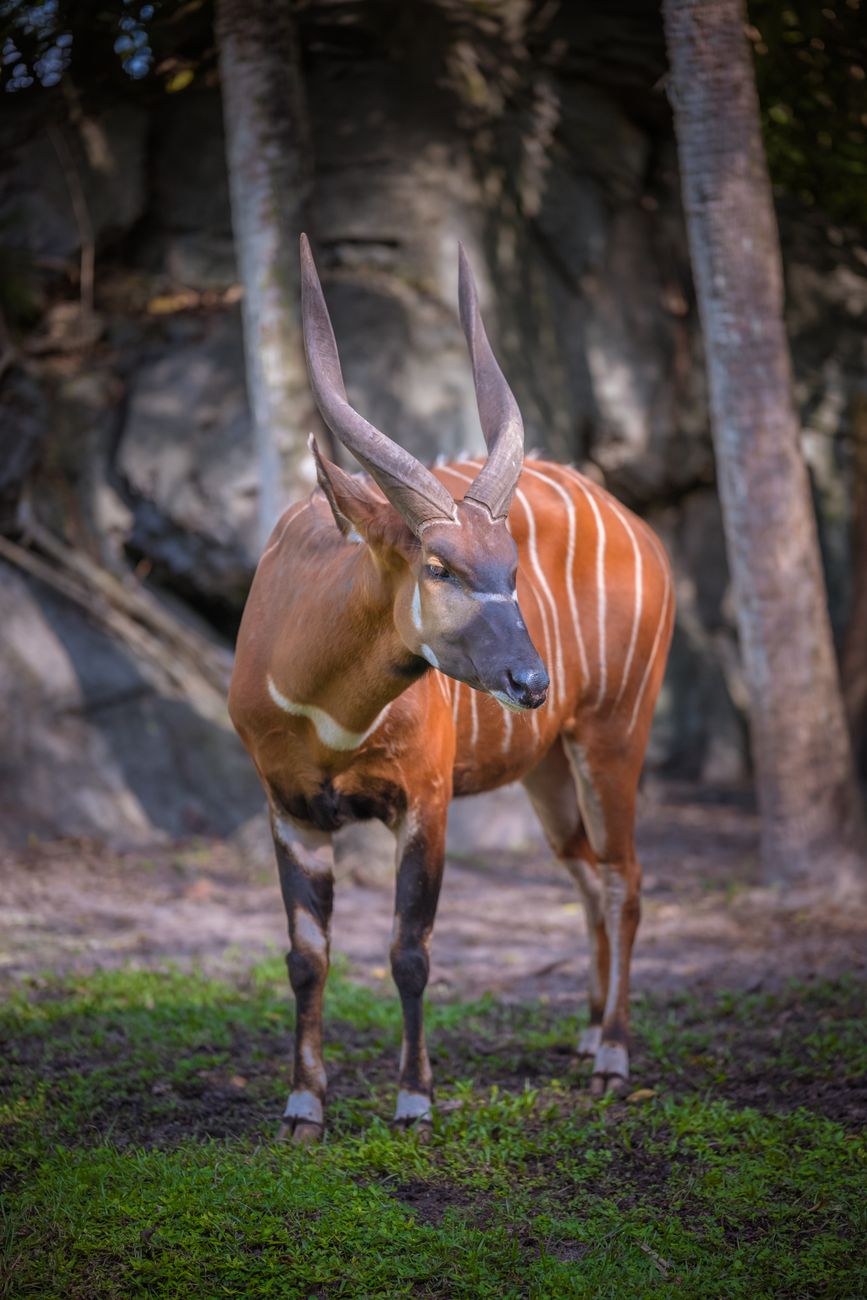
EASTERN BONGO
Tragelaphus eurycerus isaaci
DESCRIPTION
Eastern Bongo (Tragelaphus eurycerus isaaci) is a strikingly beautiful antelope known for its reddish-brown coat and white stripes that run vertically down its body. These animals are primarily found in the dense forests of East Africa, where they are well-adapted to their environment, using their keen sense of hearing and smell to navigate through thick vegetation. Eastern Bongos are generally shy and elusive, often remaining hidden during the day and becoming more active during the cooler hours of dawn and dusk.
FUN FACTS
- Eastern Bongos are known for their incredible agility and can leap over obstacles with ease, making them well-suited for their forested habitats
- Additionally, they have a unique vocalization that sounds like a deep, resonant grunt, which they use to communicate with each other in the dense underbrush
QUICK INFO
Lifespan15-20 years in the wild, up to 30 in captivity
Average Weight100-200 kg
Average Length1.8-2.1 m
Diet TypeHerbivore
Social Structuresolitary or small groups, typically consisting of females and their offspring
Activity PatternCrepuscular
Breeding SeasonYear-round, with peaks depending on local conditions
- Habitat
- They inhabit dense tropical and subtropical forests, often favoring areas with thick underbrush for cover.
- Biomes
- Tropical Rainforest
- Native Range
- Eastern Bongos are native to the mountainous forests of East Africa, particularly in Kenya and Tanzania.
- Continent
- Africa
- Countries
- Kenya, Tanzania
- Diet
- Eastern Bongos are herbivores that primarily feed on leaves, fruits, and shrubs found in their forest habitat.
- Diet Type
- Herbivore
- Favorite Food
- leaves, fruits, shrubs
- Social Structure
- solitary or small groups, typically consisting of females and their offspring
- Activity Pattern
- Crepuscular
- Group Size
- 1-5
- Territorial
- 0
 VU
VU
 LC
LC
100-200 kg
Weight
1.8-2.1 m
Length
1.0-1.2 m at shoulder
Height (Shoulder)
- Coloration
- reddish-brown coat with white vertical stripes
- Sexual Dimorphism
- Males are larger and have long, spiraled horns, while females are smaller and hornless.
- Lifespan
- 15-20 years in the wild, up to 30 in captivity
- Gestation Period
- 240 days
- Offspring per Birth
- 1
- Sexual Maturity
- 2-3 years
- Breeding Season
- Year-round, with peaks depending on local conditions
EN
Endangered
IUCN Red List Status
- Population Status
- The population of Eastern Bongo is currently declining due to habitat loss and poaching.
- Wild Population Estimate
- Less than 1,000 individuals
- Population Trend
- Decreasing
- Endangered
- 1
- Threats
- The main threats to Eastern Bongo include habitat destruction due to logging and agriculture, as well as poaching for their meat and horns. Conservation efforts are crucial to protect their remaining populations.
- Conservation Program
- Various conservation programs are in place, including habitat protection and anti-poaching initiatives.
- Predators
- Leopards, lions, and hyenas are known predators of Eastern Bongo, particularly targeting young or weak individuals.
- Defense Mechanisms
- They rely on their camouflage and elusive behavior to avoid detection by predators.
- Found in Zoos
- Uncommon