


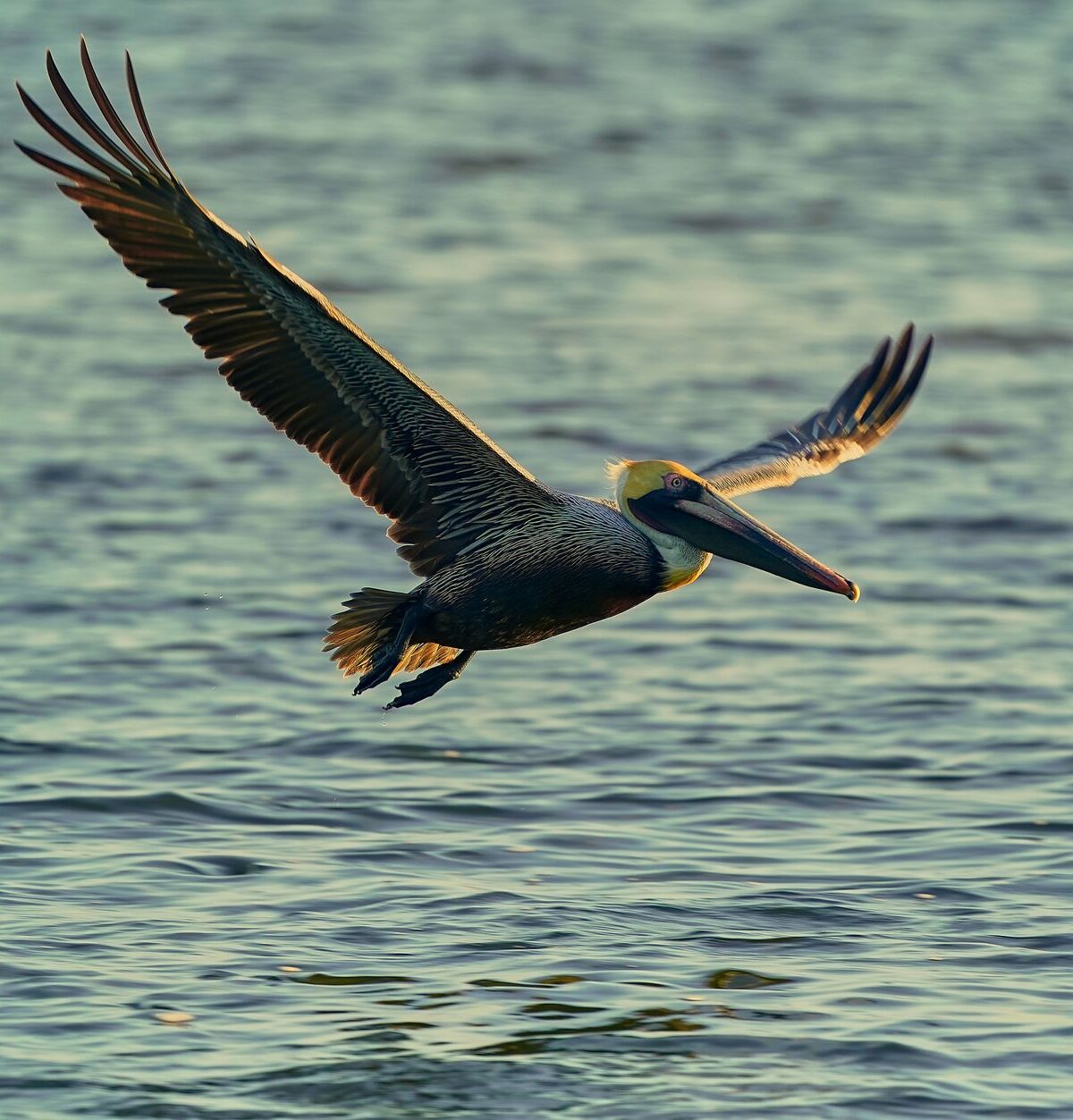
EASTERN BROWN PELICAN
Pelecanus occidentalis carolinensis
DESCRIPTION
Eastern brown pelican (Pelecanus occidentalis carolinensis) is a large coastal bird known for its distinctive long bill and large throat pouch. It has a predominantly brown plumage with a white head and neck, and its wingspan can reach up to 2.5 meters. This species is often seen diving into the water to catch fish, showcasing its impressive hunting skills and social behavior when foraging in groups.
FUN FACTS
- The Eastern brown pelican is known for its unique feeding technique, where it dives from heights of up to 20 feet to catch fish
- This spectacular behavior not only showcases their agility but also their ability to adapt to various fishing conditions
- | Brown pelicans are also known for their strong social bonds, often seen nesting in colonies and engaging in cooperative hunting
- Their impressive wingspan and graceful flight make them a favorite among bird watchers and nature enthusiasts
QUICK INFO
Lifespan10-15 years in the wild, up to 25 years in captivi
Average Weight3-5 kg
Average Length1.1-1.5 m
Diet TypePiscivore
Social StructureThey are often seen in groups, especially during feeding and nesting seasons.
Activity PatternDiurnal
Breeding SeasonSpring (March-June)
- Habitat
- This species inhabits coastal regions, estuaries, and lagoons, often nesting on islands or in mangroves. They prefer areas with abundant fish supply and suitable nesting sites.
- Biomes
- Coastal, Marine
- Native Range
- The Eastern brown pelican is found along the Atlantic coast of the United States, from New Jersey to Florida, and in the Caribbean.
- Continent
- North America, Caribbean
- Countries
- United States, Bahamas, Cuba, Dominican Republic
- Diet
- The Eastern brown pelican primarily feeds on fish, which it catches by diving from the air into the water. It may also consume small invertebrates occasionally.
- Diet Type
- Piscivore
- Favorite Food
- fish
- Social Structure
- They are often seen in groups, especially during feeding and nesting seasons.
- Activity Pattern
- Diurnal
- Group Size
- 5-50
- Territorial
- 0
 LC
LC
 LC
LC
3-5 kg
Weight
1.1-1.5 m
Length
- Coloration
- Brown body with a white head and neck, and a large bill.
- Lifespan
- 10-15 years in the wild, up to 25 years in captivi
- Offspring per Birth
- 1-3
- Sexual Maturity
- 3-4 years
- Breeding Season
- Spring (March-June)
LC
Least Concern
IUCN Red List Status
- Population Status
- The population of Eastern brown pelicans has recovered significantly since the 1970s due to conservation efforts.
- Wild Population Estimate
- Approximately 100,000
- Population Trend
- Increasing
- Endangered
- 0
- Threats
- Main threats include habitat loss, pollution, and entanglement in fishing gear. Climate change also poses a risk to their coastal habitats.
- Conservation Program
- The Eastern brown pelican has benefited from the Endangered Species Act and various habitat restoration programs.
- Predators
- Eggs and chicks are vulnerable to predation by gulls, raccoons, and other coastal predators.
- Compatible Animals
- Gulls, terns, other seabirds
- Found in Zoos
- Uncommon