


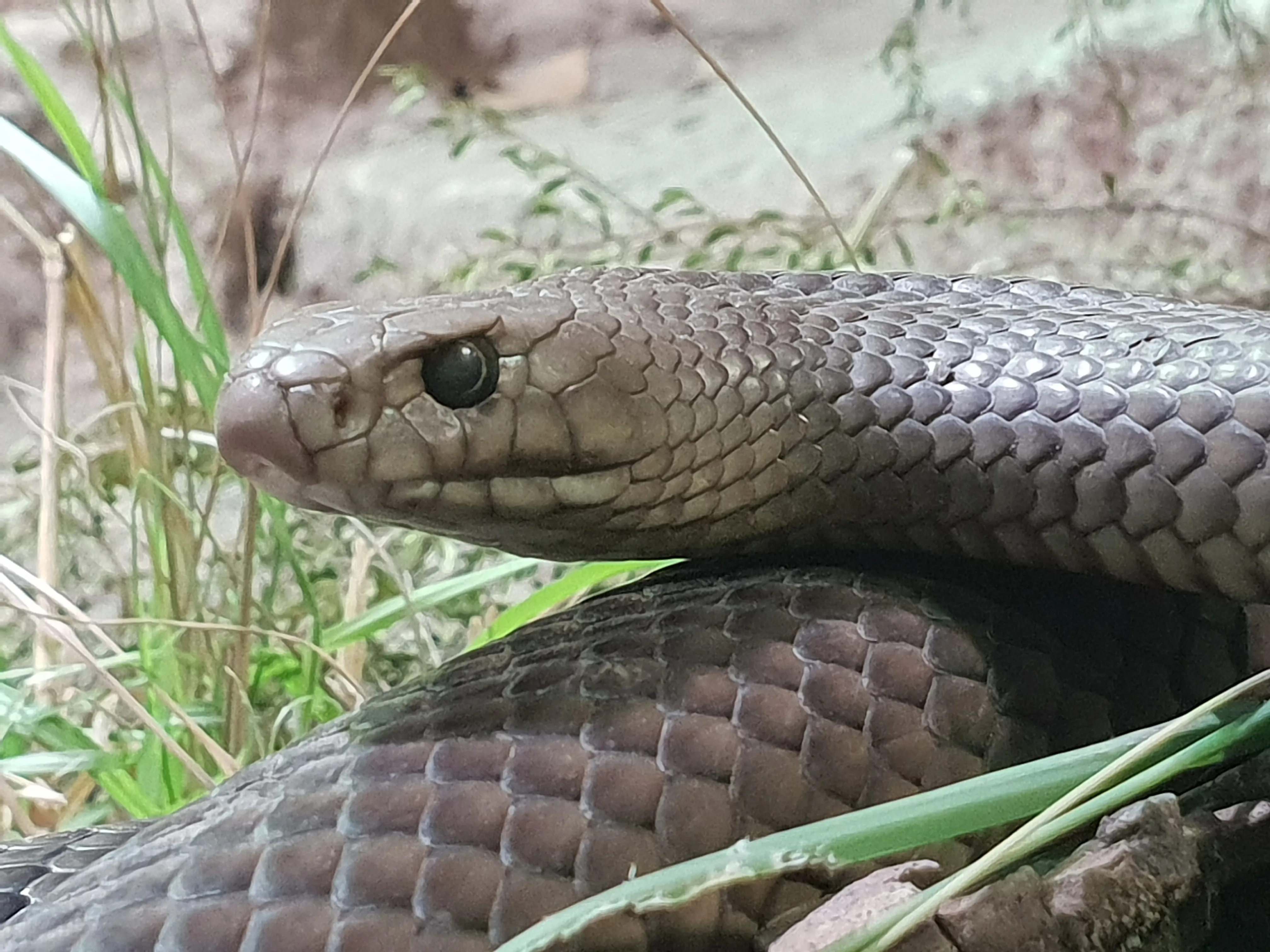
EASTERN BROWN SNAKE
DESCRIPTION
Also called the Common Brown Snake, the Eastern Brown Snake is a highly venomous species native to Australia. It is characterized by its slender body and a color range that typically includes shades of brown, with some individuals displaying a lighter or darker hue. This snake is known for its agility and speed, often found in a variety of habitats, including urban areas, grasslands, and woodlands.
FUN FACTS
- The Eastern Brown Snake is considered one of the most venomous snakes in the world, with venom that can cause paralysis and death in humans if untreated
- Interestingly, this species is also known for its adaptability, thriving in urban environments where it can find food and shelter despite human presence.| In addition to its impressive speed, the Eastern Brown Snake has a unique hunting strategy, often ambushing its prey rather than actively pursuing it
- This makes it a highly effective predator in its natural habitat
QUICK INFO
Lifespan10-15 years in the wild, up to 20 years in captivi
Average Weight1-2 kg
Average Length1.5-2.5 m
Diet TypeCarnivore
Social Structuresolitary, typically found alone except during mating season
Activity PatternDiurnal
Breeding SeasonSpring (September-November)
- Habitat
- The Eastern Brown Snake inhabits a wide range of environments, including forests, grasslands, and urban areas. It prefers areas with ample cover and access to water sources.
- Biomes
- Temperate Forest, Grassland, Urban
- Native Range
- The Eastern Brown Snake is found throughout eastern and central Australia, as well as in parts of New Guinea.
- Continent
- Australia, Oceania
- Countries
- Australia, Papua New Guinea
- Diet
- The Eastern Brown Snake primarily feeds on small mammals, birds, and reptiles. It is an opportunistic predator, often hunting during the day.
- Diet Type
- Carnivore
- Favorite Food
- small mammals, birds, reptiles
- Social Structure
- solitary, typically found alone except during mating season
- Activity Pattern
- Diurnal
- Group Size
- 1
- Territorial
- 0
 VU
VU
1-2 kg
Weight
1.5-2.5 m
Length
- Coloration
- varies from light brown to dark brown, often with a lighter underside
- Sexual Dimorphism
- males are generally smaller than females
- Lifespan
- 10-15 years in the wild, up to 20 years in captivi
- Offspring per Birth
- 10-30
- Sexual Maturity
- 2-3 years
- Breeding Season
- Spring (September-November)
LC
Least Concern
IUCN Red List Status
- Population Status
- The population is considered stable, but local declines may occur due to habitat loss.
- Wild Population Estimate
- unknown
- Population Trend
- Stable
- Endangered
- 0
- Threats
- Main threats include habitat destruction and road mortality. Urbanization has led to a decrease in suitable habitats for this species.
- Predators
- Birds of prey, larger snakes, and some mammals may prey on Eastern Brown Snakes.
- Defense Mechanisms
- When threatened, the Eastern Brown Snake may display aggressive behavior, including hissing and striking. It can also use its speed to escape quickly.
- Found in Zoos
- Common