


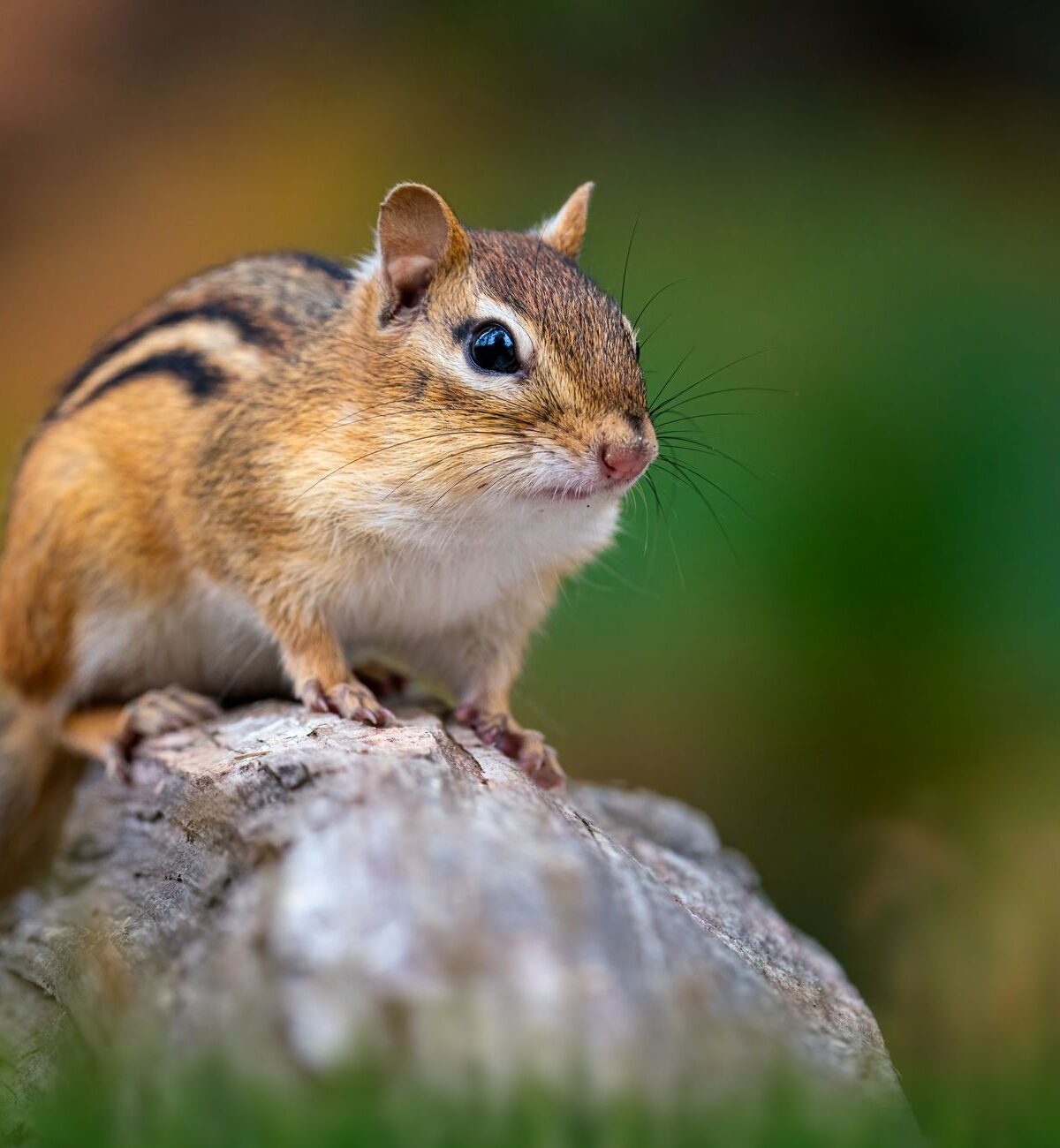
EASTERN CHIPMUNK
Tamias striatus
DESCRIPTION
Eastern Chipmunk (Tamias striatus) is a small, striped rodent known for its distinctive brown fur with darker stripes running down its back. These chipmunks are primarily terrestrial and are often seen foraging on the ground, where they exhibit a lively and curious behavior. They play a crucial role in their ecosystem by dispersing seeds and nuts, which helps in forest regeneration.
FUN FACTS
- Eastern Chipmunks have cheek pouches that allow them to store food while foraging, which they can later transport back to their burrows
- These pouches can expand significantly, enabling them to carry multiple seeds at once
- | They are known for their distinctive chirping sounds, which they use to communicate with each other, especially when warning of potential threats
- Their vocalizations can vary in pitch and intensity, reflecting different messages
QUICK INFO
Lifespan3-5 years in the wild, up to 8 years in captivity
Average Weight70-150 g
Average Length20-25 cm
Diet TypeOmnivore
Social StructureSolitary, except during mating season and when mothers are raising young.
Activity PatternDiurnal
Breeding SeasonSpring (March-May)
- Habitat
- Eastern Chipmunks prefer wooded areas, particularly deciduous forests, but they can also be found in suburban gardens and parks. They create complex burrow systems that provide shelter and storage for food.
- Biomes
- Temperate Forest, Deciduous Forest
- Native Range
- The Eastern Chipmunk is native to eastern North America, ranging from southern Canada to the eastern United States.
- Continent
- North America
- Countries
- Canada, United States
- Diet
- Eastern Chipmunks are omnivorous, feeding on a variety of foods including seeds, nuts, fruits, and insects. They are known to store food in their burrows for later consumption.
- Diet Type
- Omnivore
- Favorite Food
- Nuts, seeds, fruits
- Social Structure
- Solitary, except during mating season and when mothers are raising young.
- Activity Pattern
- Diurnal
- Group Size
- 1
- Territorial
- 1
 CR
CR
 LC
LC
 LC
LC
70-150 g
Weight
20-25 cm
Length
- Coloration
- Brown with darker stripes along the back and lighter underparts.
- Lifespan
- 3-5 years in the wild, up to 8 years in captivity
- Gestation Period
- 31 days
- Offspring per Birth
- 2-5
- Sexual Maturity
- 1 year
- Breeding Season
- Spring (March-May)
LC
Least Concern
IUCN Red List Status
- Population Status
- The population of Eastern Chipmunks is generally stable and widespread.
- Wild Population Estimate
- Not specifically estimated, but considered abundant.
- Population Trend
- Stable
- Endangered
- 0
- Threats
- Main threats include habitat loss due to urban development and predation by domestic cats and other predators. However, they are adaptable and can thrive in suburban environments.
- Predators
- Hawks, owls, snakes, domestic cats, foxes
- Defense Mechanisms
- Eastern Chipmunks use their speed and agility to escape predators, often retreating to their burrows for safety.
- Found in Zoos
- Uncommon