


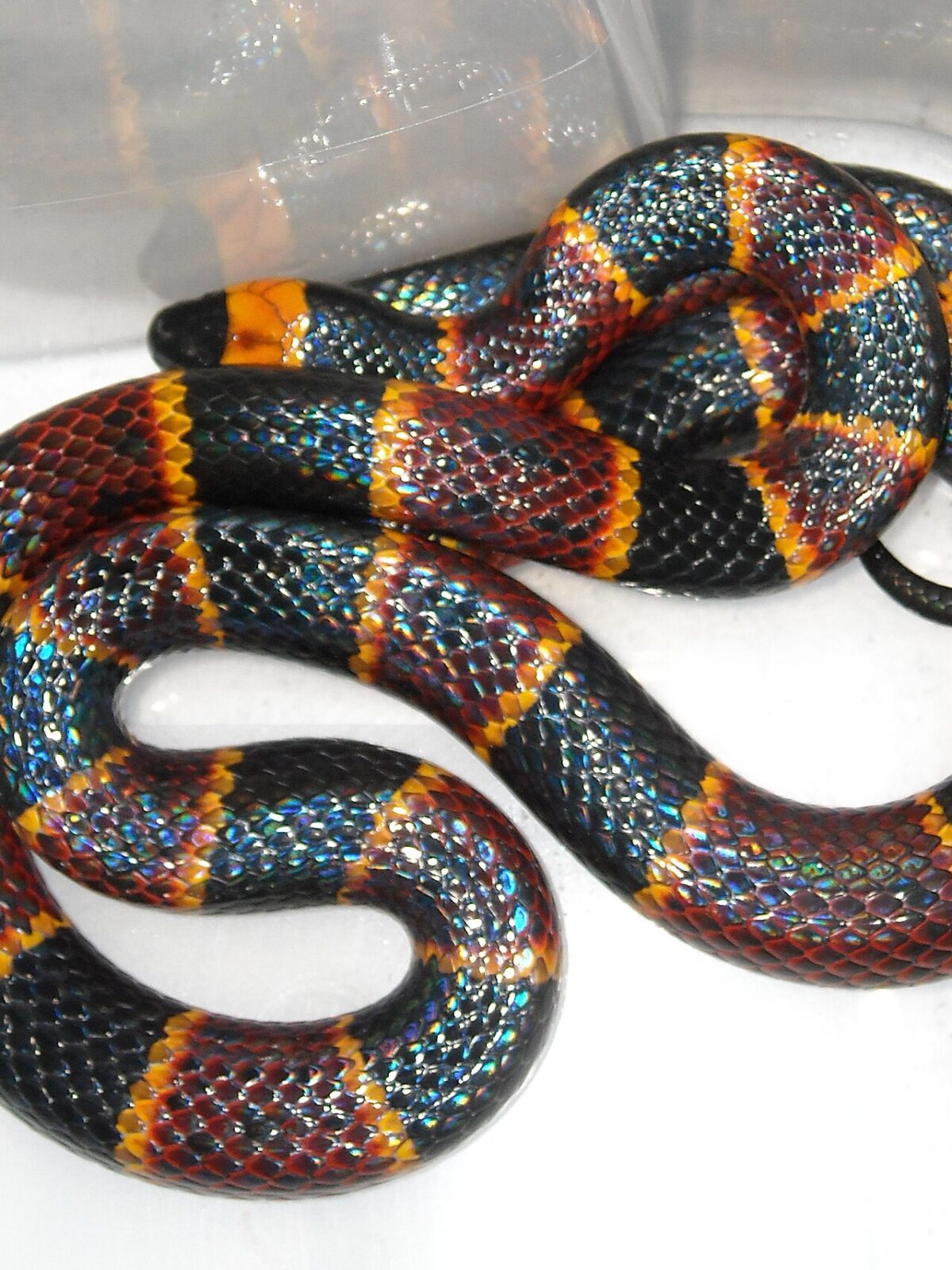
EASTERN CORAL SNAKE
Micrurus fulvius
DESCRIPTION
Eastern Coral Snake (Micrurus fulvius) is a highly venomous snake known for its distinctive coloration of red, yellow, and black bands. This species exhibits a slender body and can reach lengths of about 2 to 3 feet. Typically found in the southeastern United States, it prefers habitats such as pine forests, sandy areas, and grasslands, where it can often be found hidden under leaf litter or logs.
FUN FACTS
- The Eastern Coral Snake is often confused with the non-venomous Scarlet Kingsnake due to their similar coloration
- However, a simple rhyme can help distinguish them: 'Red on yellow, kill a fellow; red on black, friend of Jack.' | Despite their potent venom, Eastern Coral Snakes are not aggressive and will typically avoid confrontation with humans
- They prefer to escape rather than bite, and bites are rare
QUICK INFO
Lifespan10-15 years in the wild, up to 20 years in captivi
Average Weight0.5-1 kg
Average Length0.6-1 m
Diet TypeCarnivore
Social Structuresolitary, typically found alone except during mating season
Activity PatternDiurnal
Breeding SeasonSpring (April-June)
- Habitat
- Eastern Coral Snakes inhabit a variety of environments, including pine forests, grasslands, and coastal areas. They are often found in sandy soils where they can easily burrow and hide.
- Biomes
- Temperate Forest, Grassland, Coastal
- Native Range
- The native range of the Eastern Coral Snake extends from the southeastern United States, including states like Florida, Georgia, and South Carolina.
- Continent
- North America
- Countries
- United States
- Diet
- Eastern Coral Snakes primarily feed on small reptiles and amphibians, particularly lizards and frogs. They use their potent venom to subdue their prey before consumption.
- Diet Type
- Carnivore
- Favorite Food
- lizards, frogs
- Social Structure
- solitary, typically found alone except during mating season
- Activity Pattern
- Diurnal
- Group Size
- 1
- Territorial
- 0
 VU
VU

0.5-1 kg
Weight
0.6-1 m
Length
- Coloration
- vivid red, yellow, and black bands
- Lifespan
- 10-15 years in the wild, up to 20 years in captivi
- Offspring per Birth
- 3-12
- Sexual Maturity
- 2-3 years
- Breeding Season
- Spring (April-June)
LC
Least Concern
IUCN Red List Status
- Population Status
- The population of Eastern Coral Snakes is currently stable, but they face threats from habitat loss.
- Wild Population Estimate
- unknown
- Population Trend
- Stable
- Endangered
- 0
- Threats
- Main threats include habitat destruction due to urban development and agriculture. Additionally, they are often killed out of fear due to their venomous nature.
- Predators
- birds of prey, larger snakes, mammals
- Defense Mechanisms
- Eastern Coral Snakes rely on their bright coloration as a warning to potential predators, a form of aposematism. When threatened, they may also play dead or retreat quickly into their hiding spots.
- Found in Zoos
- Uncommon