


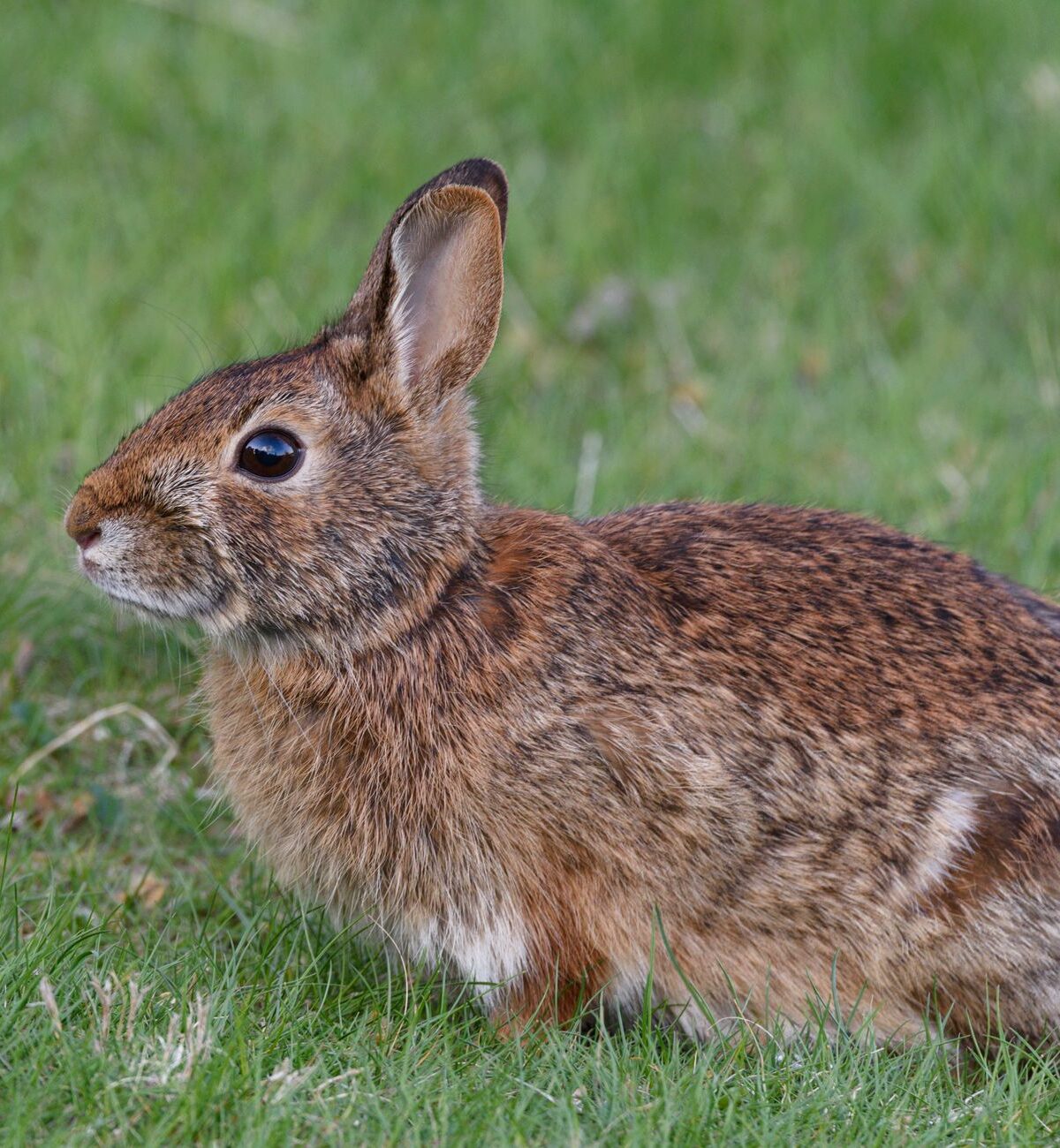
EASTERN COTTONTAIL
Sylvilagus floridanus
DESCRIPTION
Eastern Cottontail (Sylvilagus floridanus) is a widely recognized species of rabbit known for its distinctive fluffy white tail, which resembles a cotton ball. This medium-sized rabbit has a brownish-gray fur coat that provides excellent camouflage in its natural habitat. They are primarily crepuscular, being most active during dawn and dusk, and are known for their agility and speed, which help them evade predators in the wild.
FUN FACTS
- Eastern Cottontails can leap up to 10 feet in a single bound, making them one of the fastest rabbits in North America
- They have a unique way of communicating with each other through a series of thumping sounds made by their hind feet, which can signal danger to other rabbits.|These rabbits are known for their impressive reproductive capabilities, with females capable of producing several litters each year, each containing multiple offspring
- This high reproductive rate helps maintain their population despite predation and environmental challenges
QUICK INFO
Lifespan1-3 years in the wild, up to 5 years in captivity
Average Weight1.0-2.0 kg
Average Length38-50 cm
Diet TypeHerbivore
Social Structuresolitary, occasionally seen in pairs during breeding season
Activity PatternCrepuscular
Breeding SeasonSpring to early summer (March-August)
- Habitat
- They thrive in a range of habitats, including fields, meadows, and wooded areas, often near human settlements. Eastern Cottontails prefer areas with dense vegetation for cover and foraging.
- Biomes
- Temperate Forest, Grassland, Urban
- Native Range
- Eastern Cottontails are native to North America, ranging from southern Canada to the eastern United States and parts of Mexico.
- Continent
- North America
- Countries
- United States, Canada, Mexico
- Diet
- Eastern Cottontails are herbivores, primarily feeding on a variety of grasses, herbs, and leafy plants. They also consume fruits and vegetables when available, making them adaptable foragers.
- Diet Type
- Herbivore
- Favorite Food
- grasses, clover, dandelions
- Social Structure
- solitary, occasionally seen in pairs during breeding season
- Activity Pattern
- Crepuscular
- Group Size
- 1-2
- Territorial
- 0
 CR
CR
 LC
LC
1.0-2.0 kg
Weight
38-50 cm
Length
- Coloration
- brownish-gray fur with a white underbelly and distinctive white tail
- Sexual Dimorphism
- males and females are similar in size and appearance
- Lifespan
- 1-3 years in the wild, up to 5 years in captivity
- Gestation Period
- 28-32 days
- Offspring per Birth
- 3-8
- Sexual Maturity
- 3-4 months
- Breeding Season
- Spring to early summer (March-August)
LC
Least Concern
IUCN Red List Status
- Population Status
- The population of Eastern Cottontails is generally stable, although local declines may occur due to habitat loss.
- Wild Population Estimate
- unknown
- Population Trend
- Stable
- Endangered
- 0
- Threats
- Main threats include habitat destruction due to urban development and agricultural practices. Additionally, they face predation from various animals, which can impact local populations.
- Predators
- foxes, coyotes, hawks, owls, domestic cats
- Defense Mechanisms
- They rely on their speed and agility to escape predators, often using zigzag patterns to evade capture.
- Found in Zoos
- Common