


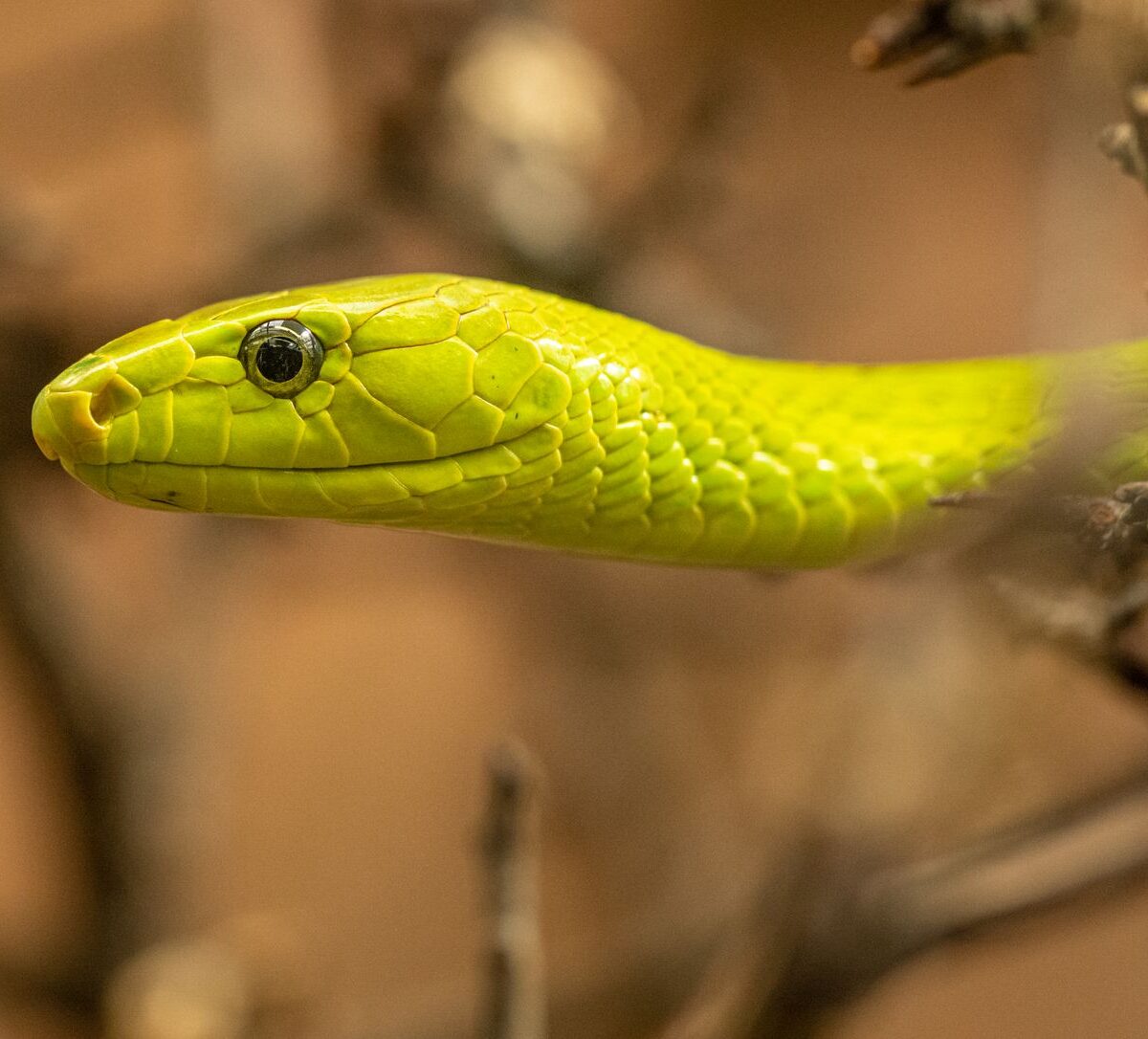
EASTERN GREEN MAMBA
Dendroaspis angusticeps
DESCRIPTION
Eastern Green Mamba (Dendroaspis angusticeps) is commonly known as the Green Mamba. This snake is characterized by its vibrant green coloration, which provides excellent camouflage among the foliage of its arboreal habitat. It is a highly agile and fast-moving snake, primarily found in trees, and is known for its shy nature, often avoiding human contact.
FUN FACTS
- The Eastern Green Mamba is one of the most venomous snakes in Africa, with a potent neurotoxic venom that can be fatal to humans if untreated
- Despite their dangerous reputation, these snakes are generally shy and prefer to avoid confrontation, often retreating into the trees when approached
- | Their vibrant green coloration not only helps them blend into their leafy surroundings but also plays a role in their mating displays, as brighter individuals may be more attractive to potential mates
- Interestingly, they are known to exhibit a unique behavior called 'basking,' where they will lie in the sun to regulate their body temperature
QUICK INFO
Lifespan10-15 years in the wild, up to 20 years in captivi
Average Weight1-2 kg
Average Length1.5-2.5 m
Diet TypeCarnivore
Social Structuresolitary
Activity PatternDiurnal
Breeding SeasonSpring (September-November)
- Habitat
- This species inhabits tropical and subtropical forests, often found in trees where it can easily hunt for prey. It prefers areas with dense vegetation that provide cover and hunting opportunities.
- Biomes
- Tropical Rainforest
- Native Range
- The Eastern Green Mamba is native to the coastal regions of East Africa, particularly in countries like Kenya and Tanzania.
- Continent
- Africa
- Countries
- Kenya, Tanzania, Mozambique
- Diet
- The Eastern Green Mamba primarily feeds on small mammals and birds. It uses its speed and agility to capture prey in its arboreal environment.
- Diet Type
- Carnivore
- Favorite Food
- small mammals, birds
- Social Structure
- solitary
- Activity Pattern
- Diurnal
- Group Size
- 1
- Territorial
- 0
 VU
VU
1-2 kg
Weight
1.5-2.5 m
Length
- Coloration
- vibrant green with a smooth, shiny appearance
- Sexual Dimorphism
- males are generally smaller than females
- Lifespan
- 10-15 years in the wild, up to 20 years in captivi
- Offspring per Birth
- 5-15
- Sexual Maturity
- 2-3 years
- Breeding Season
- Spring (September-November)
LC
Least Concern
IUCN Red List Status
- Population Status
- The population of Eastern Green Mambas is currently stable, but habitat loss poses a potential threat.
- Wild Population Estimate
- unknown
- Population Trend
- Stable
- Endangered
- 0
- Threats
- Main threats include habitat destruction due to deforestation and human encroachment. Additionally, they are sometimes killed out of fear or misunderstanding.
- Predators
- birds of prey, larger snakes, and mammals such as mongooses
- Defense Mechanisms
- When threatened, Eastern Green Mambas may display a defensive posture, raising their heads and flattening their necks, or they may flee quickly into the trees.
- Found in Zoos
- Uncommon