


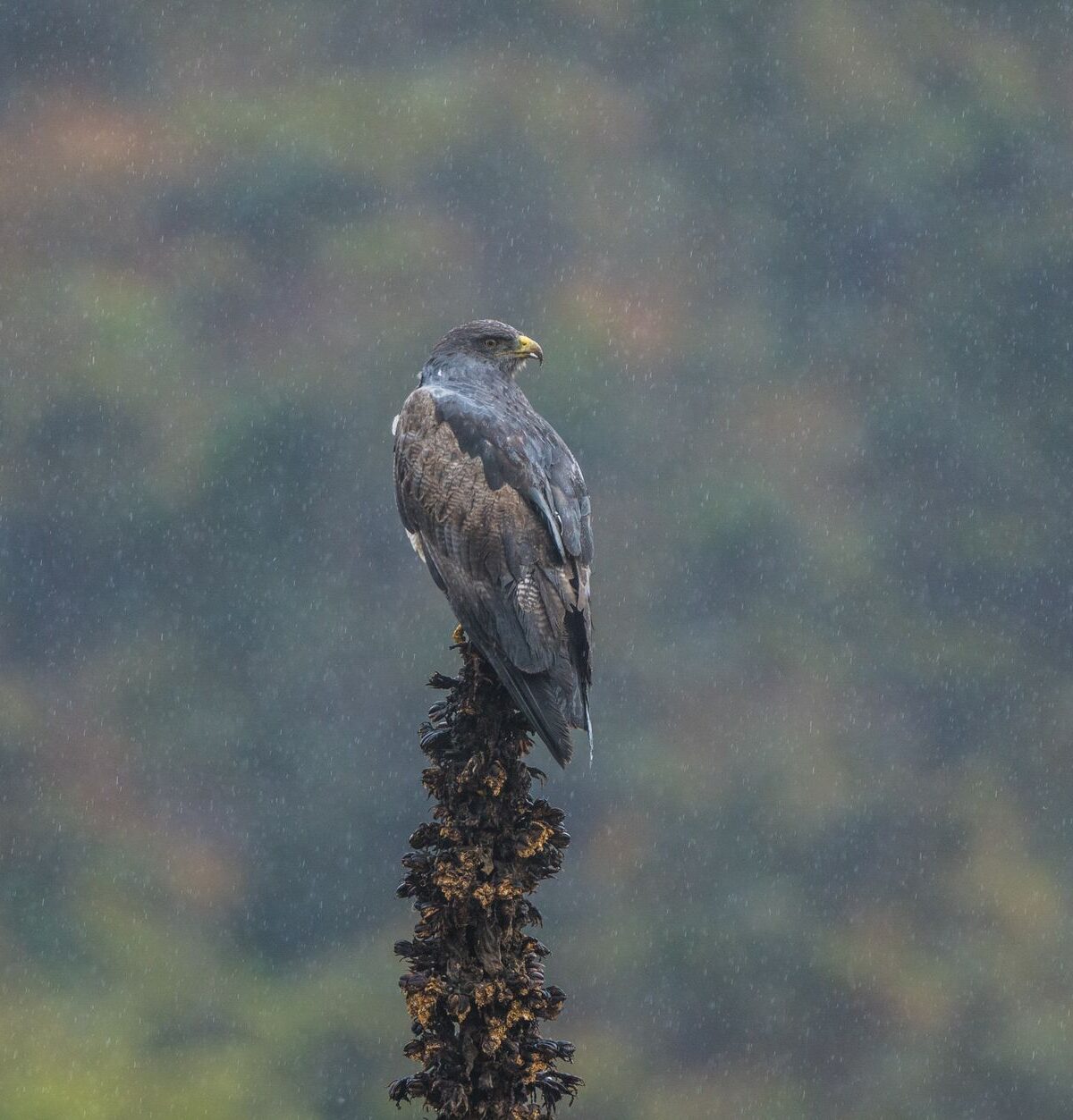
EASTERN GREY BUZZARD EAGLE
Geranoaetus melanoleucus australis
DESCRIPTION
Eastern grey buzzard eagle (Geranoaetus melanoleucus australis), also known as the Black-chested buzzard-eagle, is a large bird of prey characterized by its striking black and white plumage. It has a distinctive black chest and a white head, with a wingspan that can reach up to 1.8 meters. This species is known for its soaring flight and keen hunting abilities, often seen gliding over open landscapes in search of prey.
FUN FACTS
- The Eastern grey buzzard eagle is known for its impressive aerial displays during courtship, where it performs acrobatic maneuvers to attract a mate
- Additionally, this species has a unique vocalization that resembles a series of high-pitched whistles, which can be heard during territorial displays or communication with a mate
QUICK INFO
Lifespan15-20 years in the wild, up to 30 in captivity
Average Weight2.5-3.5 kg
Average Length60-70 cm
Diet TypeCarnivore
Social Structuresolitary or pair, typically seen alone or with a mate
Activity PatternDiurnal
Breeding SeasonSpring (September-November)
- Habitat
- This eagle inhabits a variety of open habitats, including grasslands, savannas, and mountainous regions. It prefers areas with ample perches for hunting and nesting.
- Biomes
- Grassland, Savanna, Mountain
- Native Range
- The Eastern grey buzzard eagle is native to the southern regions of South America, particularly in countries like Argentina, Chile, and parts of Uruguay.
- Continent
- South America
- Countries
- Argentina, Chile, Uruguay
- Diet
- It primarily feeds on small mammals, birds, and reptiles, utilizing its sharp talons to capture prey. The Eastern grey buzzard eagle is an opportunistic hunter, often scavenging when necessary.
- Diet Type
- Carnivore
- Favorite Food
- small mammals, birds
- Social Structure
- solitary or pair, typically seen alone or with a mate
- Activity Pattern
- Diurnal
- Group Size
- 1-2
- Territorial
- 1
2.5-3.5 kg
Weight
60-70 cm
Length
- Coloration
- Black and white plumage with a distinctive black chest
- Sexual Dimorphism
- Males are generally smaller than females.
- Lifespan
- 15-20 years in the wild, up to 30 in captivity
- Offspring per Birth
- 1-3
- Sexual Maturity
- 3-4 years
- Breeding Season
- Spring (September-November)
LC
Least Concern
IUCN Red List Status
- Population Status
- The population is currently stable, but habitat loss poses a potential threat.
- Wild Population Estimate
- 10,000-15,000
- Population Trend
- Stable
- Endangered
- 0
- Threats
- Main threats include habitat destruction due to agriculture and urbanization. Additionally, hunting and poisoning can impact local populations.
- Predators
- Humans are the primary threat, but young eagles may be vulnerable to larger birds of prey.
- Defense Mechanisms
- They use their size and powerful flight to escape threats, and can also display aggressive behavior when defending their territory.
- Found in Zoos
- Uncommon