


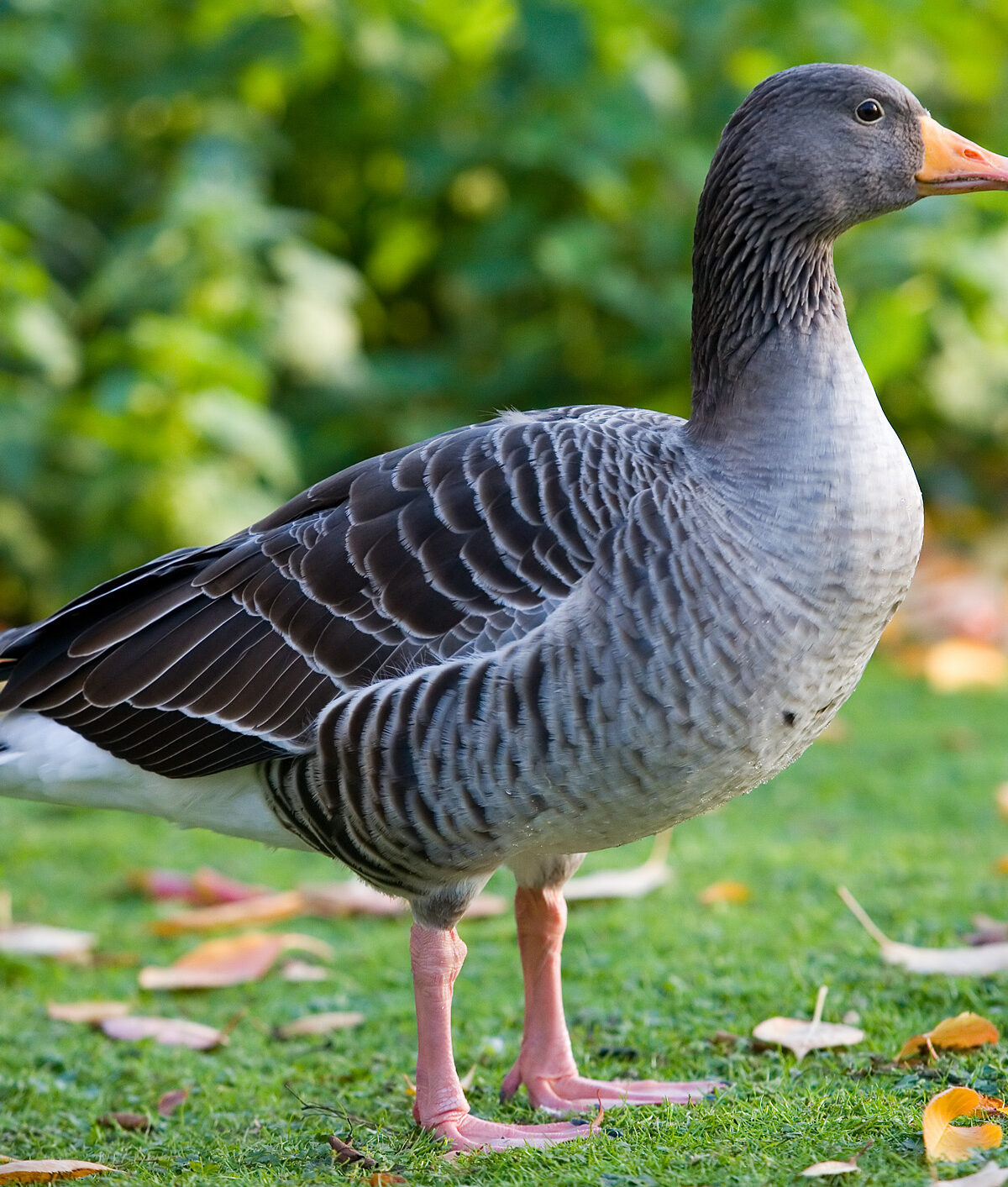
EASTERN GREYLAG GOOSE
Anser anser rubrirostris
DESCRIPTION
Eastern greylag goose (Anser anser rubrirostris) is a subspecies of the greylag goose, characterized by its robust body and long neck. It typically has a grayish-brown plumage with a lighter head and a distinctive orange bill, which is a key feature for identification. This species is known for its migratory behavior, often traveling in large flocks during the breeding season and wintering in warmer regions.
FUN FACTS
- Eastern greylag geese are known for their impressive migratory journeys, often traveling thousands of kilometers between their breeding and wintering grounds
- They are also highly social animals, often seen engaging in synchronized swimming and vocalizations to communicate with each other.| These geese have a unique way of foraging, often tipping their bodies forward to reach underwater vegetation while keeping their tails in the air
- This behavior not only helps them find food but also makes them a distinctive sight in their natural habitats
QUICK INFO
Lifespan10-15 years in the wild, up to 20 in captivity
Average Weight3-4 kg
Average Length75-90 cm
Diet TypeHerbivore
Social Structuregroup — they are often seen in flocks, especially during migration and foraging.
Activity PatternDiurnal
Breeding SeasonSpring (March-May)
- Habitat
- This species inhabits a variety of wetland environments, including lakes, rivers, and marshes, as well as agricultural fields. They prefer areas with abundant vegetation for foraging and nesting.
- Biomes
- Wetlands, Grasslands
- Native Range
- Eastern greylag geese are native to parts of Asia, particularly in regions such as Mongolia and northern China.
- Continent
- Asia
- Countries
- Mongolia, China
- Diet
- Eastern greylag geese primarily feed on grasses, grains, and other plant material, foraging in fields and wetlands. They are known to graze extensively in agricultural areas.
- Diet Type
- Herbivore
- Favorite Food
- grasses, grains
- Social Structure
- group — they are often seen in flocks, especially during migration and foraging.
- Activity Pattern
- Diurnal
- Group Size
- 20-100
- Territorial
- 0

 LC
LC
 VU
VU
3-4 kg
Weight
75-90 cm
Length
- Coloration
- grayish-brown plumage with a lighter head and orange bill
- Sexual Dimorphism
- males and females are similar in appearance, with no significant differences.
- Lifespan
- 10-15 years in the wild, up to 20 in captivity
- Offspring per Birth
- 3-8
- Sexual Maturity
- 2-3 years
- Breeding Season
- Spring (March-May)
LC
Least Concern
IUCN Red List Status
- Population Status
- The population of Eastern greylag geese is currently stable, with no immediate threats to their numbers.
- Wild Population Estimate
- unknown
- Population Trend
- Stable
- Endangered
- 0
- Threats
- Main threats include habitat loss due to agricultural expansion and hunting. Climate change may also impact their migratory patterns and breeding success.
- Predators
- foxes, eagles, and large birds of prey
- Defense Mechanisms
- They often rely on their strong flight capabilities and flocking behavior to evade predators.
- Compatible Animals
- none
- Found in Zoos
- Uncommon