


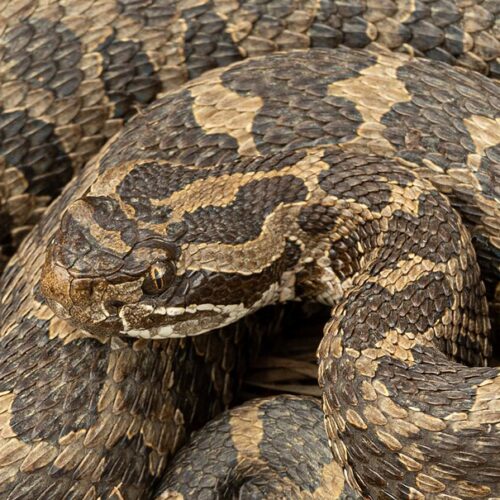
EASTERN MASSASAUGA
Sistrurus catenatus
DESCRIPTION
The Eastern Massasauga is a small to medium-sized rattlesnake, typically measuring between 18 to 30 inches in length. It has a distinctive pattern of dark brown or grayish-brown blotches on a lighter background, which provides excellent camouflage in its natural habitat. This species is known for its relatively docile nature, often preferring to remain motionless when threatened rather than striking.
FUN FACTS
- The Eastern Massasauga is the only rattlesnake species found in the Midwest, making it a unique part of the region's biodiversity
- Despite their venomous nature, they are often misunderstood and play a crucial role in controlling rodent populations in their ecosystems.|Eastern Massasaugas are known for their distinctive rattle, which they use to warn potential threats
- Interestingly, not all individuals have a prominent rattle, and some may have a very small or even absent rattle, making identification challenging
QUICK INFO
Lifespan10-15 years in the wild, up to 20 in captivity
Average Weight0.5-1.5 kg
Average Length0.5-0.75 m
Diet TypeCarnivore
Social Structuresolitary
Activity PatternCrepuscular
Breeding SeasonSpring (April-June)
- Habitat
- The Eastern Massasauga inhabits wetlands, grasslands, and open woodlands, often near water sources. It prefers areas with abundant cover such as dense vegetation or rocky outcrops.
- Biomes
- Temperate Forest, Wetland, Grassland
- Native Range
- The Eastern Massasauga is found in the Great Lakes region of North America, primarily in the United States and parts of Canada.
- Continent
- North America
- Countries
- United States, Canada
- Diet
- The Eastern Massasauga primarily feeds on small mammals, birds, and amphibians. It uses its heat-sensing pits to locate warm-blooded prey, striking quickly to inject venom.
- Diet Type
- Carnivore
- Favorite Food
- small mammals, birds
- Social Structure
- solitary
- Activity Pattern
- Crepuscular
- Group Size
- 1
- Territorial
- 0
 VU
VU
 LC
LC

0.5-1.5 kg
Weight
0.5-0.75 m
Length
- Coloration
- dark brown or grayish-brown with lighter background and dark blotches
- Sexual Dimorphism
- males are generally smaller than females
- Lifespan
- 10-15 years in the wild, up to 20 in captivity
- Gestation Period
- 90-100 days
- Offspring per Birth
- 3-20
- Sexual Maturity
- 2-3 years
- Breeding Season
- Spring (April-June)
VU
Vulnerable
IUCN Red List Status
- Population Status
- The population is currently declining due to habitat loss and fragmentation.
- Wild Population Estimate
- unknown
- Population Trend
- Decreasing
- Endangered
- 1
- Threats
- Main threats include habitat destruction due to urban development and agriculture, as well as road mortality. Additionally, persecution by humans due to fear of snakes contributes to their decline.
- Conservation Program
- Various local conservation programs aim to protect habitats and educate the public about the species.
- Predators
- birds of prey, raccoons, foxes, larger snakes
- Defense Mechanisms
- The Eastern Massasauga uses its rattles as a warning signal to deter potential threats. When threatened, it may also remain motionless or attempt to escape.
- Found in Zoos
- Uncommon