


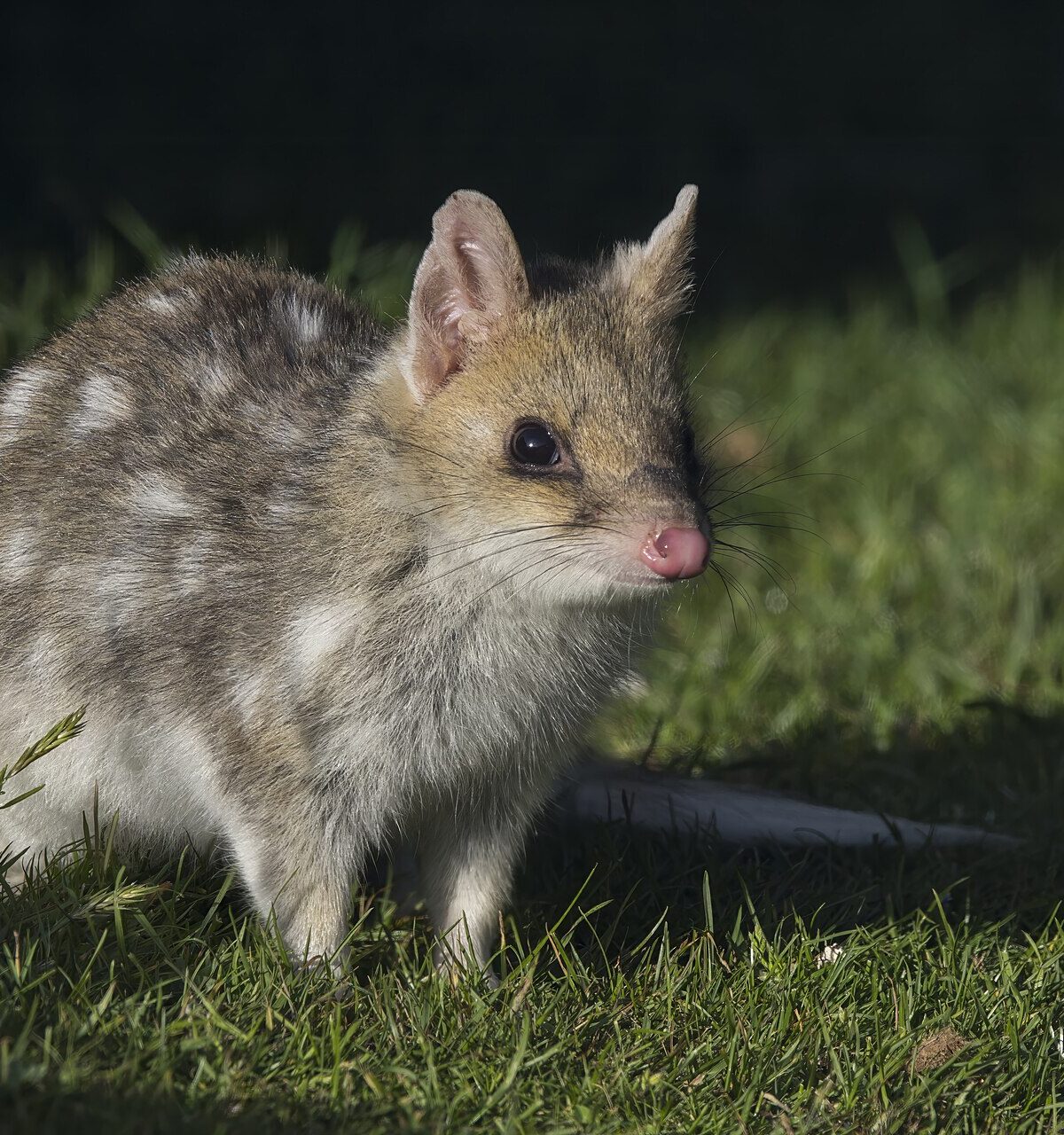
EASTERN QUOLL
Dasyurus viverrinus
DESCRIPTION
Eastern Quoll (Dasyurus viverrinus) is commonly known as the Spotted Quoll and Tiger Quoll. This small to medium-sized marsupial features a distinctive coat with white spots on a dark brown or black background, making it easily recognizable. They are primarily nocturnal and are known for their agile climbing abilities, often found in a variety of habitats including forests and grasslands.
FUN FACTS
- Eastern Quolls are known for their unique hunting techniques, often climbing trees to hunt birds or insects
- They are also one of the few marsupials that exhibit a form of social play, engaging in playful interactions with each other during the breeding season.|The Eastern Quoll has a fascinating reproductive strategy, where the young are born very small and continue to develop in the mother's pouch for several weeks
- After leaving the pouch, the young will ride on their mother's back for additional protection and warmth
QUICK INFO
Lifespan2-5 years in the wild, up to 10 years in captivity
Average Weight2.5-4 kg
Average Length60-80 cm
Diet TypeCarnivore
Social Structuresolitary, with individuals typically maintaining their own territories
Activity PatternNocturnal
Breeding SeasonLate winter to early spring (August-October)
- Habitat
- Eastern Quolls inhabit a range of environments, including forests, woodlands, and grasslands. They prefer areas with dense vegetation for shelter and hunting.
- Biomes
- Temperate Forest, Grassland
- Native Range
- The Eastern Quoll is native to eastern Australia, including Tasmania and parts of the mainland.
- Continent
- Australia
- Countries
- Australia, Tasmania
- Diet
- Eastern Quolls are carnivorous and primarily feed on insects, small mammals, and birds. They are opportunistic hunters and scavengers, often foraging for food at night.
- Diet Type
- Carnivore
- Favorite Food
- insects, small mammals, birds
- Social Structure
- solitary, with individuals typically maintaining their own territories
- Activity Pattern
- Nocturnal
- Group Size
- 1
- Territorial
- 1

 VU
VU
2.5-4 kg
Weight
60-80 cm
Length
- Coloration
- dark brown or black with white spots
- Sexual Dimorphism
- males are generally larger than females
- Lifespan
- 2-5 years in the wild, up to 10 years in captivity
- Gestation Period
- 21 days
- Offspring per Birth
- 2-6
- Sexual Maturity
- 1 year
- Breeding Season
- Late winter to early spring (August-October)
EN
Endangered
IUCN Red List Status
- Population Status
- The population of Eastern Quolls has declined significantly due to habitat loss and predation by introduced species.
- Wild Population Estimate
- unknown
- Population Trend
- Decreasing
- Endangered
- 1
- Threats
- Main threats to Eastern Quolls include habitat destruction, competition with invasive species like foxes and cats, and road fatalities. Conservation efforts are underway to protect their habitats and manage predator populations.
- Conservation Program
- Tasmanian Devil Recovery Program
- Predators
- foxes, feral cats, and large birds of prey
- Defense Mechanisms
- Eastern Quolls use their agility to escape predators and may also hiss or growl when threatened.
- Found in Zoos
- Uncommon