


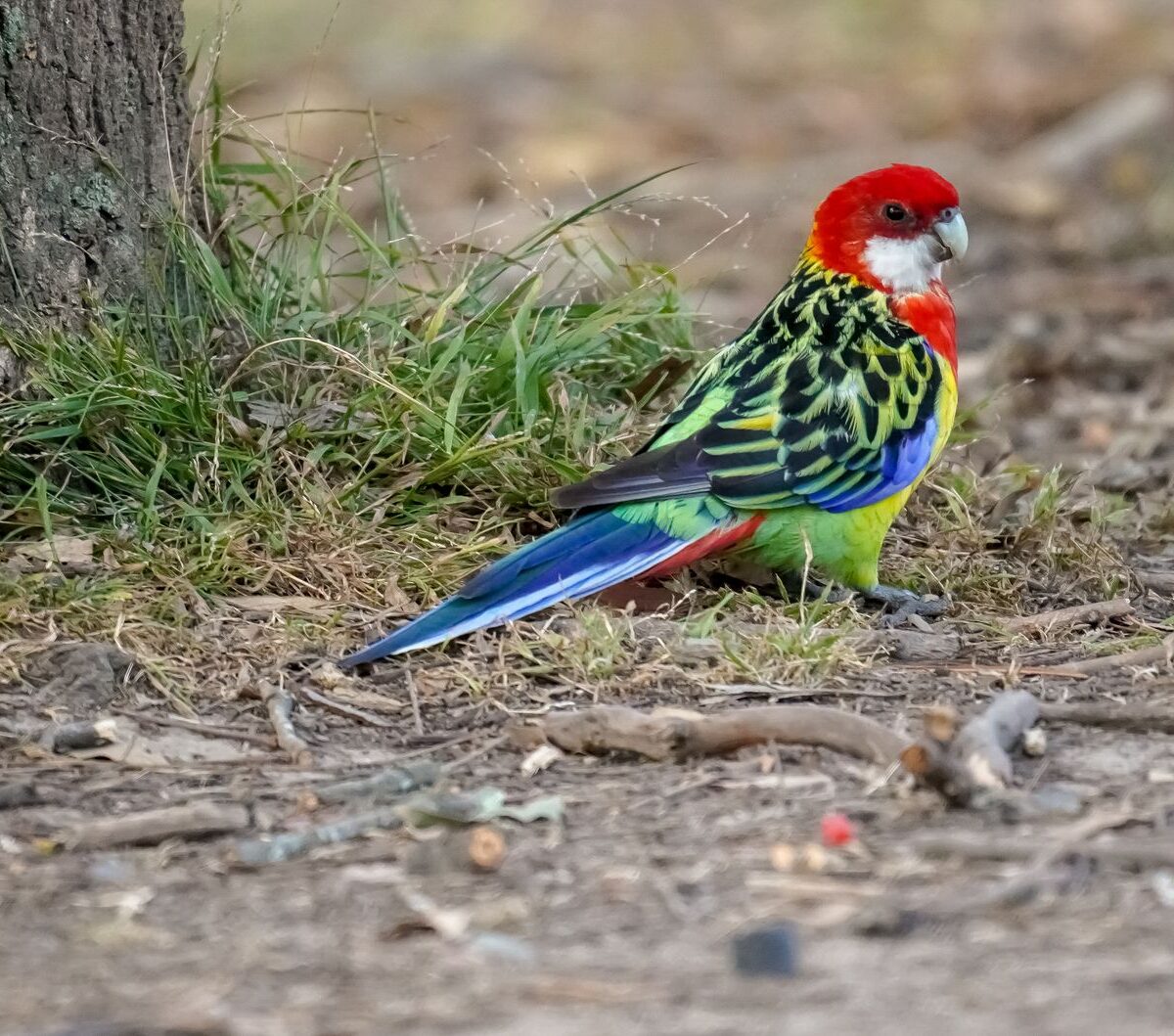
EASTERN ROSELLA
Platycercus eximius
DESCRIPTION
Eastern Rosella (Platycercus eximius) is a strikingly colorful parrot native to eastern Australia. It features a vibrant mix of red, yellow, and green plumage, with a distinctive blue patch on its wings. These birds are known for their social behavior, often seen in pairs or small groups, and they inhabit a variety of environments including woodlands and gardens.
FUN FACTS
- Eastern Rosellas are known for their melodious calls and can mimic sounds, making them popular pets
- They are also highly social and enjoy interacting with their owners, often displaying playful behavior
- | These birds are often seen foraging in pairs or small groups, and they have a unique way of communicating with each other through a series of whistles and chirps
- Their vibrant colors not only attract mates but also serve as a warning to potential predators about their toxicity from certain seeds they consume
QUICK INFO
Lifespan10-15 years in the wild, up to 20 years in captivi
Average Weight100-150 g
Average Length25-30 cm
Diet TypeHerbivore
Social StructureThey are typically found in pairs or small groups, often forming loose flocks.
Activity PatternDiurnal
Breeding SeasonSpring to early summer
- Habitat
- They thrive in open forests, woodlands, and urban areas, often favoring areas with plenty of trees for nesting. Eastern Rosellas are adaptable and can also be found in gardens and parks.
- Biomes
- Temperate Forest, Grassland
- Native Range
- Eastern Australia, including Tasmania and parts of New Guinea.
- Continent
- Australia
- Countries
- Australia, Papua New Guinea
- Diet
- Eastern Rosellas primarily feed on seeds, fruits, and flowers, often foraging in trees and shrubs. They are known to enjoy a variety of seeds, particularly from grasses and other plants.
- Diet Type
- Herbivore
- Favorite Food
- seeds, fruits, flowers
- Social Structure
- They are typically found in pairs or small groups, often forming loose flocks.
- Activity Pattern
- Diurnal
- Group Size
- 2-20
- Territorial
- 0
 VU
VU
 LC
LC
100-150 g
Weight
25-30 cm
Length
- Coloration
- Bright red head and underparts, with yellow and green wings and back.
- Sexual Dimorphism
- Males are generally more brightly colored than females.
- Lifespan
- 10-15 years in the wild, up to 20 years in captivi
- Offspring per Birth
- 3-6
- Sexual Maturity
- 1 year
- Breeding Season
- Spring to early summer
LC
Least Concern
IUCN Red List Status
- Population Status
- The population of Eastern Rosellas is currently stable, and they are not considered endangered.
- Wild Population Estimate
- Not specifically estimated, but considered common in their range.
- Population Trend
- Stable
- Endangered
- 0
- Threats
- Habitat loss due to deforestation and urbanization poses a threat to their populations. However, they adapt well to human-altered environments.
- Predators
- Birds of prey, such as hawks and eagles, as well as feral cats.
- Defense Mechanisms
- They often rely on their ability to fly quickly and maneuver through trees to evade predators.
- Compatible Animals
- Other small parrots, finches, canaries
- Found in Zoos
- Common