


EASTERN TURKEY VULTURE
Cathartes aura septentrionalis
DESCRIPTION
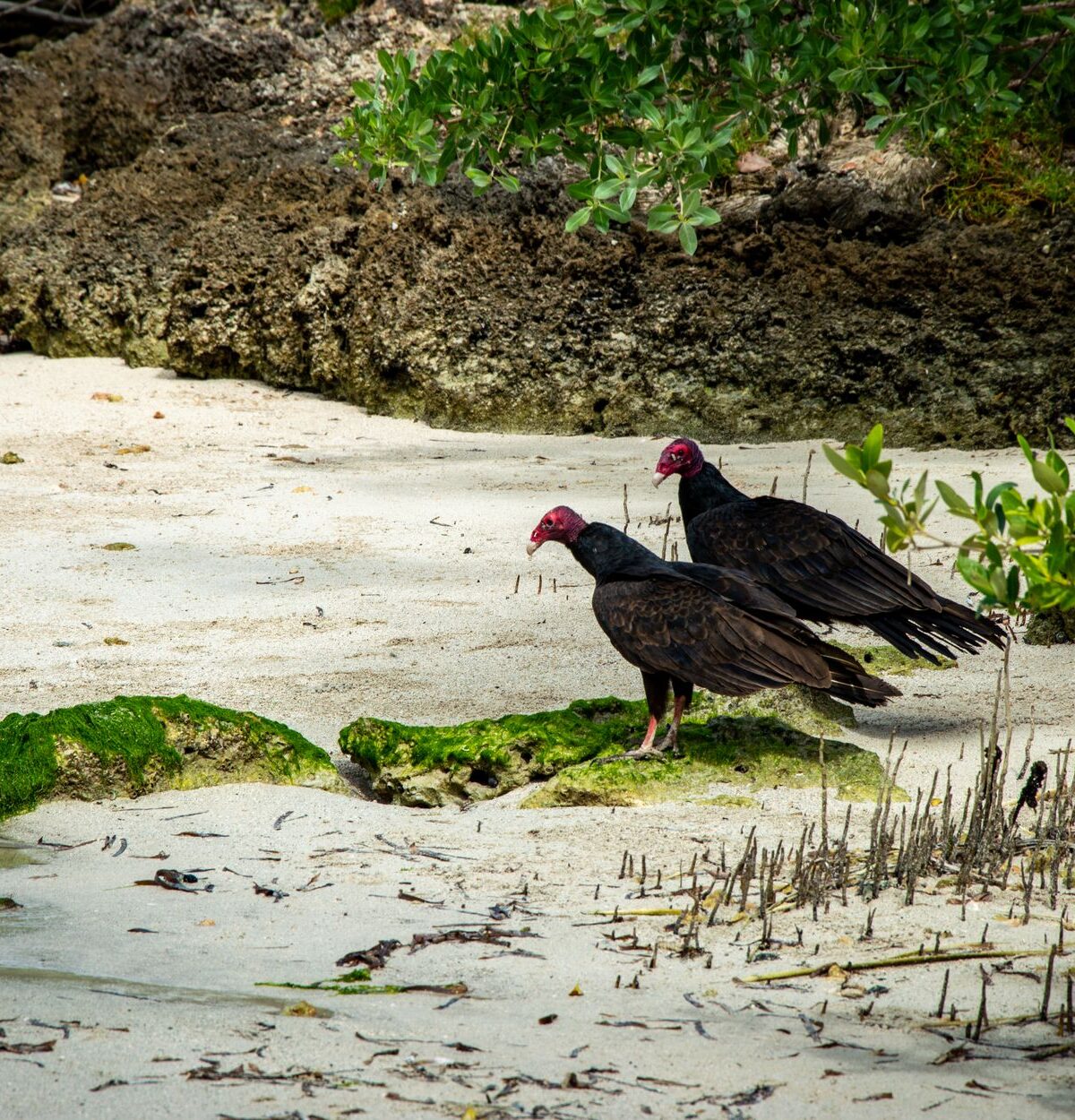
Eastern turkey vulture (Cathartes aura septentrionalis) is commonly known as the Turkey vulture. This large bird of prey is characterized by its dark brown to black plumage, a featherless red head, and a distinctive wingspan that can reach up to 6 feet. They are known for their soaring flight, often seen gliding in circles while searching for carrion, which constitutes the majority of their diet.
FUN FACTS
- Turkey vultures have an exceptional sense of smell, which is rare among birds, allowing them to detect carrion from great distances
- They also play a crucial ecological role by consuming dead animals, helping to prevent the spread of disease.| Unlike many birds, turkey vultures do not build nests; instead, they lay their eggs in secluded areas such as rock crevices or abandoned buildings, relying on the warmth of the environment to incubate their eggs
QUICK INFO
Lifespan10-20 years in the wild, up to 30 years in captivi
Average Weight1.5-2.5 kg
Average Length60-75 cm
Diet TypeCarnivore
Social StructureThey are often found in groups, especially when feeding, but can also be solitary.
Activity PatternDiurnal
Breeding SeasonSpring (March-May)
- Habitat
- They inhabit a variety of open and semi-open areas, including forests, grasslands, and urban environments. Their adaptability allows them to thrive in diverse habitats across their range.
- Biomes
- Temperate Forest, Grassland, Urban
- Native Range
- Eastern North America, from southern Canada to northern South America.
- Continent
- North America, South America
- Countries
- United States, Canada, Mexico, Colombia, Venezuela
- Diet
- Eastern turkey vultures primarily feed on carrion, utilizing their keen sense of smell to locate decaying animals.
- Diet Type
- Carnivore
- Favorite Food
- carrion
- Social Structure
- They are often found in groups, especially when feeding, but can also be solitary.
- Activity Pattern
- Diurnal
- Group Size
- 5-30
- Territorial
- 0
 LC
LC
 LC
LC
1.5-2.5 kg
Weight
60-75 cm
Length
- Coloration
- Dark brown to black with a featherless red head.
- Sexual Dimorphism
- Males and females are similar in appearance, but females are generally larger.
- Lifespan
- 10-20 years in the wild, up to 30 years in captivi
- Offspring per Birth
- 1-3
- Sexual Maturity
- 5-6 years
- Breeding Season
- Spring (March-May)
LC
Least Concern
IUCN Red List Status
- Population Status
- The population is currently stable, with a wide distribution across its range.
- Wild Population Estimate
- 1,000,000+
- Population Trend
- Stable
- Endangered
- 0
- Threats
- Main threats include habitat loss, poisoning from consuming carcasses contaminated with toxins, and collisions with vehicles. Despite these threats, their population remains stable.
- Predators
- Great horned owls, eagles, and humans (indirectly through habitat destruction).
- Defense Mechanisms
- They may regurgitate undigested food as a defense mechanism when threatened.
- Compatible Animals
- Other vultures, certain raptors
- Found in Zoos
- Common