


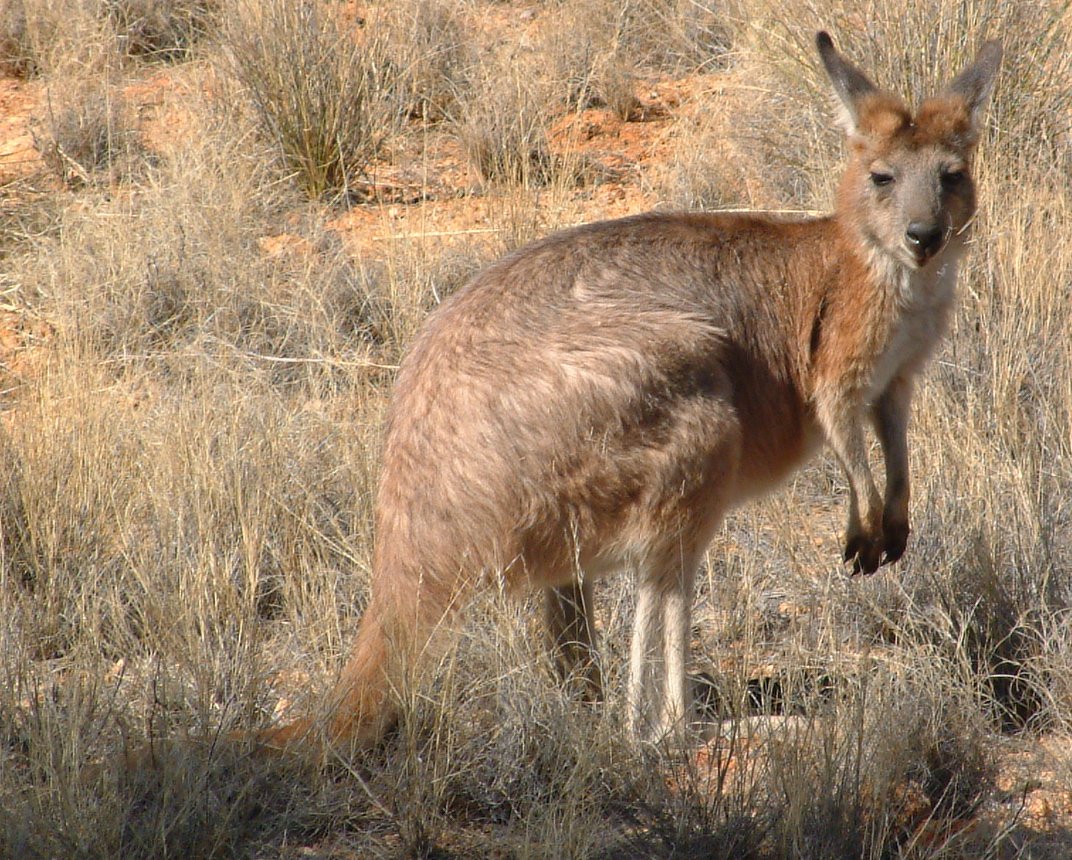
EASTERN WALLAROO
Osphranter robustus robustus
DESCRIPTION
Eastern wallaroo (Osphranter robustus robustus) is a large marsupial native to Australia, characterized by its robust build and powerful hind legs. It has a coarse, shaggy coat that varies in color from grey to brown, with a lighter underbelly. These wallaroos are known for their agility and can often be seen hopping across rocky terrains, displaying a mix of solitary and social behaviors depending on environmental conditions.
FUN FACTS
- Eastern wallaroos are excellent jumpers, capable of leaping over obstacles that are several times their height
- They can also cover large distances quickly, making them well-adapted to their rugged habitats.|These wallaroos have a unique social structure, often being seen alone or in small family groups, which allows them to efficiently forage for food while minimizing competition
- Their ability to adapt to various environments has helped them thrive in the wild
QUICK INFO
Lifespan10-15 years in the wild, up to 20 years in captivi
Average Weight40-60 kg
Average Length1.0-1.5 m
Diet TypeHerbivore
Social Structuresolitary, occasionally found in small groups
Activity PatternCrepuscular
Breeding SeasonYear-round, with peaks in spring and summer
- Habitat
- Eastern wallaroos inhabit a variety of environments, including rocky outcrops, open woodlands, and grasslands. They prefer areas with ample cover to hide from predators and to find food.
- Biomes
- Grassland, Woodland
- Native Range
- The native range of the Eastern wallaroo includes the eastern parts of Australia, particularly in New South Wales and Queensland.
- Continent
- Australia
- Countries
- Australia
- Diet
- Eastern wallaroos are herbivores, primarily grazing on grasses and shrubs. They are known to adapt their diet based on seasonal availability of food sources.
- Diet Type
- Herbivore
- Favorite Food
- grasses, shrubs
- Social Structure
- solitary, occasionally found in small groups
- Activity Pattern
- Crepuscular
- Group Size
- 1-5
- Territorial
- 0
 LC
LC
 LC
LC
40-60 kg
Weight
1.0-1.5 m
Length
1.0 m at shoulder
Height (Shoulder)
- Coloration
- grey to brown with a lighter underbelly
- Sexual Dimorphism
- males are generally larger than females
- Lifespan
- 10-15 years in the wild, up to 20 years in captivi
- Gestation Period
- 30-35 days
- Offspring per Birth
- 1
- Sexual Maturity
- 1-2 years
- Breeding Season
- Year-round, with peaks in spring and summer
LC
Least Concern
IUCN Red List Status
- Population Status
- The population of Eastern wallaroos is currently stable, with no immediate threats to their survival.
- Wild Population Estimate
- Unknown
- Population Trend
- Stable
- Endangered
- 0
- Threats
- Main threats include habitat loss due to agriculture and urban development, as well as competition with livestock for food resources. However, they are not currently facing significant threats.
- Predators
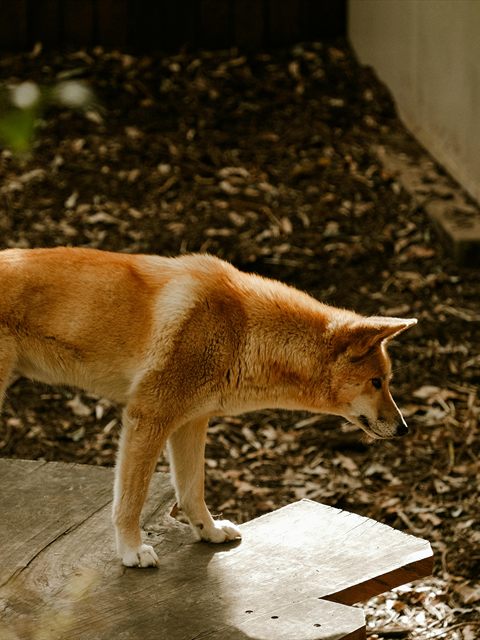
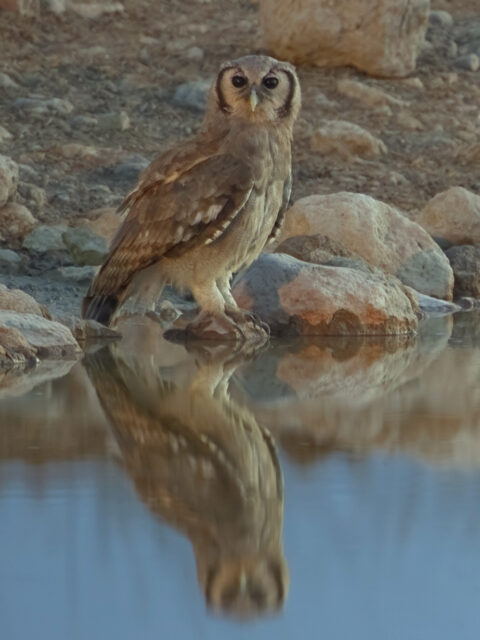
- Dingoes, eagles, and large reptiles are known predators of Eastern wallaroos.
- Defense Mechanisms
- They rely on their speed and agility to escape predators, often using rocky terrain to their advantage.
- Found in Zoos
- Uncommon