


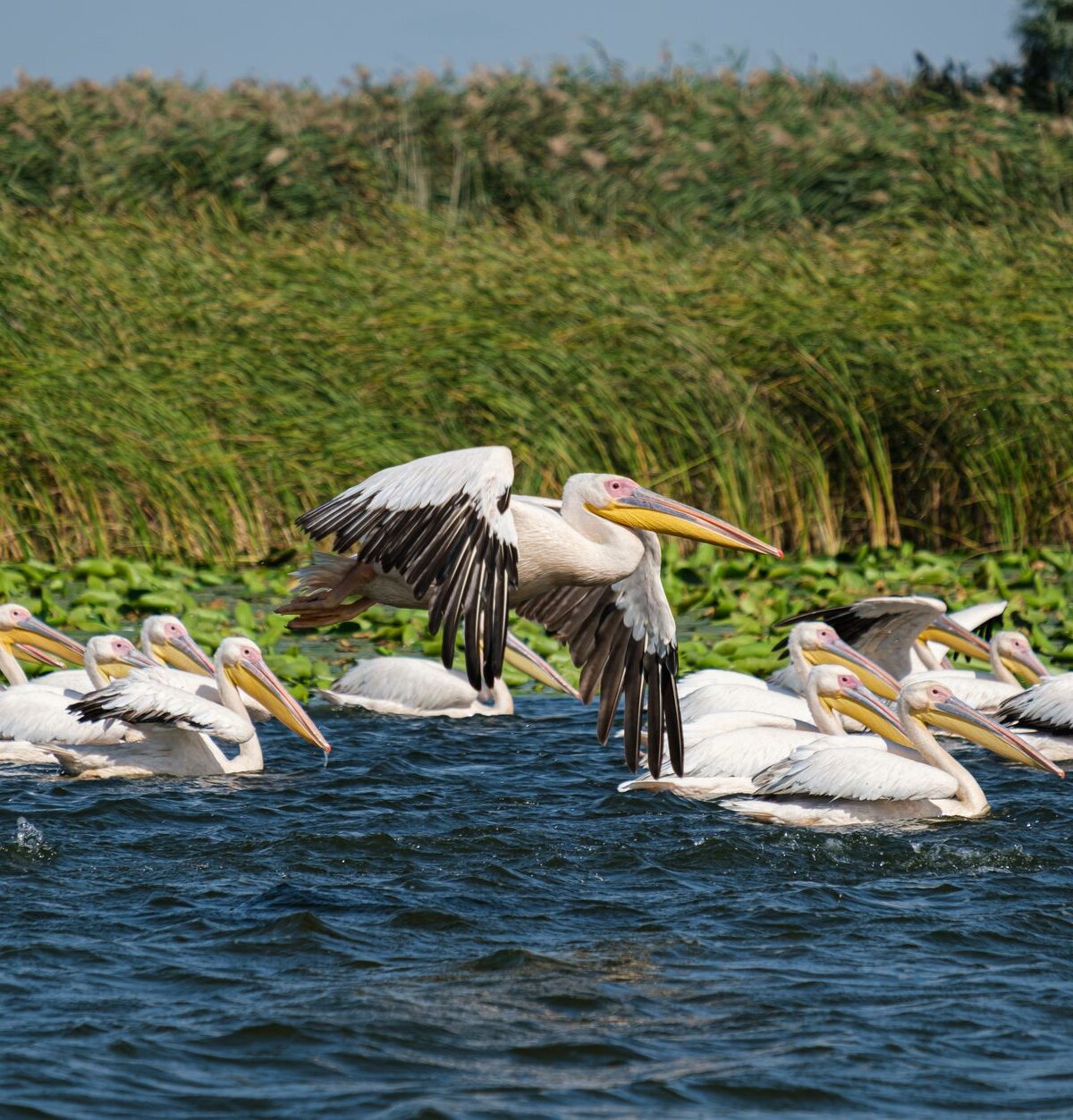
EASTERN WHITE PELICAN
DESCRIPTION
Also called the Great White Pelican, Eastern White Pelican is a large waterbird known for its striking white plumage and distinctive long bill with a large throat pouch. These pelicans are social birds, often seen in groups, and are known for their cooperative hunting techniques, where they work together to herd fish into shallow waters. They inhabit a variety of wetland environments, including lakes, rivers, and coastal areas, where they can be seen gliding gracefully over the water or diving to catch their prey.
FUN FACTS
- Eastern White Pelicans are known for their impressive wingspan, which can reach up to 3 meters, making them one of the largest flying birds
- They have a unique feeding technique where they dip their bills into the water and scoop up fish, often working together in groups to maximize their catch.|These pelicans are also known for their elaborate courtship displays, which include synchronized swimming and bill clapping, showcasing their strong social bonds and cooperative nature
QUICK INFO
Lifespan15-25 years in the wild, up to 30 years in captivi
Average Weight10-15 kg
Average Length1.2-1.8 m
Diet TypePiscivore
Social Structuregroup — they are highly social birds that often nest and feed in large colonies.
Activity PatternDiurnal
Breeding SeasonSpring (April-June)
- Habitat
- These pelicans prefer freshwater and brackish wetlands, including lakes, rivers, and estuaries. They often nest in colonies on islands or in secluded areas away from predators.
- Biomes
- Wetlands, Coastal
- Native Range
- Eastern White Pelicans are found across parts of Europe, Asia, and Africa, particularly in regions with suitable wetland habitats.
- Continent
- Asia, Europe, Africa
- Countries
- India, Nepal, Egypt, Greece, Turkey
- Diet
- Eastern White Pelicans primarily feed on fish, which they catch using their large bills and throat pouches. They may also consume small invertebrates occasionally.
- Diet Type
- Piscivore
- Favorite Food
- fish
- Social Structure
- group — they are highly social birds that often nest and feed in large colonies.
- Activity Pattern
- Diurnal
- Group Size
- 20-100
- Territorial
- 0
 LC
LC
 LC
LC
10-15 kg
Weight
1.2-1.8 m
Length
- Coloration
- primarily white with some black on the wings and a yellow-orange patch on the bill.
- Sexual Dimorphism
- males and females are similar in appearance, though males are generally larger.
- Lifespan
- 15-25 years in the wild, up to 30 years in captivi
- Offspring per Birth
- 1-3
- Sexual Maturity
- 3-4 years
- Breeding Season
- Spring (April-June)
LC
Least Concern
IUCN Red List Status
- Population Status
- The population of Eastern White Pelicans is currently stable, though they face threats from habitat loss.
- Wild Population Estimate
- 50,000-100,000
- Population Trend
- Stable
- Endangered
- 0
- Threats
- Main threats include habitat destruction due to human activities, pollution, and disturbance from fishing and boating. Climate change also poses a risk to their wetland habitats.
- Predators
- Eggs and chicks are vulnerable to predation by birds of prey, such as eagles and crows, as well as mammals like foxes.
- Defense Mechanisms
- They rely on their size and social behavior for protection, often nesting in large colonies to deter predators.
- Compatible Animals
- other pelican species, ducks, swans
- Found in Zoos
- Common