


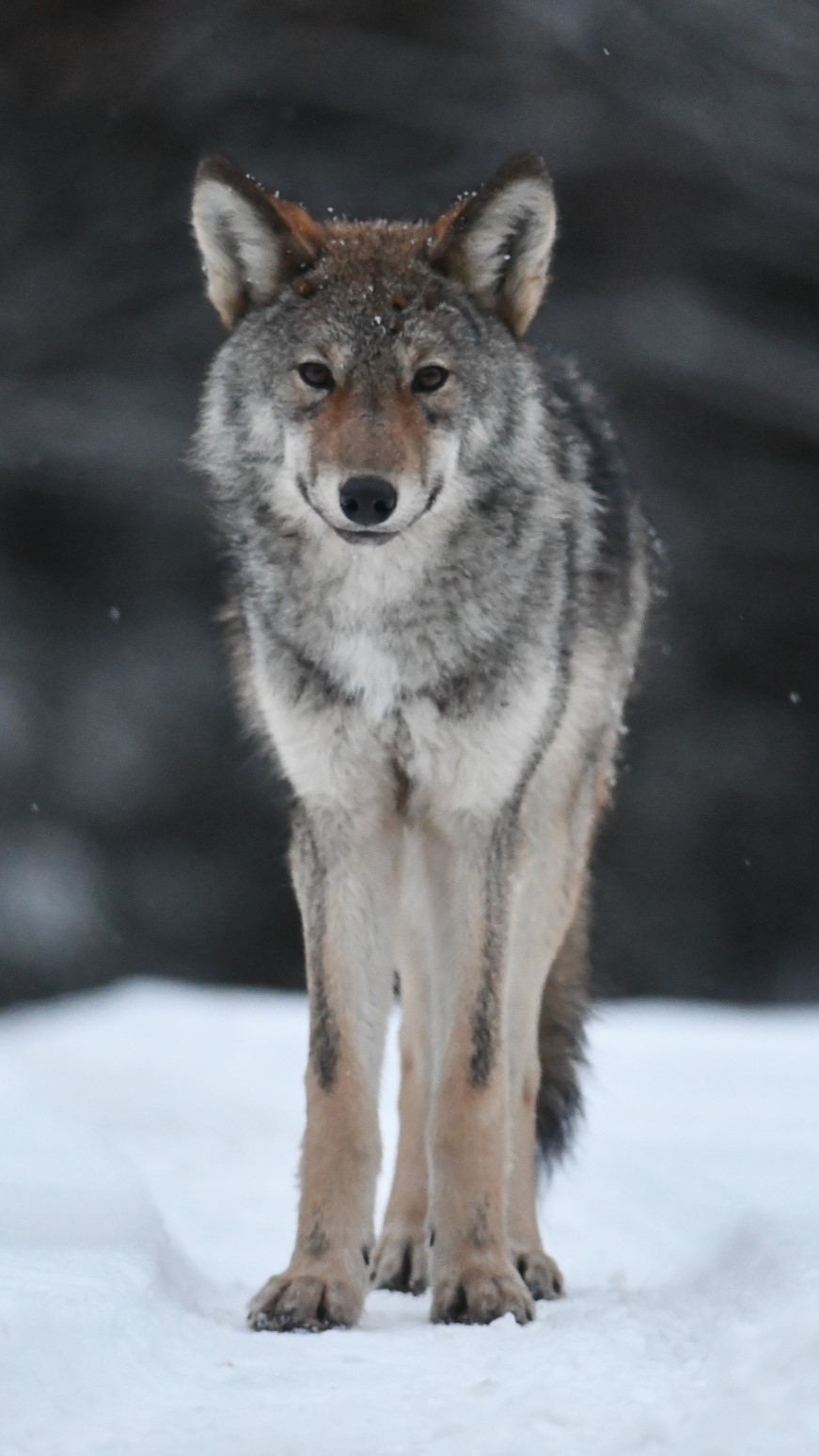
EASTERN WOLF
Canis lycaon
DESCRIPTION
Eastern Wolf (Canis lycaon) is a medium-sized canid that exhibits a range of colors from gray to reddish-brown, often with a lighter underbelly. This species is known for its social behavior, typically living in packs that can range from a few individuals to over a dozen. They play a crucial role in their ecosystem as apex predators, helping to maintain the balance of prey populations in their habitats.
FUN FACTS
- Eastern Wolves are known for their unique vocalizations, which can include howls, barks, and yips, allowing them to communicate over long distances
- | Unlike many other wolf species, Eastern Wolves have adapted to hunt in dense forest environments, showcasing their agility and stealth in navigating through thick underbrush
QUICK INFO
Lifespan5-10 years in the wild, up to 15 years in captivit
Average Weight25-45 kg
Average Length1.2-1.5 m
Diet TypeCarnivore
Social StructureTypically found in packs, Eastern Wolves exhibit strong social bonds and cooperative behaviors within their groups.
Activity PatternCrepuscular
Breeding SeasonWinter (January-March)
- Habitat
- Eastern Wolves inhabit a variety of forested areas, including mixed woodlands and wetlands. They prefer regions with ample cover for hunting and denning.
- Biomes
- Temperate Forest, Boreal Forest
- Native Range
- The Eastern Wolf is native to parts of eastern Canada and the northeastern United States.
- Continent
- North America
- Countries
- Canada, United States
- Diet
- Eastern Wolves primarily hunt large ungulates such as deer, but they also consume smaller mammals and carrion when necessary.
- Diet Type
- Carnivore
- Favorite Food
- White-tailed deer
- Social Structure
- Typically found in packs, Eastern Wolves exhibit strong social bonds and cooperative behaviors within their groups.
- Activity Pattern
- Crepuscular
- Group Size
- 2-10
- Territorial
- 1
25-45 kg
Weight
1.2-1.5 m
Length
0.6-0.9 m at shoulder
Height (Shoulder)
- Coloration
- Generally gray to reddish-brown with a lighter underbelly and distinctive facial markings.
- Sexual Dimorphism
- Males are generally larger than females.
- Lifespan
- 5-10 years in the wild, up to 15 years in captivit
- Gestation Period
- 63 days
- Offspring per Birth
- 4-6
- Sexual Maturity
- 2-3 years
- Breeding Season
- Winter (January-March)
EN
Endangered
IUCN Red List Status
- Population Status
- The population of Eastern Wolves is currently considered vulnerable due to habitat loss and hybridization with coyotes.
- Wild Population Estimate
- Unknown, but estimated to be in the low thousands.
- Population Trend
- Decreasing
- Endangered
- 1
- Threats
- Main threats include habitat destruction, vehicle collisions, and hybridization with coyotes, which can dilute the genetic integrity of the species.
- Predators
- Humans are the primary threat, but young wolves may be vulnerable to larger predators such as bears.
- Defense Mechanisms
- Eastern Wolves rely on their pack structure for defense and may use vocalizations to warn off intruders.
- Found in Zoos
- Uncommon