


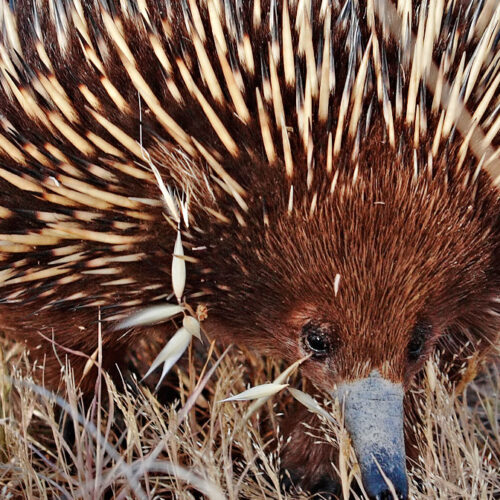
ECHIDNA
Tachyglossus aculeatus
DESCRIPTION
The echidna, or spiny anteater, is a monotreme native to Australia and New Guinea. It is characterized by its spiny coat, elongated snout, and ability to lay eggs.
FUN FACTS
- Echidnas are one of only five extant species of monotremes | They can regulate their body temperature, unlike most mammals | Echidnas have a specialized snout that helps them detect food underground
QUICK INFO
Lifespan10-16 years in the wild, up to 50 in captivity
Average Weight2-7 kg
Average Length30-45 cm
Diet TypeInsectivore
Social Structuresolitary, typically found alone except during mating season
Activity PatternDiurnal
Breeding SeasonWinter (June-August)
- Habitat
- Echidnas inhabit a variety of environments, including forests, grasslands, and deserts. They prefer areas with ample soil for burrowing and foraging.
- Biomes
- Temperate Forest, Grassland, Desert
- Native Range
- Echidnas are found throughout Australia and New Guinea.
- Continent
- Australia, Oceania
- Countries
- Australia, New Guinea
- Diet
- Echidnas primarily feed on ants and termites, using their long tongues to extract them from their nests. They may also consume other small invertebrates.
- Diet Type
- Insectivore
- Favorite Food
- ants, termites
- Social Structure
- solitary, typically found alone except during mating season
- Activity Pattern
- Diurnal
- Group Size
- 1
- Territorial
- 0

2-7 kg
Weight
30-45 cm
Length
- Coloration
- spiny, brown to black fur
- Lifespan
- 10-16 years in the wild, up to 50 in captivity
- Gestation Period
- 22 days
- Offspring per Birth
- 1
- Sexual Maturity
- 2-3 years
- Breeding Season
- Winter (June-August)
LC
Least Concern
IUCN Red List Status
- Population Status
- The population is currently stable, but habitat loss poses a potential threat.
- Wild Population Estimate
- unknown
- Population Trend
- Stable
- Endangered
- 0
- Threats
- Main threats include habitat destruction and climate change. They are also vulnerable to predation by introduced species.
- Predators
- foxes, feral cats
- Defense Mechanisms
- Echidnas can curl into a ball, using their spines for protection against predators.
- Found in Zoos
- Uncommon