


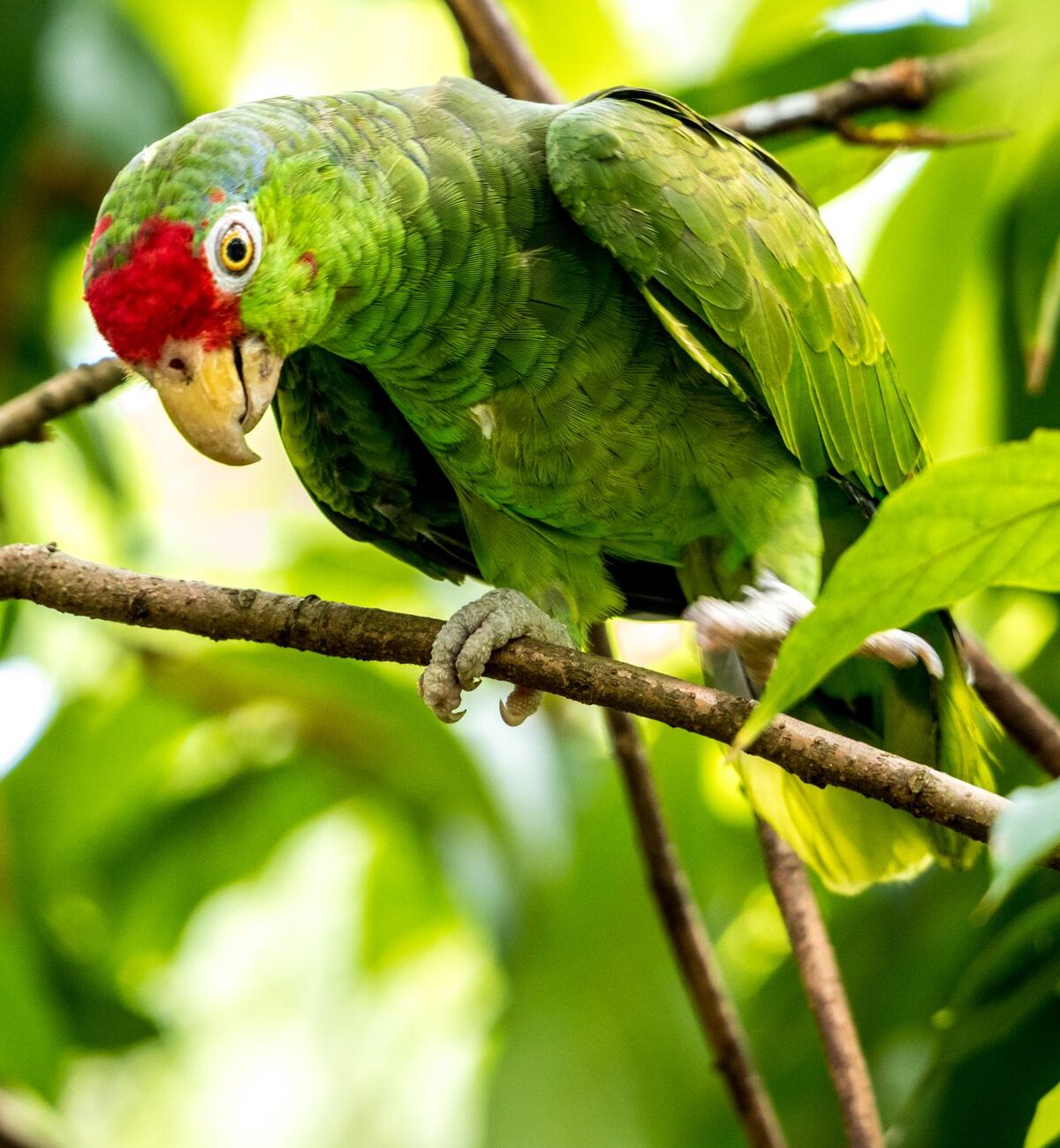
ECUADORIAN RED-LORED AMAZON
Amazona viridis
DESCRIPTION
Ecuadorian Red-lored Amazon (Amazona viridis) is commonly known as the Red-lored Amazon and is characterized by its vibrant green plumage, accented by a distinctive red patch on the forehead and yellow markings on the face. This medium-sized parrot is known for its playful and social behavior, often seen in pairs or small groups, engaging in vocalizations and interactions with one another. In the wild, they inhabit tropical forests and are known to be quite intelligent, capable of mimicking human speech and sounds.
FUN FACTS
- Ecuadorian Red-lored Amazons are known for their exceptional intelligence and ability to mimic human speech, making them popular pets
- They can develop a large vocabulary and often use words in context, showcasing their cognitive abilities
- | These parrots are also known for their playful nature, often engaging in acrobatic displays and games with their flock mates
- Their social interactions are complex, and they form strong bonds with their partners, often preening each other and sharing food
QUICK INFO
Lifespan20-30 years in captivity
Average Weight300-400 g
Average Length30-35 cm
Diet TypeHerbivore
Social StructureThey are typically found in pairs or small groups, often forming strong bonds with their mates.
Activity PatternDiurnal
Breeding SeasonSpring (March-May)
- Habitat
- Ecuadorian Red-lored Amazons thrive in tropical and subtropical forests, often found in areas with abundant fruiting trees. They prefer habitats that provide ample food sources and nesting sites.
- Biomes
- Tropical Rainforest
- Native Range
- This species is native to the lowland forests of Ecuador and parts of Peru.
- Continent
- South America
- Countries
- Ecuador, Peru
- Diet
- They primarily feed on fruits, seeds, nuts, and flowers, showcasing a preference for a varied diet that includes both plant material and some insects.
- Diet Type
- Herbivore
- Favorite Food
- Fruits, seeds, nuts
- Social Structure
- They are typically found in pairs or small groups, often forming strong bonds with their mates.
- Activity Pattern
- Diurnal
- Group Size
- 2-20
- Territorial
- 1
 VU
VU
 LC
LC
300-400 g
Weight
30-35 cm
Length
- Coloration
- Predominantly green with red forehead and yellow facial markings.
- Lifespan
- 20-30 years in captivity
- Offspring per Birth
- 2-4
- Sexual Maturity
- 3-4 years
- Breeding Season
- Spring (March-May)
LC
Least Concern
IUCN Red List Status
- Population Status
- The population is currently stable, but habitat loss poses a threat.
- Wild Population Estimate
- 50,000-100,000
- Population Trend
- Stable
- Endangered
- 0
- Threats
- Main threats include habitat destruction due to deforestation and illegal trapping for the pet trade. Conservation efforts are needed to protect their natural habitats.
- Predators
- Large birds of prey, snakes, and mammals such as cats may prey on young or vulnerable individuals.
- Defense Mechanisms
- They often rely on their ability to fly away quickly and their loud vocalizations to warn others of danger.
- Compatible Animals
- Other parrot species, small mammals
- Found in Zoos
- Common