


EDWARDS’S PHEASANT
DESCRIPTION
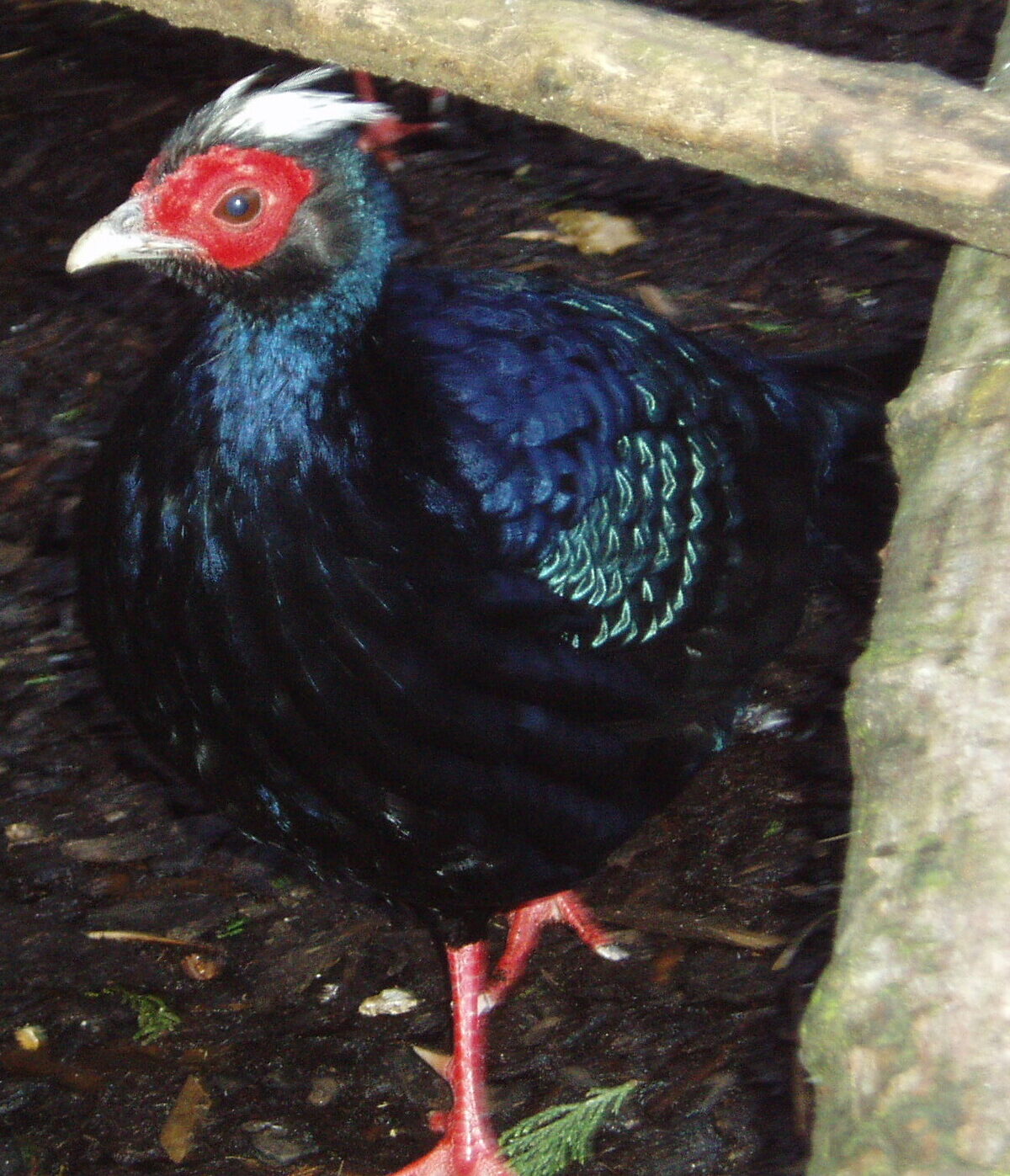
Edwards’s Pheasant is a striking bird native to the dense forests of Vietnam, known for its vibrant plumage and distinctive long tail. Males are particularly colorful, featuring a mix of iridescent blue, green, and gold feathers, while females are more subdued in coloration, primarily brown with some lighter markings. This species is primarily ground-dwelling, often foraging in the underbrush for food and is known for its elusive behavior, making it a challenge to observe in the wild.
FUN FACTS
- Edwards’s Pheasant is named after the British naturalist George Edwards, who was one of the first to describe the species in the 18th century
- This pheasant is not only known for its beauty but also for its unique courtship displays, where males perform elaborate dances to attract females, showcasing their vibrant plumage and vocalizations
QUICK INFO
Lifespan10-15 years in the wild, up to 20 in captivity
Average Weight1.5-2.5 kg
Average Length70-80 cm
Diet TypeOmnivore
Social Structuresolitary or pair, often seen alone or with a mate
Activity PatternDiurnal
Breeding SeasonSpring (March-May)
- Habitat
- This pheasant inhabits tropical and subtropical moist forests, often favoring areas with dense undergrowth. It requires a habitat that provides ample cover for foraging and nesting.
- Biomes
- Tropical Rainforest
- Native Range
- Edwards’s Pheasant is endemic to Vietnam, specifically found in the central and southern regions of the country.
- Continent
- Asia
- Countries
- Vietnam
- Diet
- Edwards’s Pheasant primarily feeds on seeds, fruits, and small invertebrates found on the forest floor. Its diet reflects its omnivorous nature, allowing it to adapt to the availability of food sources in its habitat.
- Diet Type
- Omnivore
- Favorite Food
- seeds, fruits, small invertebrates
- Social Structure
- solitary or pair, often seen alone or with a mate
- Activity Pattern
- Diurnal
- Group Size
- 1-2
- Territorial
- 1
 LC
LC
 VU
VU
1.5-2.5 kg
Weight
70-80 cm
Length
- Coloration
- males are iridescent blue and green with gold accents, females are brown with lighter markings
- Sexual Dimorphism
- males are more colorful and larger than females
- Lifespan
- 10-15 years in the wild, up to 20 in captivity
- Offspring per Birth
- 5-10 eggs
- Sexual Maturity
- 1 year
- Breeding Season
- Spring (March-May)
EN
Endangered
IUCN Red List Status
- Population Status
- The population of Edwards’s Pheasant is currently declining due to habitat loss and hunting pressures.
- Wild Population Estimate
- unknown, but considered rare
- Population Trend
- Decreasing
- Endangered
- 1
- Threats
- The main threats to Edwards’s Pheasant include habitat destruction due to deforestation and agricultural expansion, as well as hunting for food and the pet trade. These factors have significantly impacted their population numbers.
- Conservation Program
- There are ongoing conservation efforts in Vietnam aimed at protecting the remaining habitats of Edwards’s Pheasant and raising awareness about its endangered status.
- Predators
- snakes, birds of prey, and larger mammals
- Defense Mechanisms
- Edwards’s Pheasant relies on its cryptic coloration and elusive behavior to avoid predators, often remaining motionless in dense vegetation.
- Found in Zoos
- Uncommon