


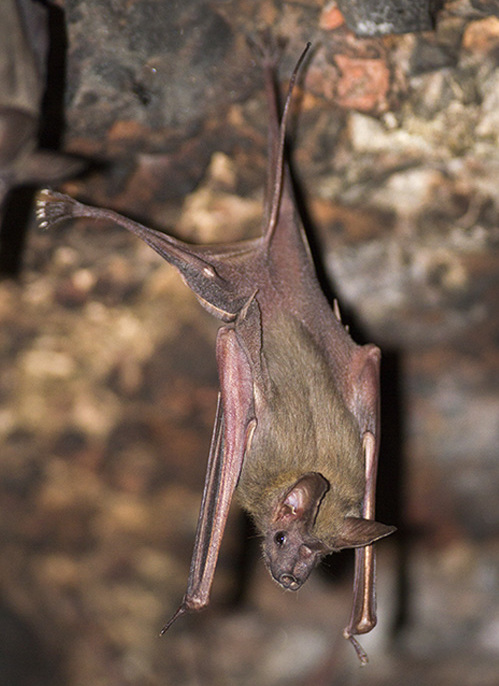
EGYPTIAN BAT
Rhinopoma microphyllum
DESCRIPTION
Egyptian Bat (Rhinopoma microphyllum) is a small bat species characterized by its unique noseleaf structure, which aids in echolocation. It has a slender body with long wings and a short tail, typically exhibiting a light brown to grayish coloration. This species is primarily nocturnal, foraging for insects in flight and roosting in caves or crevices during the day, often in small groups.
FUN FACTS
- Egyptian Bats are fascinating for their unique echolocation abilities, which allow them to navigate and hunt in complete darkness
- They can detect objects as small as a few centimeters away, making them highly efficient hunters
- | Despite their small size, Egyptian Bats play a crucial role in their ecosystem by controlling insect populations, which helps maintain the balance in their habitats
- Their presence indicates a healthy environment, as they thrive in areas with abundant insect life
QUICK INFO
Lifespan5-10 years in the wild
Average Weight5-10 g
Average Length4-5 cm
Diet TypeInsectivore
Social StructureThey are typically found in small groups, often roosting together in caves or crevices.
Activity PatternNocturnal
Breeding SeasonSpring (March-May)
- Habitat
- They are commonly found in arid and semi-arid regions, often roosting in caves, rock crevices, or man-made structures. Their habitat is typically characterized by sparse vegetation and open spaces.
- Biomes
- Desert, Savanna
- Native Range
- Egyptian Bats are native to parts of North Africa and the Middle East, including countries like Egypt, Sudan, and Saudi Arabia.
- Continent
- Africa, Asia
- Countries
- Egypt, Sudan, Saudi Arabia, Yemen
- Diet
- Egyptian Bats primarily feed on insects, particularly moths and beetles, which they catch in mid-air using their echolocation abilities.
- Diet Type
- Insectivore
- Favorite Food
- moths, beetles
- Social Structure
- They are typically found in small groups, often roosting together in caves or crevices.
- Activity Pattern
- Nocturnal
- Group Size
- 5-20
- Territorial
- 0

5-10 g
Weight
4-5 cm
Length
- Coloration
- light brown to grayish
- Sexual Dimorphism
- males are slightly larger than females
- Lifespan
- 5-10 years in the wild
- Gestation Period
- 60-70 days
- Offspring per Birth
- 1-2
- Sexual Maturity
- 6-12 months
- Breeding Season
- Spring (March-May)
LC
Least Concern
IUCN Red List Status
- Population Status
- The population status of Egyptian Bats is currently stable, although specific numbers are not well-documented.
- Wild Population Estimate
- unknown
- Population Trend
- Stable
- Endangered
- 0
- Threats
- Main threats include habitat loss due to urbanization and agricultural expansion, as well as potential disturbances from human activities in their roosting sites.
- Predators
- Common predators include birds of prey, such as hawks and owls, as well as larger mammals that may hunt bats.
- Defense Mechanisms
- They rely on their ability to fly quickly and maneuver in the air to evade predators.
- Found in Zoos
- Uncommon