


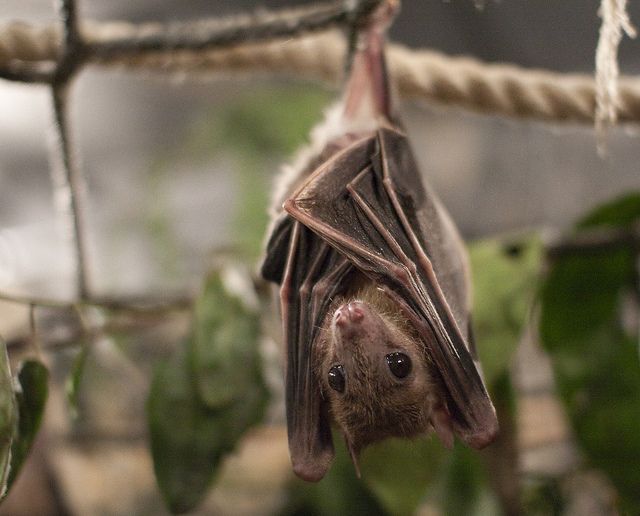
EGYPTIAN FRUIT BAT
Rousettus aegyptiacus
DESCRIPTION
The Egyptian Fruit Bat, also known as the Rousette Bat, is a medium to large bat species characterized by its large eyes and a wingspan that can reach up to 1 meter. Its fur is typically a mix of brown and yellowish tones, providing excellent camouflage in its natural habitat. These bats are known for their social behavior, often roosting in large colonies in caves or trees, and they play a crucial role in their ecosystem as pollinators and seed dispersers.
FUN FACTS
- Egyptian Fruit Bats are known for their unique echolocation abilities, which they use to navigate in the dark
- Unlike many other bat species, they can also see well in low light, which aids in foraging for food at night
- | These bats have a fascinating social structure, often forming large colonies that can include thousands of individuals
- Their communal roosting behavior not only provides safety in numbers but also facilitates social interactions and mating opportunities
QUICK INFO
Lifespan15-20 years in the wild, up to 30 in captivity
Average Weight150-250 g
Average Length12-15 cm
Diet TypeHerbivore
Social StructureGroup, often roosting in large colonies
Activity PatternNocturnal
Breeding SeasonSpring (March-May)
- Habitat
- Egyptian Fruit Bats inhabit tropical and subtropical forests, often roosting in caves, tree hollows, or under bridges. They prefer areas with abundant fruiting trees, which provide their primary food source.
- Biomes
- Tropical Rainforest, Subtropical Forest
- Native Range
- This species is native to parts of Africa, the Middle East, and the Indian subcontinent.
- Continent
- Africa, Asia
- Countries
- Egypt, Sudan, Kenya, Tanzania, Uganda, Saudi Arabia, Yemen, India
- Diet
- The Egyptian Fruit Bat primarily feeds on fruits, nectar, and flowers. They are particularly fond of figs and other tropical fruits, which they help to pollinate.
- Diet Type
- Herbivore
- Favorite Food
- Fruits, especially figs
- Social Structure
- Group, often roosting in large colonies
- Activity Pattern
- Nocturnal
- Group Size
- 100-1,000
- Territorial
- 0
 LC
LC
 CR
CR
 LC
LC
 VU
VU
150-250 g
Weight
12-15 cm
Length
- Coloration
- Brown and yellowish fur with a lighter underbelly
- Sexual Dimorphism
- Males are generally larger than females
- Lifespan
- 15-20 years in the wild, up to 30 in captivity
- Gestation Period
- 110 days
- Offspring per Birth
- 1
- Sexual Maturity
- 1-2 years
- Breeding Season
- Spring (March-May)
LC
Least Concern
IUCN Red List Status
- Population Status
- The population is currently stable, but habitat loss poses a potential threat.
- Wild Population Estimate
- Unknown
- Population Trend
- Stable
- Endangered
- 0
- Threats
- Main threats include habitat destruction due to deforestation and urbanization. Additionally, they may face hunting pressures in some regions.
- Predators
- Eagles, hawks, snakes, and other large birds of prey.
- Defense Mechanisms
- They rely on their ability to fly and roost in high places to avoid predators.
- Compatible Animals
- Other fruit bats, various bird species
- Found in Zoos
- Common