


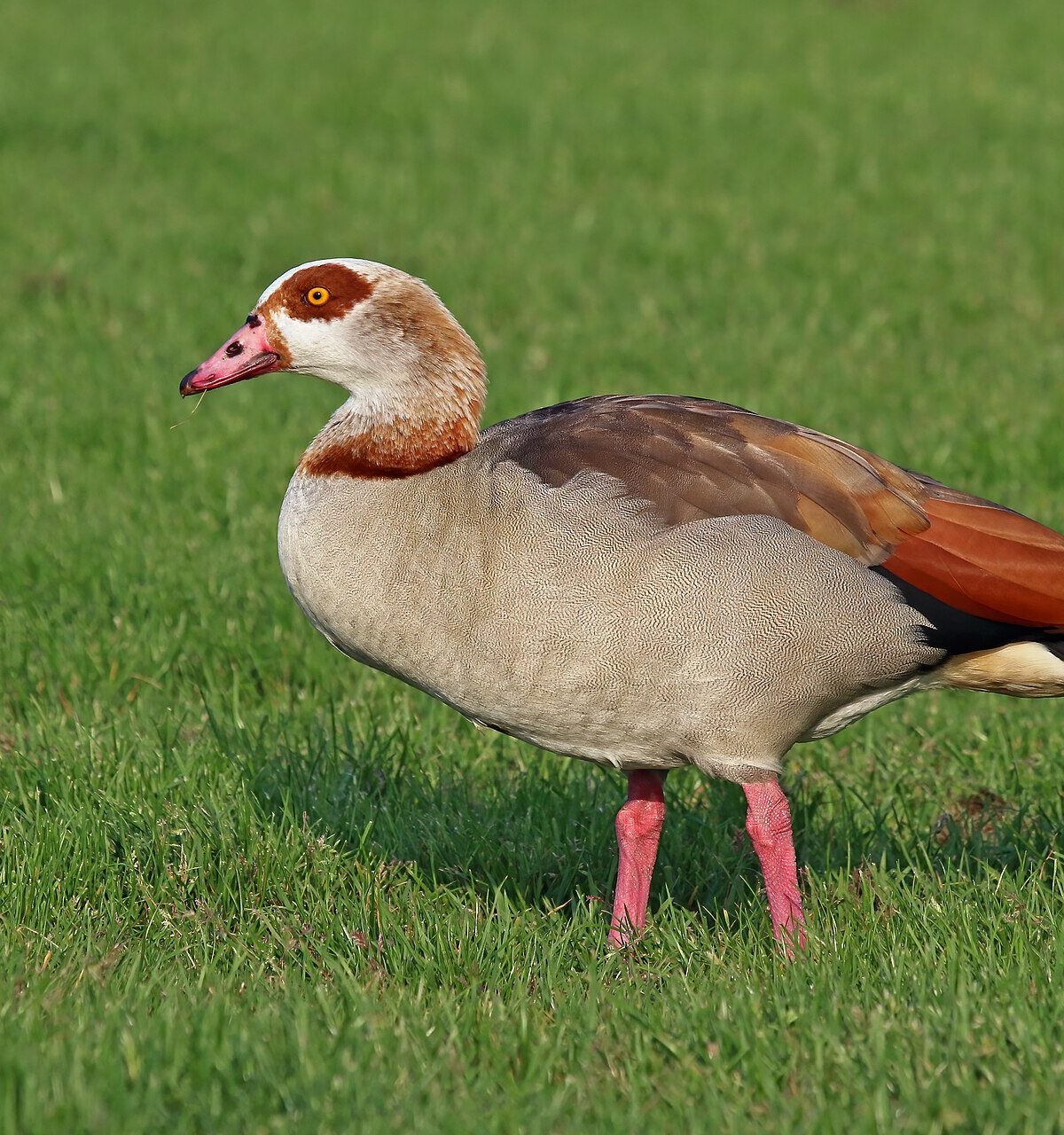
EGYPTIAN GOOSE
Alopochen aegyptiaca
DESCRIPTION
Egyptian Goose (Alopochen aegyptiaca) is commonly known as the Nilgai Goose and Egyptian Duck. This medium-sized waterfowl is characterized by its striking appearance, featuring a brownish body with a distinctive white face and a prominent dark eye patch. They are known for their loud honking calls and are often seen grazing in open grasslands and near water bodies, displaying a unique blend of terrestrial and aquatic behaviors.
FUN FACTS
- Egyptian Geese are unique among waterfowl for their strong pair bonds, often staying with the same mate for life
- They are also known for their distinctive honking calls, which can be heard from a distance and are used to communicate with each other in their social groups.| These geese have a fascinating history, as they were revered in ancient Egypt and often depicted in art and hieroglyphs
- They were associated with the goddess Hathor and were sometimes kept as pets by the ancient Egyptians
QUICK INFO
Lifespan10-15 years in the wild, up to 20 years in captivi
Average Weight1.5-3.5 kg
Average Length65-75 cm
Diet TypeHerbivore
Social StructureThey are typically found in pairs or small groups, often seen foraging together.
Activity PatternDiurnal
Breeding SeasonSpring (March-May)
- Habitat
- These geese inhabit a variety of environments, including wetlands, grasslands, and agricultural fields. They prefer areas near water sources for foraging and nesting.
- Biomes
- Wetlands, Grassland, Savanna
- Native Range
- Egyptian Geese are native to Africa, particularly in the Nile Valley and surrounding regions, and have also been introduced to parts of Europe and Asia.
- Continent
- Africa, Europe
- Countries
- Egypt, Sudan, South Africa, Kenya, Tanzania, Netherlands, United Kingdom
- Diet
- Egyptian Geese primarily feed on grasses, seeds, and other plant materials, often foraging on land. They may also consume some insects and small invertebrates.
- Diet Type
- Herbivore
- Favorite Food
- grasses, seeds
- Social Structure
- They are typically found in pairs or small groups, often seen foraging together.
- Activity Pattern
- Diurnal
- Group Size
- 2-20
- Territorial
- 1

 VU
VU
1.5-3.5 kg
Weight
65-75 cm
Length
- Coloration
- The plumage is predominantly brown with a white face and a dark brown eye patch, along with distinctive wing markings.
- Sexual Dimorphism
- Males and females are similar in appearance, but males are generally larger.
- Lifespan
- 10-15 years in the wild, up to 20 years in captivi
- Offspring per Birth
- 5-10
- Sexual Maturity
- 1-2 years
- Breeding Season
- Spring (March-May)
LC
Least Concern
IUCN Red List Status
- Population Status
- The population of Egyptian Geese is currently stable, with some local increases due to successful adaptation to human-altered environments.
- Wild Population Estimate
- 100,000-200,000
- Population Trend
- Stable
- Endangered
- 0
- Threats
- Main threats include habitat loss due to agricultural expansion and hunting. However, they are adaptable and have successfully established populations in urban areas.
- Predators
- Foxes, large birds of prey, and domestic dogs are known predators of Egyptian Geese.
- Defense Mechanisms
- They are known to be aggressive when defending their nests and can use loud vocalizations to deter threats.
- Compatible Animals
- Other waterfowl, such as ducks and swans, in controlled environments
- Found in Zoos
- Common