


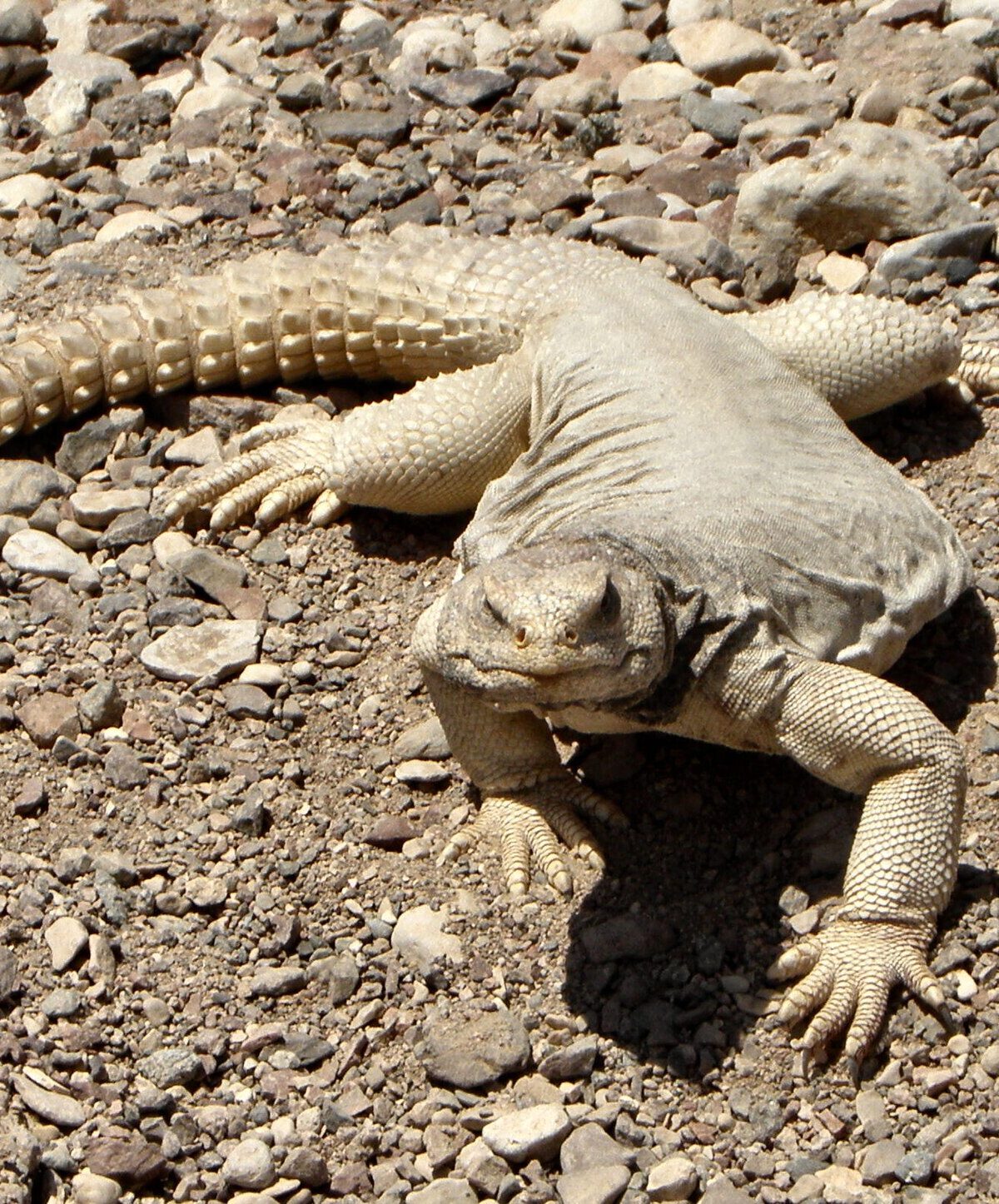
EGYPTIAN SPINY-TAILED LIZARD
Uromastyx aegypticus
DESCRIPTION
Also called Spiny-tailed Lizard, the Egyptian Spiny-Tailed Lizard (Uromastyx aegypticus) is a robust lizard characterized by its spiny tail and stocky body. It typically exhibits a coloration that ranges from yellow to brown, often with darker patterns, which helps it blend into its arid desert environment. This species is primarily herbivorous, feeding on a variety of plant materials, and is known for its burrowing behavior, creating extensive tunnel systems in sandy soils.
FUN FACTS
- The Egyptian Spiny-Tailed Lizard is known for its ability to tolerate high temperatures and can often be found basking in direct sunlight for extended periods
- They are also capable of digging extensive burrows, which provide them with shelter from predators and extreme temperatures.| These lizards have a unique social structure where males establish territories and engage in displays of strength to attract females
- Their spiny tails not only serve as a defense mechanism but also play a role in their mating rituals
QUICK INFO
Lifespan10-15 years in the wild, up to 20 years in captivi
Average Weight0.5-1 kg
Average Length30-50 cm
Diet TypeHerbivore
Social Structuresolitary
Activity PatternDiurnal
Breeding SeasonSpring (March-May)
- Habitat
- This lizard inhabits arid and semi-arid regions, often found in rocky deserts and sandy plains. It prefers areas with sparse vegetation where it can easily burrow and find shelter.
- Biomes
- Desert, Semi-arid
- Native Range
- The native range of the Egyptian Spiny-Tailed Lizard includes parts of North Africa and the Middle East.
- Continent
- Africa, Asia
- Countries
- Egypt, Libya, Sudan, Saudi Arabia
- Diet
- The Egyptian Spiny-Tailed Lizard primarily feeds on leaves, flowers, and fruits, making it a herbivore. It has adapted to consume tough, fibrous plant material found in its desert habitat.
- Diet Type
- Herbivore
- Favorite Food
- leaves, flowers, fruits
- Social Structure
- solitary
- Activity Pattern
- Diurnal
- Group Size
- 1-2
- Territorial
- 1
 VU
VU
 LC
LC
0.5-1 kg
Weight
30-50 cm
Length
- Coloration
- Typically yellow to brown with darker patterns
- Sexual Dimorphism
- Males are generally larger and more colorful than females.
- Lifespan
- 10-15 years in the wild, up to 20 years in captivi
- Gestation Period
- 60-90 days
- Offspring per Birth
- 5-20
- Sexual Maturity
- 2-3 years
- Breeding Season
- Spring (March-May)
LC
Least Concern
IUCN Red List Status
- Population Status
- The population is currently stable, but habitat destruction poses a potential threat.
- Wild Population Estimate
- Unknown
- Population Trend
- Stable
- Endangered
- 0
- Threats
- Main threats include habitat loss due to urbanization and agriculture. Additionally, collection for the pet trade can impact local populations.
- Predators
- Birds of prey, snakes, and larger mammals are known predators of the Egyptian Spiny-Tailed Lizard.
- Defense Mechanisms
- When threatened, these lizards can retreat into their burrows or use their spiny tails as a defense mechanism.
- Found in Zoos
- Uncommon